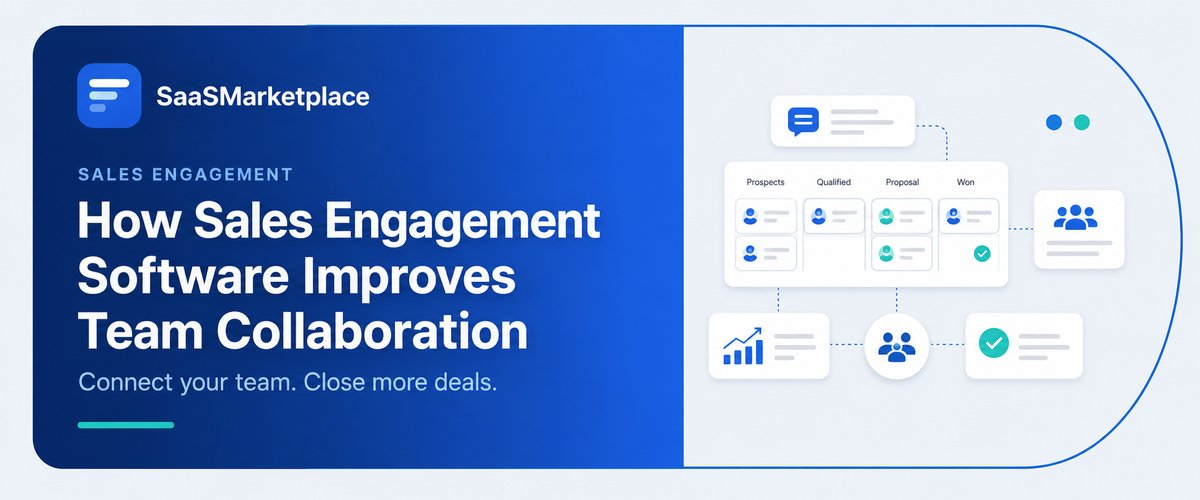
How Sales Engagement Software Improves Team Collaboration
-min.jpg)
Sales engagement software has become the bridge to the execution gaps in a rapidly changing US market where remote teams are replacing traditional sales teams. Through centralizing outreach efforts, multi-threading, automating activity logging in CRM systems, and streamlining the use of playbooks, these software solutions solve the problem of functional silos and eliminate inefficient manual processes from the sales process. With the implementation of these platforms, modern sales teams have gained full visibility of customer conversations, transaction follow-ups, and deal signals. This in turn allows managers to conduct useful coaching, enables AEs to receive leads from the BDRs automatically and effortlessly, and makes it possible for different teams to work together around effective data-based strategies.
What Is Sales Engagement Software?
The sales engagement software refers to a centralized tech platform used for the simplification, automation, and optimization of interactions between the revenue team and prospective customers at every stage of the sales cycle. Instead of making their sales representatives switch between different tools, the sales engagement software integrates with the standard CRM systems and allows representatives to combine the outreach efforts made through emails, calls, social messages, and scheduling meetings in one automated cadence. For modern-day sales teams, it serves as the execution layer guiding their representatives in everyday activities without providing them with any uncertainty regarding the clients they need to contact, the time when they need to act, and the channel they should use for conducting these activities.
In the modern marketing atmosphere that calls for speed, sales engagement software’s powerhouse ability lies in its power to turn disorganized sales practices into effective strategies based on evidence. This tool captures timely indications of a client’s understanding of the service or product position of the purchased item, email opened, and data collected through phone calls, thus allowing the management to understand what buyers want. Superiors can identify which messages worked best, copy those successful messages, and train new workers in a shorter period of time. To sum up, sales engagement software allows the company to minimize the administrative workload for sales representatives and spend more time with the customers.
How Does Sales Engagement Software Improve Communication?
Sales engagement software simplifies communications and interactions with both customers and employees by gathering all the information about every interaction with the customers into one place. Rather than worrying about multiple emails, phone calls, and chat logs being scattered among several tools, a sales engagement program ensures that every communication is recorded in the same document. This process reduces tons of miscommunications among SDRs, sales reps, and Customer Success Managers. Thus, when a client moves on to the next step of the sales funnel, anyone on the team can read about the previous interactions with them in order to understand how they feel about the product and continue the conversation right from where the last person left off without making the person repeat himself/herself.
In addition to facilitating smooth deal transitions, these applications also establish uniform messaging strategies throughout the revenue department. The template libraries and dynamic playbooks built into these apps provide sales personnel with effective, consistent messaging for any outreach mode, such as emails, LinkedIn messages, and call monitoring scripts. The managers can also observe the communication strategy performing best against the number of responses in real time and adjust the messaging guidelines according to the real audience responses rather than relying on their intuition. This way, every employee has a professional and harmonized voice for the audience.
Using conversation intelligence technologies takes communications strategy to a whole new level, from simple outreach to true listening. The solutions automatically capture, transcribe, and analyze sales calls, which provides all the necessary insights regarding high-value calls such as different buying patterns or competitor activity. Sales professionals can share interesting snippets with the marketing department so that marketing managers can address buyers' remarks. Thus, sales managers can provide effective coaching to their teams based on the obtained insights from conversations with customers.
How Does Sales Engagement Software Align Sales and Marketing Teams?
- Shared Buyer Insights: Combines real-time interaction statistics into a single system, allowing both teams to quickly identify which email marketing are effective in leading prospects to success.
- Unifying Communication: Provides salespeople with market-friendly materials and pre-written emails for their sales presentations to guarantee consistency of marketing messages.
- Automated Handoffs of Leads: Immediately starts a pre-scheduled marketing email chain as soon as the potential customers have taken the necessary engagement steps to trigger it.
- Feedback in Closed Loop: Allows the marketing department to monitor how salespeople make use of their content, thus enabling them to improve their future campaigns on the basis of actual sales data.
- Account-Based Synchronization: Aligns the lists of target companies so that ads from the marketing department and outreach from salespeople are sent out for the same target audience.
- Accurate Attribution System: Compiles the information on all marketing contacts of the customers and further activities of salespeople in order to measure marketing success properly.
How Does Sales Engagement Software Streamline Workflows?
- Automated Activity Logging: Synchronizes emails and phone records easily and forward that directly into the CRM, thus eliminating the chance of sales representatives looking for data to enter.
- Structured Cadences of Outreach: It creates a sequence of outreach, where the sales representatives have an idea of what to do.
- Easy to Dial and Email: It is equipped with auto-dialers, email templates, and tags to perform outreach with just one click.
- Automated Tasks: It can carry out tasks of creating task follow-ups or updating deal status, and assigning leads with just one effort.
- It Can Schedule or Book the Customers’ Appointments: Sales representatives can send links to their customers with their curated schedules.
- Centralized Content Management: Monitors approved content for sales managers, aiming to secure immediate access when interacting with customers.
- Real-time Task Prioritization: The first step of the process is sorting leads by the level of involvement.
How Does Sales Engagement Software Improve Visibility Across Teams?
- Track Centralized Deal Timelines: Keep track of all emails, calls, and meetings in an activity feed and allow cross-functional teams to have continuous insight into the history of any account.
- Real-Time Buyer Intent Tracking: See the engagement signals in real time such as opened emails, clicked links, and viewed content thus giving access to all team members to the prospect’s level of interest.
- Pipeline Progress Dashboards: Display real-time visualization of deals’ stages, pipeline health, and metrics of rep activities through the joint dashboard for the team.
- Conversation Intelligence Sharing: Record customer calls and transcribe them so that managers, sellers, and marketers can analyze real feedback from buyers.
- Standardized Activity Analytics: Measure individual and team performance of their outreach against standards, informing what messenger works well and where to improve.
- Seamless Deal Handoff Visibility: Provide account executives and customer success representatives with complete information about all previous communications with a prospect to fulfil their duties effectively.
- Executive-Level Revenue Forecasting: Merge both activities of reps with engagement signals and obtain insights into the velocity of the pipeline.
How Does Sales Engagement Software Support Remote Collaboration in the US Market?
Today’s U.S. B2B landscape has enterprise revenue teams located in many locations including coastal tech hubs, regional offices, and home offices. In this space, sales engagement software provides a virtual sales floor where team members communicate with each other. With no more opportunistic desk drop-ins or in-person deal-room meetings, these systems create the operational heart of the enterprise in a centralized manner. Remote account executives, business development representatives, and revenue operations managers work on the same time schedule when it comes to their clients’ engagement signals, action items, and phone call transcripts. The fact that they share the context helps to avoid any downtime due to different time zones as lead hand-offs can be done quickly.
And on top of that, sales engagement software helps to address important issues associated with remote work, including performance management, constant coaching, and the onboarding process. Thanks to integrated conversation intelligence, sales managers can access call recordings whenever convenient for them and provide feedback on specific aspects, as well as share useful call recordings through team communication channels that are based on Slack or Microsoft Teams. This enables executives to deliver efficient data-supported sales scripts to their remote reps instead of letting them guess what works and what doesn't in their sales activities. Overall, the software provides an excellent combination of standardized execution, asynchronous coaching, and complete visibility of the sales process so that remote teams in the US stay cohesive and inline with sales objectives. In addition, using this software, companies achieve all that regardless of where their employees log in.
How Does Sales Engagement Software Boost Team Performance?
The software utilized for engagement in sales helps modern sales organizations amplify their capabilities by eliminating administrative difficulties and enhancing their execution on a daily basis. Sales representatives no longer spend time entering data into the CRM software by hand, searching for needed materials, or trying to decide which lead to pursue. Instead, the software creates workflow templates on a daily basis. With the help of the software, managers prioritizing targets and accelerating their follow up have more time to communicate with customers and conduct an increased number of sales calls.
In addition to enhancing rep capacity, these systems enhance effective output through the conversion of useful techniques into replicable data-driven action plans. Revenue professions are able to track the performance indicators throughout the entire funnel, allowing them to clearly identify what voice scripts, message sequences, and time of interaction lead to the maximum level of conversions. Instead of leaving the process to the best representatives, management is able to make effective systems available for all the employees immediately and use text messaging metrics for their training. As a result, the company becomes capable of achieving its goals in a fast way with the new employee onboarding process becoming efficient, underachieving personnel receiving qualified assistance, and company operations turning into predictable processes.
Conclusion
The introduction of sales engagement systems allows making previously unconnected activities highly effective since it facilitates interdepartmental communication, prevents manual data entry in the CRMs, and makes it possible for the sales, marketing, and customer success departments to be aware of each other’s activities. Are you determined to acquire the required selling solutions? All you need to do is to check SaaSMarketplace in order to find the relevant technology.
FAQ's
It centralizes shared communication histories, email templates, and deal notes so every rep works from the same live data.
It allows marketing to feed approved messaging and content directly into reps' automated outreach sequences.
Yes, managers can review call recordings, track sequence performance, and share best practices across the team in real time.
It automatically syncs lead statuses and contact logs across the team to ensure clear ownership and avoid duplicate outreach.
Yes, it bi-directionally syncs with CRMs like Salesforce and HubSpot to keep deal updates and collaborative notes instantly aligned.