
How Students Use Technology for Smarter Learning

It would not be an exaggeration to say that the modern world is undergoing a true digital revolution. One of its most striking manifestations is the transformation of education. What appeared to be science fiction only twenty or fifteen years ago has now become everyday life. Smartphones and computers. Cloud services and interactive educational platforms, Artificial intelligence. They have all become essential tools for learning. As a result, pupils now have the following opportunities. Significantly improve the effectiveness of the learning process. The opportunity to develop critical thinking. The ability to acquire knowledge in a way that is convenient for them. So, how exactly does technology in education help young people in their studies? What methods and tools do they use? What advantages and challenges arise along the way?
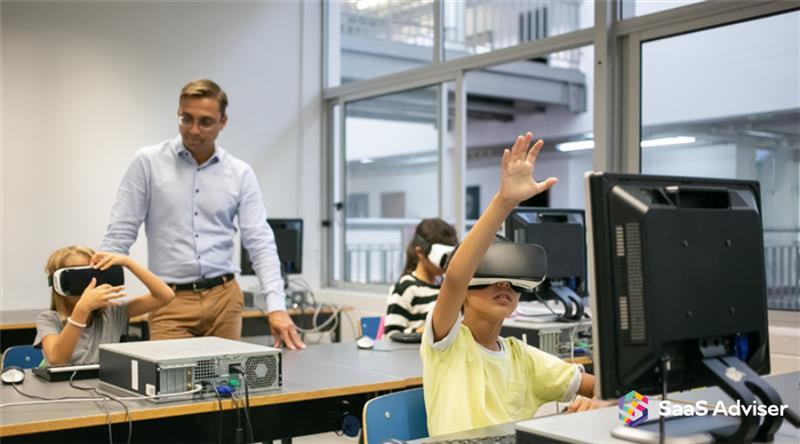
The Modern Educational Environment and the Use of Technology
Modern education differs significantly from previous forms of learning. They differs in its flexibility and openness. Today's students are no longer limited to printed textbooks, auditoriums, or libraries. They have access to:
-
Global knowledge bases;
-
Open courses;
-
Interactive simulations;
-
Virtual laboratories.
This allows them to learn at their own pace. Also, deepen their knowledge of topics that interest them most. Students can fill in gaps where additional practice is needed.
Thanks to digital resources, students can:
-
Participate in distance learning programs;
-
Listen to lectures from leading universities around the world;
-
Use educational applications to learn mathematics, languages, or programming.
This approach not only makes learning more accessible. It also instills a sense of responsibility in young people for their own educational path. This is where the impact on students becomes apparent. After all, technology opens up new horizons. It broadens learners' worldview. It also allows students to master skills that seemed unattainable just a short time ago.
Despite this, in the realities of modern student life, there are times when the amount of work can exceed one's capabilities, both in terms of time and knowledge. Parallel work. Practical classes. Social activities and other responsibilities. All this forces us to look for effective solutions for time management. With modern possibilities, this is not only possible but also effective. Namely, turning to additional specialized resources. Specifically, online help by professionals. In such cases, it is worth paying attention to the support of professional writers who can help with difficult tasks.
If you are struggling with voluminous calculations or complex math problems while doing your homework, you should not neglect online help on the appropriate platform. Just enter the query do my homework math and select a reliable service like DoMyHomework. With this solution, you will complete your homework on time and also understand the correct solution with the help of experts. This way, you can maintain a needed balance between studies and personal life. With this kind of targeted help, now you can focus more productively on your long-term educational goals.
And here, technology comes to the fore again. Modern technologies allow you to plan your studies and organize projects, participate in group research, and create your own educational products.
Online Platforms. Their Role in Education
Modern digital tools have expanded access to knowledge that were formerly restricted to the educational institutions' walls. Online platforms have emerged as essential middlemen between colleges and those who prefer to learn at their own speed. They broaden educational opportunities. They create new ways to connect with learning materials.
Massive open online courses
One of the most notable trends in education has been the emergence of platforms by Coursera, Udemy, edX, and others. They offer free online courses from the world's leading universities. These platforms cover topics ranging from the humanities to high-tech specialties.
-
Choose their own learning path;
-
Receive certificates recognized by employers;
-
Study material at their own pace.
These services have become particularly popular due to their accessibility and flexibility. They are shaping a new approach to student use of technology. The main focus is on independence and the ability to combine different sources of knowledge.
Specialized applications. Services
In addition to global platforms, mobile apps play an important role. Duolingo for learning languages or Photomath for solving math problems. Quizlet for creating interactive flashcards. These and similar tools allow you to integrate learning into your daily life. Students can learn new words on public transport or repeat formulas before an exam. It is also possible to test your knowledge in a game format. This makes the learning process less stressful, much more interactive than before, and for many, more productive.
Virtual and Augmented Reality
One of the most innovative areas is VR and AR. They allow you to create simulations that are as close to real life as possible. Their use in education is gradually moving from experimental solutions to systemic practices in the world's leading universities. This is becoming an important step in the transformation of technology in education. The approach to learning itself is changing. Namely, from passive absorption of information to active experience.
Simulations for professional training
One of the biggest advantages of VR is the ability to create realistic simulations. Medical students can practice surgical procedures without risk to patients' lives.
Similar technologies are also used in aviation. Pilots practice complex flight scenarios in VR cockpits, where conditions are as close to real life as possible. This provides students with a safe environment for training and learning critical skills.
VR enables architects and engineers to visualize ideas in the most appropriate format, walk around future buildings, and evaluate structural strength in virtual space.
Augmented reality in everyday learning
AR is less demanding on equipment. It can be used via smartphones or tablets. It superimposes digital objects onto the real world and makes learning more interactive.
A student studying biology can point their phone camera at an illustration in a textbook and see a three-dimensional model of a cell. One where each organelle is labeled and explained. When studying history, you can bring maps or artifacts to life by seeing them in a dynamic form.
VR and AR in collaborative learning
Students from different countries can work on projects simultaneously and meet in shared VR rooms. There, people might have discussions or do laboratory experiments. This dramatically expands the potential for communal learning by breaking down the barriers between audiences and universities.
In this respect, student use of technology is reaching a new level. Learning is becoming global and collaborative.
Advantages
- Deeper immersion in the material.
- Safe environment.
- Motivation and interest.
- Practical training.
Cloud Services. Collaboration
Google Workspace. Microsoft Teams. Slack and similar platforms. These have become the foundation for group work. Students can collaborate on documents and hold online meetings. They can create presentations and track progress.
It is important not only for the learning process but also for preparing for future professional activities.
Modern companies expect their employees to:
-
Be able to work remotely;
-
Communicate through digital tools;
-
Organize projects effectively.
That is why the impact on students is twofold. They simultaneously improve their academic and career skills.

AI. Personalization of Learning
One of the most interesting aspects is the use of AI. Algorithms can:
-
Analyze student progress;
-
Offer individual assignments;
-
Give advice on topics that need extra work.
AI-based platforms allow courses to be tailored to specific individuals. If a student quickly grasps the material, they are offered more challenging tasks. If difficulties arise, the system provides additional explanations or exercises. This approach makes learning even more flexible and, consequently, more effective.
Social Networks as a Tool
Social networks are often associated with entertainment. However, they have long ceased to be just that. Now social networks also have educational potential. Facebook groups, YouTube channels, etc. They can even be dedicated to scientific topics and become popular sources of knowledge.
Students form communities and share notes. They may also explain complex topics in simple terms. Moreover, students may create their own educational videos. This not only helps others to understand the material better, but also stimulates creativity.
Challenges. Risks of Using Technology
Despite the obvious benefits, student use of technology also has certain drawbacks. They can be summarized as distraction, information overload, inequality, and academic integrity issues.
1. Distraction.
Social media and online games can distract students from their studies.
2. Digital inequality.
Not all students have access to high-quality internet or modern devices.
3. Information overload.
An excessive amount of resources sometimes complicates the choice and leads to superficial learning.
4. Problems with academic integrity.
Struggling with deadlines? Use do my homework TutorBin for expert academic support. Manage heavy workloads, improve understanding, and complete assignments on time with ease. Easy access to ready-made work sometimes encourages cheating instead of independent learning.
Addressing these challenges requires a comprehensive approach. Namely,
-
Developing digital literacy;
-
Fostering responsibility;
-
Creating conditions for equal access to technology.
To Conclude
Technology dramatically altered the modern schooling landscape. It has provided learners with unparalleled access to previously unavailable tools and opportunities. Thanks to technology in education, young people learn skills that prepare them for a new future. The one in which digital competences will be the foundation of professional success. At the same time, it's critical to remember that technology is just a tool. Its usefulness is dependent on how learners use it. It also depends on how effectively they can balance independence, responsibility, and critical thinking. The appropriate blend of classic and creative ways will make learning smarter and much more exciting and adaptable. The future of education is inextricably connected to digital technologies. As a result, it is critical that every student learns how to make the best use of these chances. Then students will not only learn but also acquire the skills required for life and career in the twenty-first century.
Frequently Asked Questions


.jpg)


