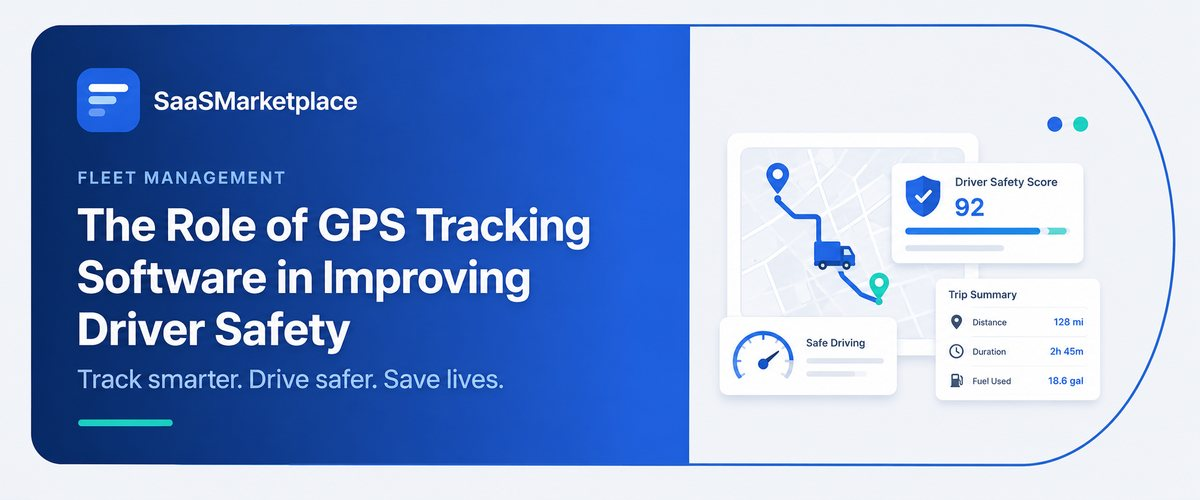
The Role of GPS Tracking Software in Improving Driver Safety
-min.jpg)
The safety of drivers on the road is the foremost concern of every fleet operator in the field of modern transportation. The current measures that are used to track drivers have completely changed from basic navigation to being used as an important safety tool that gives managers a direct view of the daily work on the road. The use of telematics is possible due to the continuous monitoring of the product that enables the company to identify risky behavior in driving, which helps them to train drivers before an incident occurs. In short, the implementation of advanced GPS tracking software technology is aimed not only at protecting vehicles but also at forming the culture of responsibility related to the safety of drivers.
How Does GPS Tracking Software Improve Driver Safety in the US?
The software providing GPS tracking has made road safety for drivers easier in almost all parts of the country owing to its capability of giving visibility to daily road activities. The telematics equipment embedded inside detects behaviors like speeding, sudden acceleration, following too closely behind vehicles, and hard braking by giving alerts to company management whenever any such behavior is detected.
Alongside the tracking of drivers’ behaviors, the systems also take care of the drivers' safety by allowing them to have a perfect route every time they travel. Dynamic routing allows the driver to avoid bad weather conditions, traffic jams, or road repairs, hence lessening the tensions that develop during travel time. Whenever a driver goes off his trip course or faces engine problems, the stewards can locate his exact position and send necessary assistance.
The new fleet management software eliminates the necessity of making maintenance arrangements. By using data from the onboard computer, the system has information about engine usage, tire condition, and brake operation. Therefore, the mechanics are alerted to provide repairs at the right moment.
What Features of GPS Tracking Software Reduce Accidents for US Fleets?
- Monitoring Speeds in Real-Time and Using Telematics: Identifies speeding and risky driving instantly, while permitting fleet owners to learn about unsafe practices leading to accidents as well.
- Alerts Inside the Cab and Driver Coaching: Sounds a beep or a voice alert in the cab as soon as a safety breach occurs. This allows the driver to improve their behavior as quickly as possible.
- Safety Scorecards for Drivers and Gamification: Combines various driving factors for a daily rating, helping managers to motivate drivers and train them efficiently to avoid risky actions.
- Alerts on Maintenance: Connects directly with the vehicle diagnostics to measure mileage and brakes and warns of necessary repairs before accidents occur.
- Optimizing Routes and Monitoring Weather Conditions: Helps to change routes when it comes to bad weather and traffic jams. As a result, it can limit the fatigue of drivers and their stress levels.
- Monitoring Driving Hours and Avoiding Fatigue: Works with ELDs and follows the DOT regulations on drivers’ resting periods to avoid accidents caused by tiredness.
How Does GPS Tracking Software Help US Fleet Managers Monitor Driver Behavior?
- Real-Time Telematics and Sensor Monitoring: Using integrated G-sensors, telematics technology enables you to monitor driving mechanics in real time, including reckless behaviors such as heavy braking, rapid acceleration, sharp turns, and tailgating.
- Automated Speed Monitoring: With automated vehicle speed monitoring, you will automatically check real-time GPS speed against local speed limits across the U.S. so that you can be alerted if a driver goes over speed.
- Integrated Dashcam Footage: Equipped with GPS tracking software, the dashcam provides managers with video recordings of specific safety incidents (e.g., cellphone use, sleepiness, near misses).
- Automated Safety Scorecards: Receives daily telemetry information and creates individual safety ratings so that you can rank drivers and provide rewards.
- Custom Alerts: Provides instant notifications in the form of text messages or emails whenever there is an occurrence of an infraction.
- Reports on Idling: Telemetry technology can track idle times and history of car use, making it possible to detect aggressive driving behavior.
- Historical Route Review: Monitors all trips taken so that managers can reconstruct and analyze any trip from beginning to end.
Can GPS Tracking Software Lower Insurance Costs for US Businesses?
Yes, the use of GPS tracking software to track vehicles can lead to a reduction in insurance costs for companies in the U.S., as many leading insurance companies offer reductions ranging between 5% and 30% for premium rates.
- Direct Telematics Premium Discounts: Many major U.S. insurers (e.g. Progressive, Nationwide, and GEICO) offer telematics discounts, which can be up to 15% on premiums paid by companies that fit telematics equipment on their vehicles.
- Anti-Theft Premium Discount: One of the important functions of the GPS technology is theft prevention and recovery. Due to this ability of bug tracking, companies qualify for significant premium discounts.
- False Claims Protection: GPS-equipped vehicles help accumulate data to be used in case of false claims. In fact, having access to location data and speed information can significantly solve issues related to claims fraud.
- Accident Reduction and Lower Loss Ratio: By monitoring such risky activities as speeding, tailgating, and braking the fleet managers can decrease accident occurrences. Lower number of accidents indicates a more favorable loss run report, giving insurance brokers the ability to negotiate lower rates with insurance companies.
- Data-driven usage-based insurance (UBI): Thanks to software data, fleet owners can join in UBI or commercial telematics programs, through which they pay premiums based on the distance they have traveled and verified safety scores.
- Automated Maintenance: Keeping track of the mileage, diagnostic codes, and maintenance cycles can prevent high risk mechanical failure (such as tire blowout or brake failure) on the road and minimize insurance claims related to equipment neglect.
- Compliance with state-mandated discounts: The laws in various U.S. states, such as Texas and New York, require insurance providers to offer their clients who put approved telematics and anti-theft devices discounts on premiums.
How Does GPS Tracking Software Support Compliance with US Transportation Regulations?
GPS tracking technology has an important function in keeping the U.S. fleets in compliance with regulations through automation of crucial data collection process. Currently available telematics systems connect directly to the engine control unit of a vehicle in order to comply with Federal Motor Carrier Safety Administration (FMCSA) Electronic Logging Device (ELD) regulations. Thanks to automation of the recording process where the program detects whereby the vehicle is through the recorded driving hours, location and engine performance, it enables tracking of the Hours of Service (HOS) in real time, which helps prevent driver fatigue violations and facilitates inspections by the Department of Transportation (DOT).
Ignoring each day's driver logs, GPS programs make it considerably easier for companies to comply with the statutory requirements because they can be used across state boundaries or in the different jurisdictions of federal law. The presence of integrated modules allows having the IFTA reporting automated by means of calculating and measuring miles travelled in each state independently. Besides, such systems enable digitalization of DVIRs so that drivers can carry out pre-trip and post-trip vehicle checks. This technology keeps fleet operators’ CSA scores safe and helps them remain compliant with the laws.
What Role Does GPS Tracking Software Play in Real-Time Driver Alerts in the US?
- Audio Alerts in the Cab: Provide immediate verbal warnings or notifications by chimes from speakers in the truck cabin when the measuring device or the engine, shows that the vehicle is being driven aggressively (hard brakes applied, fast acceleration, sharp turns, tailgating).
- Alerts on Speed Violation: Monitors the current GPS position of the vehicle with the help of the internal database that holds information about the speed limits in every state to warn the driver in case he exceeds the maximum speed limit.
- Video Distraction Alerts: Works together with advanced craftsmans' cameras that are installed at the front and inside of the truck to let the driver know about closing of the eyes (loss of consciousness), using mobile phone, seatbelt not used, and all other activities that distract the driver from driving.
- Severe Weather Alerts: Uses up-to-date weather data and traffic conditions to inform the drivers about the possibility of changing their route in case of dangerous weather conditions.
- Immediate Dispatcher Alerts: Notifies the fleet control center every time the vehicle engages in a risky action on the road, thus allowing dispatcher to react correctly to the situation.
- Dynamic Geofence Notifications: Monitors accurate vehicle tracking and departures within specific geographic borders (geofences) and promptly notifies managers and drivers about location of the vehicle in restricted areas, hazardous regions, or unauthorized off-road spots.
How Do US Companies Use GPS Tracking Software to Prevent Distracted Driving?
Commercial fleets in the United States have started using modern software for GPS tracking and video telematics so that they can ensure the reduced distraction while driving. Since distraction is a major cause of accidents that occur due to distracted driving, advanced GPS tracking technology, combined with AI, can help companies deal with this problem in a few different ways.
- AI monitoring with dual-facing Dashcam: New GPS monitoring systems come with a system that can track location alongside a two-way camera. The systems help keep track of what happens on the road and within the cabins with the help of inner camera.
- Instant in-cabin Auditory Feedback: Once a driver starts to use a phone or distracts from the road, he gets an immediate warning through audio signal inside the cabin.
- Uploading of Video clips after the Events: If distracted driving leads to an event, such as heavy braking or any other incident, the GPS system will be able to identify the incident automatically and to send a video to a company that has installed a GPS system.
- Targeted Safety Training Sessions: Fleet management uses summarized difficulty logs and videos sessions. Instead of sending out warnings, managers can refer to the minute when a certain habit was observed like using a phone or eating behind the wheel.
- Gamification and Reward System: GPS systems record the distance driven without distractions in the drivers' score cards. Thus, companies in the U.S. have the ability to award drivers for a job well done by either paying incentives, giving bonus cards, or receiving the public recognition.
- Blocking phone calls and integrating Apps: Many fleets in the U.S. link their GPS systems with the MDM system (management of devices). The system locks the driver's phone and turns on the silence mode when the vehicle reaches a certain speed threshold (e.g., 10 mph).
What Are the Benefits of GPS Tracking Software for US Small Business Fleets?
For U.S. small business fleets such as local HVAC contractors, plumbing services, delivery teams, and regional distributors GPS tracking software delivers high-impact operational value:
- Elimination of Fuel Expenses and Other Costs: It helps in better routing, no unnecessary trips made during driving, and informing about whether the car is idling for too long so that the amount spent on fuel is lowered, and wear and tear expenses are kept to a minimum.
- Reduction of Commercial Insurance Premiums: Small businesses can get a discount of 5% to 15% on their commercial auto insurance by installing active GPS tracking and anti-theft telematics into vehicles.
- Speedy Dispatch and Re-routing: Business owners will see map data as it updates in real-time and allows dispatching vehicles immediately after job request that is nearest in distance to the job site as well as avoiding traffic jams local to the U.S.
- Automated Theft Protection and Recovery of Assets: It uses round-the-clock vehicle tracking and custom geofences to notify that the vehicle is no longer in place at the place at night, which ensures its quick recovery.
- Increased Accuracy in Billing and Proof of Service: The system is designed to track accurate timestamps for arrivals and departures at job sites, which allows businesses to have documented proof of service to settle client disputes and make payroll processing easier.
- Preventive Vehicle Maintenance Scheduling: It links to the vehicle's diagnostic systems to monitor mileage and engine codes, which helps schedule reminders for maintenance services and prevents unplanned and expensive breakdowns.
- Easier Compliance with Federal and State Regulations: It simplifies the paperwork by automating IFTA miles reporting and keeping track of ELD service hours associated with compliance.
Conclusion
The software for GPS monitoring revolutionizes the safety of drivers in fleets in America by converting the information from the road into actionable insights that save lives. The software responsible for fleet tracking is capable of keeping track of poor driving habits, automating maintenance, controlling compliance with federally mandated rest periods, and keeping the driver focused on the road, constructing a culture of prevention that protects drivers and a company. Are you ready to improve your fleet? Go to SaaS Marketplace to find, compare and purchase the software for your company's needs.
FAQ's
It detects unsafe driving habits in real time—such as harsh braking, speeding, and rapid acceleration—prompting instant corrections and safer behavior.
Yes, GPS tracking software provides real-time alerts and telematics dashboards so managers can address dangerous driving as it happens.
Scorecards track individual driver performance, encouraging healthy competition and providing objective data for targeted safety coaching.
By promoting defensive driving habits and flagging risky behaviors early, fleets experience significantly fewer collisions and lower liability risks.
Insurers frequently offer discounts to fleets using GPS tracking because verified safe driving logs demonstrate a lower operational risk profile.