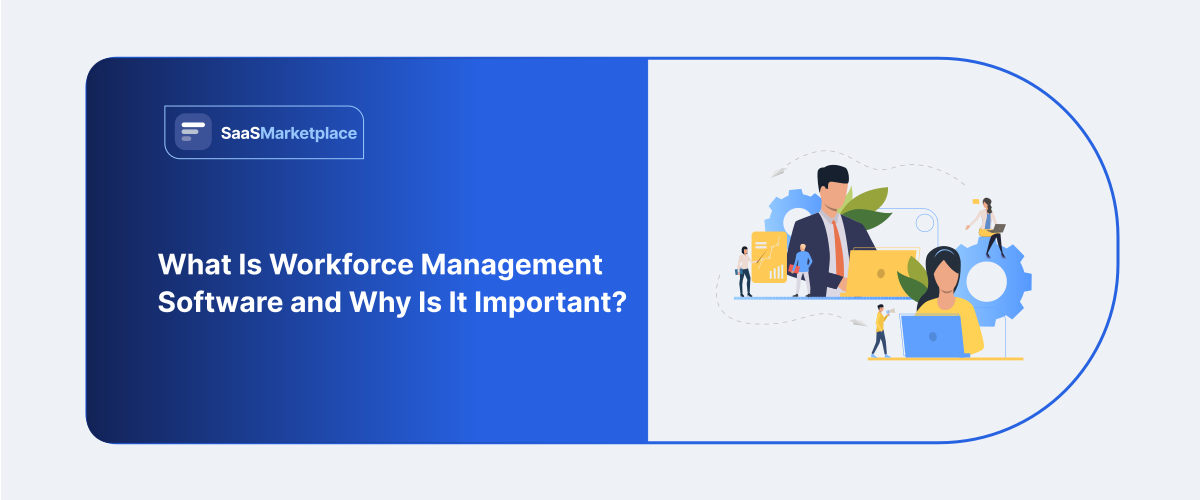
What Is Workforce Management Software and Why Is It Important?
-min.jpg)
Workforce management software covers five jobs that usually live in separate spreadsheets. Building schedules, capturing hours, coping with absence, forecasting staffing desires, and keeping the whole lot inside hard work laws are all hard work. Why it matters in 2026 is generally economic. Fewer scheduling mistakes, a decreased hard work price, better productiveness, and a supervisor who can see who's operating right now and what that shift charges.

Looking for Workforce management software ? Check out the SaaS Marketplace list of the best Workforce Management Software in USA for your business.
Watch a shift supervisor on a Thursday afternoon. She is building next week's rota in a spreadsheet, answering 3 time-off requests that arrived by using textual content, and has just labored out that one of all her team participants worked beyond regular time on Saturday. Half the schedule gets rebuilt. That is clerical work being done by somebody paid to run an operation. It also happens again next Thursday and the one after.
What Is Workforce Management Software?
Workforce management software is the platform running all of it. Scheduling, time and attendance, leave, labor rules, and analytics in one place.
How Workforce Management Systems Work
Staff clock in through a terminal, a phone, or a browser. Your pay rules then get applied to those hours automatically, overtime and shift differentials and break penalties included.
Schedules build against forecast demand instead of against whatever last week looked like. A capable workforce management system will flag the coverage gap or the approaching overtime threshold while you can still do something about it, rather than after payroll has run.
Approved hours pass through to payroll with nobody retyping anything. That single removed step eliminates where most errors used to enter the process.
Workforce Management Software vs HR Software
HR software owns the employment relationship. Employee records, onboarding, benefits, performance reviews, compensation history.
Workforce management owns the working day instead. Who is on Saturday, whether they took the break they were owed, how close somebody is to overtime this week.
The two do overlap, since plenty of HR platforms ship a workforce management module. Depth is the distinction that matters. Run shift-based operations with complicated pay rules and a general HR system's scheduling tool will disappoint you within a quarter.
Key Features of Workforce Management Software
Employee Scheduling and Shift Management
Rota building that knows who is qualified, who is available, and whose certification expires next month. Capable Employee Scheduling Software goes further and lets staff swap shifts or claim open ones themselves, which takes a manager out of every single exchange.
Time and Attendance Tracking
This is the anchor capability, and the market data supports that. Time and attendance software is projected at roughly 30.8% of the labor management software market in 2026, which tells you where most buyers start before layering anything else on.
Geofencing and biometric verification exist for operations where buddy punching costs real money rather than being a theoretical concern.
Absence and Leave Management
Requests, approvals, accruals, and balances in one place. Accrual rules vary state by state, and any employer operating across a few of them discovers how quickly that gets complicated.
Workforce Forecasting and Demand Planning
Here is where basic tools separate from genuine platforms. Demand signals feed the system, whether that is sales volume, footfall, or a service level target, and staffing recommendations come back out. The schedule generates from those numbers rather than from a manager's read of them.
Compliance and Labor Law Management
The system enforces overtime, break, and jurisdiction rules rather than trusting a manager to remember them. Avoid one wage-and-hour claim, and the platform has paid for itself, which is why this feature sells itself to finance faster than any other.
Workforce Analytics and Reporting
Labor cost against revenue, coverage against demand, and overtime broken out by department. Workforce analytics software turns operational data into the numbers finance actually asks for.
The reporting most operators find useful is comparative rather than absolute. Which site runs the most overtime? Which shift pattern produces the most absence, which manager consistently overstaffs. Standalone workforce analytics software exists, though most buyers get enough from the reporting built into their main platform.
Why Is Workforce Management Software Important?
Six reasons come up repeatedly in 2026 buying conversations:
- Overstaffing and understaffing errors go away
- Productivity and utilisation improve
- Federal and state labor law compliance becomes enforceable
- Workforce deployment becomes visible in real time
- Labor cost turns trackable and forecastable
- Employee experience improves through flexible scheduling
Reduces Scheduling Errors and Overstaffing Costs
Overstaffing a quiet shift by two people, twice a week, across eight locations produces a substantial annual figure that has never appeared on anyone's report.
Understaffing costs differently but no less. Lost sales, longer waits, unhappy customers, and the premium overtime you end up paying to cover the gap anyway.
Improves Employee Productivity and Utilization
Matching skills to shifts sounds like an obvious thing to do and almost never happens in a spreadsheet. Whoever builds it is solving for coverage, and capability comes second when the deadline is Friday.
Ensures Compliance With Labor Laws
Wage-and-hour exposure is the threat most operators underestimate till they face a claim. Automated rule enforcement prevents a proper manager from approving something the law does not now permit, that's how maximum violations truly happen.
Provides Real-Time Workforce Visibility
Knowing who is on shift right now across every location, without ringing anyone to ask. For multi-site businesses this visibility is usually the reason they buy at all.
Enables Smarter Headcount and Demand Planning
Historical patterns combined with forecast demand produce a hiring plan you can defend in a budget meeting, rather than a guess wearing a spreadsheet.
Who Uses Workforce Management Software?
HR and People Operations Teams
Policy enforcement, leave administration, and keeping the compliance record defensible.
Operations and Shift Managers
The heaviest daily users by some distance. Whether adoption succeeds comes down to one question: is building a schedule faster here than it was in the spreadsheet.
Finance Teams Tracking Labor Costs
Labor is generally the largest variable line on the P&L. Finance would rather see it weekly than discover it at month end.
Multi-Location and Distributed Businesses
Value concentrates here more than anywhere. Standardising rules across sites is nearly impossible by hand and reasonably simple inside a system.
Key Benefits of Workforce Management Software
The workforce management benefits with measurable outcomes attached:
Lower Labor Costs Through Better Scheduling
The financial case rests mostly on this. Better demand matching cuts both the overstaffed quiet shift and the reactive overtime you pay to cover the understaffed one.
Reduced Time Theft and Attendance Errors
Rounding errors, early clock-ins, and buddy punching accumulate quietly across a large hourly team. Accurate capture tends to recover more than operators expect, which is why the feature keeps appearing in ROI calculations.
Better Employee Experience and Flexibility
Employers consistently underrate self-service. Staff who can see next week's schedule early, swap a shift themselves, and check a leave balance without asking anyone report noticeably higher satisfaction. Of all the workforce management benefits, this is the one that turns up in retention numbers.
Stronger Compliance and Audit Readiness
Hours, breaks, and approvals all recorded and traceable. Useful on an ordinary Tuesday, and the difference between an inconvenience and a serious problem when a claim lands.
Types of Workforce Management Software
Employee Scheduling Software
Rota building and shift management, usually with time tracking bundled in. Deputy, When I Work, and Homebase all serve this end of the market and suit smaller hourly operations well.
Time and Attendance Software
Built around accurate capture, with breaks, exceptions, and accruals handled properly. TimeClock Plus comes up often where timekeeping depth outweighs scheduling sophistication as a requirement.
Workforce Planning and Analytics Software
Forecasting and labor optimization live here. Workforce Planning Software leans strategic, dealing with headcount next quarter rather than who covers Tuesday evening
Full-Suite WFM Platforms
UKG, Dayforce, ADP Workforce Now, and Workday all cover the entire image inside a much wider HCM suite. These healthy, complicated environments where union regulations, multi-kingdom pay guidelines, and layered compliance make something narrower unworkable.
Buying throughout classes is where budgets get wasted. Most of the body of workers who control tools sit absolutely in a single of those four groups, and an organization platform bought for a 30-character single-website online operation delivers an extremely good deal of complexity no one will ever open.
Workforce Management Software vs. HRMS: What Is the Difference?
An HRMS owns the employee record from hire through exit. Personal data, contracts, benefits, performance, and compensation history.
Workforce management owns the working day itself. Scheduling, hours, absence, and labor cost.
Plenty of platforms now claim both, which is convenient and sometimes misleading. An HRMS with a scheduling module is not the same thing as a dedicated system once you are running rotating shifts across multiple sites under union rules.
The question that sorts this out during a demo is about pay rule complexity. Ask a vendor to handle your most awkward pay scenario live, and the category difference becomes obvious quickly.
How to Choose the Right Workforce Management System
Pay rules come first, because they are the hardest thing to bolt on afterwards. Union agreements, shift differentials, predictive scheduling ordinances, and multi-state overtime all need native handling rather than a workaround.
Payroll integration is the next check. Hours flowing straight through to payroll is where the bulk of the administrative savings lie, and a connector that half works removes most of it.
Then test what a manager sees, not what an administrator sees. A system that takes longer to build a schedule than the spreadsheet did will not get adopted, whatever else it can do.
The market is projected to be around $9.76 billion in 2026 and beyond $12 billion with the aid of 2031, which means that there is no shortage of providers willing to sell you appreciably more than you want.
Future of Workforce Management in 2026 and Beyond
Demand-driven scheduling is becoming the default rather than a premium feature. Platforms increasingly take sales, footfall, or service-level signals and produce the schedule directly, instead of handing a manager a chart to interpret.
Compliance controls keep getting more configurable, which they have to as local scheduling ordinances multiply. Mobile experiences also keep improving, and that matters more here than in most software categories because this workforce is not sitting at a desk.
AI has arrived in forecasting and turnover prediction. Genuinely useful as an input. The output still depends entirely on how good the historical data underneath it is.
Conclusion
This software earns its cost where labor is your biggest variable expense and scheduling is genuinely hard. Shift-based work, several locations, hourly staff, and pay rules with layers to them. Run a salaried single-site team on fixed hours, and this is not your priority. An HR system will cover what you need. The honest test takes ten minutes. Count the hours your managers put into scheduling and timesheet reconciliation each week, multiply by what those hours cost, and set it against a platform quote. Across most multi-site hourly operations, the comparison is not close. Worth reading alongside this: the best HRMS with workforce management covers the combined platforms, and payroll and workforce management together explain why the integration between the two matters more than either feature set alone.
FAQ's
HR software owns the employee record, like contracts and benefits, while workforce management owns the working day, like scheduling and hours.
Core features include scheduling, time and attendance tracking, leave management, demand forecasting, and labor law compliance.
Yes, it enforces overtime, break, and jurisdiction rules automatically rather than relying on managers to track them manually.
Multi-location and shift-based operations with hourly staff and complex pay rules see the most value.
An HRMS manages the employee record from hire to exit, while workforce management handles scheduling, hours, and labor cost day to day.