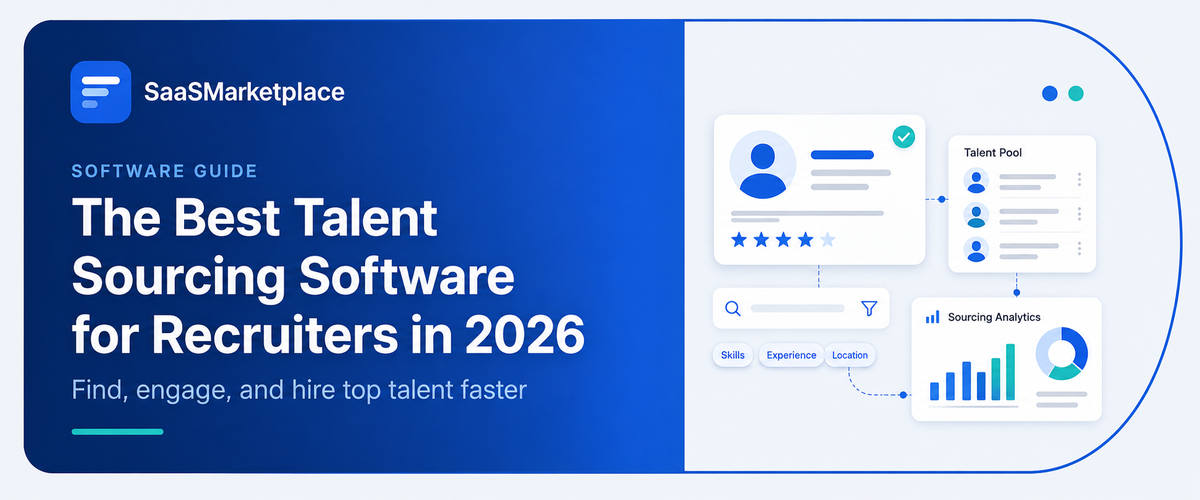
The Best Talent Sourcing Software for Recruiters in 2026
-min.jpg)
Modern talent sourcing software has kind of morphed into a hyper-intelligent automated talent engine thing, meant to spot, judge, and turn passive candidates into real conversations way faster than the old-school manual rummaging. Instead of those stiff syntax strings, you get natural language AI search, so recruiters can ask in more human terms, plus real-time profile enrichment across hundreds of global databases. Then there are the multi-channel engagement sequences, fully automated, so the outreach keeps moving without constant hand-holding. Contemporary platforms tend to lean hard on deep contextual understanding of candidate attributes, not just boring keyword matching. They often include advanced diversity filters, automated contact verification, and predictive analytics that help indicate what happens next. When search, pipeline management, and outreach all flow together as one seamless workflow, today’s top-tier sourcing tech reduces those annoying top-of-funnel slowdowns. And it basically frees talent acquisition teams to spend more time on actual candidate relationships, not on repetitive clicks.
What is Talent Sourcing Software?
Talent sourcing software is this sort of specialized tech platform made to help recruiters get ahead of things, proactively find, reach out to, and gradually shape candidate pipelines long before a job opening even starts showing up. Instead of only doing what traditional recruiting software or Applicant Tracking Systems (ATS) do basically managing the inbound stuff these tools work upstream, like they’re hunting through external networks, internal-ish databases, and social media. The goal is to locate solid professionals, especially passive candidates who aren’t out there refreshing job boards all day. A lot of modern platforms then add artificial intelligence into the mix, so it can interpret candidate information, line up matching skill sets in more complex ways, surface verified contact details, and run multi-channel messaging efforts, sometimes at scale. So yeah, when you automate the top of the recruitment funnel, manual candidate research becomes a more scalable, more data-driven routine.
And in the US hiring scene, things are fast, like really fast, so talent sourcing software moved from a nice idea to almost a day-to-day operational requirement. With high-caliber domestic talent in areas such as tech, healthcare, and engineering still staying extremely competitive, American companies can’t keep depending on that passive post-and-pray method. US talent acquisition teams use these advanced sourcing platforms to cut down time-to-hire and also reduce acquisition costs, while still keeping an eye on strict domestic compliance rules and data privacy expectations. Plus, since remote and hybrid work arrangements remain strongly embedded across the US workforce, sourcing tools let enterprise organizations and recruitment agencies map talent pools nationwide, aim for underrepresented demographics for DE&I efforts, and snag top-tier talent before competitors even get their act together, in some cases.
Why Do US Recruiters Need Talent Sourcing Software in 2026?
The 2026 US hiring landscape looks like this ongoing paradox: lots of applicants show up, often because AI-generated resumes keep pouring in, but at the same time there is this real shortage of checked, specialized talent. Traditional post-and-pray job listings keep dumping hundreds of applications into AI recruiting teams, and it turns into more noise than pipeline depth, or at least that’s what it feels like. Talent sourcing software helps cut through the volume by changing the whole mindset from passive applicant handling to active, precision matching. Instead of waiting on whoever happens to apply, recruiters can aim at passive talent professionals who are not actively job hunting, yet have the exact capability stack needed. That way, US teams can form qualified candidate pools before the role is sitting open for months.
Speed and personalization are basically no longer optional advantages in the American market. The best US candidates in high-demand areas like artificial intelligence, healthcare, and engineering can get dozens of recruiter touchpoints in a single month. Modern sourcing platforms use natural language search, real-time profile enrichment, and automated multi-channel sequencing, so outreach becomes hyper-personalized without taking over someone’s entire week. Recruiters don’t have to spend hours building complex Boolean strings or writing separate emails one by one; they can use intelligent tools to engage candidates across email, SMS, and professional networks at the same time. Net result: time-to-hire drops, and the process feels way less chaotic.
Trying to navigate the current US market means you have to stick to constantly evolving compliance, skills-first hiring directives, and data-backed diversity standards, pretty much all at once. Big enterprise companies and agencies lean on sourcing software so they can run an objective, competency-based discovery process instead of leaning on pedigree or those traditional resume screens. With the built-in analytics, talent acquisition leaders can track pipeline health, keep EEOC plus state-level compliance in good standing, and fine-tune outreach tactics in real time. And honestly, sourcing platforms aren’t just productivity tools anymore; they are really the central driver of talent strategy for US businesses.
What Features Should You Look for in Talent Sourcing Software?
1. Natural Language AI Search and Matching
That old Boolean syntax is basically obsolete. Today’s platforms use natural language processing, so they can make sense of the conversational stuff people actually type, like Find senior backend engineers in Austin who transitioned to AI/ML startups. They also match profiles with more context, not just whatever keyword density you happened to include.
2. Multi-Source Talent Aggregation
The best tools keep pulling information from 30+ public sources, code repositories, academic journals, and niche portfolio networks. In practice, this kind of consolidates a candidate’s whole footprint into one unified 360-degree view, so it can surface talent that normal job boards usually miss.
3. Automated Data Verification and Contact Discovery
With real-time enrichment, the system can surface and validate a person’s email address, direct phone number, and current social profiles. This reduces bounce rates, plus it helps outreach actually lands where it should, in real inboxes.
4. Multi-Channel Automated Engagement Sequences
You want sourcing software that lets recruiters set up, more or less, personalized automated drip sequences, across email, SMS, and professional messaging networks, all from a single platform. Also pay attention to the dynamic personalization tags and the kind of response-tracking analytics that actually show what’s happening, not just clicks or opens.
5. Talent Rediscovery & ATS Integration
Bi-directional sync with your Applicant Tracking System (ATS) matters because it helps keep duplicate outreach down. The better tools can also quickly scan your existing applicant archive, sort of like talent resurfacing, and pull back overlooked candidates for new openings, before you spend budget on brand new sourcing.
6. DE&I Sourcing & Bias Mitigation Controls
For diversity objectives and to stay within compliance rules, the platform should include anonymized search views, meaning it hides photos, names, and graduation dates, plus it should come with strong analytics. Those metrics should help track diversity representation across your candidate pipelines, so you’re not just guessing after the fact.
How Does Talent Sourcing Software Save Recruiters Time?
1. Eliminating manual search and Boolean string Creation
Instead of wasting hours manually crafting tricky Boolean search queries across multiple platforms, recruiters are now using natural language AI search, so they can ask about job requirements more naturally. The tool immediately aggregates and sorts strong matches from many web sources in just a few seconds, more or less.
2. Automating contact discovery and data Enrichment
Recruiters also don’t have to burn time hopping between websites or sending blind network requests just to find the right contact details. The sourcing software automatically surfaces, enhances, and checks personal emails, phone numbers, and social profiles in real time, without the usual hassle.
3. Deploying automated drip engagement Sequences
Rather than writing and sending one-off personalized cold email marketing, recruiters can configure multi-channel drip sequences. The system manages the initial outreach, follow-ups, and even channel switching (email, SMS, professional networks) on its own until a candidate actually replies.
4. Instantly Rediscovering that Hidden Talent sitting inside old ATS Records
Instead of restarting every hiring push from zero, sourcing software rummages through an organization’s internal Applicant Tracking System (ATS) archive. It then lines up past, already pre-screened candidates with new open roles, which can save hundreds of hours of the usual fresh web digging research.
5. Cutting down on the Administrative grind with self-scheduling Tools
Playing calendar ping pong, just to arrange quick introductory phone screens, can be a huge bottleneck. Modern sourcing platforms include direct scheduling links inside outreach sequences, so the candidate can choose an available time, and it auto-syncs back to the recruiter’s calendar. No more back-and-forth, basically.
6. Putting pipeline Management into one Single Dashboard
Recruiters lose less time because they aren’t constantly switching between separate databases, spreadsheets, email clients, and outside professional networks. When discovery, pipeline tracking, messaging, plus analytics are handled inside one unified workspace, the administrative load drops a lot.
5. Which Talent Sourcing Software Options Are Best for Small US Businesses?
1. ClearCompany
ClearCompany is sort of an end-to-end talent acquisition suite meant for small to mid-size US businesses that want more structured hiring. It uses an AI-driven Applicant Tracking System, the ATS part, to make candidate sourcing feel easier by scanning talent databases, pushing job listings out automatically, and using predictive candidate matching. There are also engagement tools inside, so recruiters can run focused email campaigns and set up interviews without jumping around between tools. Honestly, the main vibe is helping lean HR teams stay aligned with US labor laws while keeping pipelines smooth from sourcing all the way through background checks, then onboarding. So if you’re a growing business and you need a standardized, compliant recruiting workflow without juggling disconnected software, this feels like a solid fit.
2. Deel
Deel is a global HR, payroll, and hiring platform aimed at helping small US businesses reach remote, nationwide, and even international talent pools without the usual hassle. It includes the Deel Talent marketplace, which uses AI candidate matching plus specialized recruiter networks to find candidates that have already been vetted across different markets. The system also has built-in compliance engines that take care of localized US state-level taxes, contract terms, and classification rules in a more automatic way. Once someone accepts an offer, Deel’s single dashboard can turn candidate records into onboarding and payroll profiles with just one click. Overall, it’s best for US teams that want to source, hire, and manage distributed employees or contractors without setting up local entities.
3.HiBob (Bob)
HiBob is a modern, human-centric HRIS; it kind of puts people first while still doing the usual HR stuff. It comes with Bob Hiring, a fully integrated recruitment and sourcing module, made for companies that move fast and grow even faster. So for small US businesses, it helps manage the candidate pipeline, run the hiring workflows with collaboration, and reach passive talent more directly. The interface is intuitive and kind of social-style, which sounds small, but it matters. Overall, the platform really leans into candidate experience and company culture; it bridges that gap between finding great people early on and getting them onboarded later. And yeah, there are built-in analytics, so you can see hiring speed, pipeline diversity, and candidate metrics in real time. HiBob is a good fit for tech-forward US companies who want a talent platform that unifies hiring and HR operations in one place.
4. Leapsome
Leapsome is a unified people enablement platform, aimed at helping small US businesses smooth out candidate sourcing, pipeline evaluations, and post-hire growth inside a single ecosystem. People often mention it for performance and learning management, but it also has recruiting and sourcing integration that focuses on competency-based hiring and structured candidate scoring. The idea is that recruiters can source candidates using predefined skill frameworks, so decisions stay objective, and they stay aligned with company goals from the very first contact. The platform also includes automation for outreach follow-ups, continuous feedback loops, and interviewer alignment so top candidates don’t just slip away quietly. In general, Leapsome works best for growth-oriented US businesses that want structured, skills-first talent acquisition and stronger employee retention over time.
How Does AI-Powered Talent Sourcing Software Change Hiring?
1. Switching from Keyword Density to this more real, true contextual sense of things
Earlier sourcing leaned on harsh Boolean strings plus direct keyword matching, and yeah, it sometimes missed people who were clearly a match. With AI search, NLP digs into the actual underlying story skills, job trajectory, what’s going on in the industry, and the neighboring or adjacent expertise too.
2. Cutting Time-to-Hire by Dynamic, always-Refreshing Data Collation
Instead of recruiters burning hours with a pile of browser tabs just to figure out who a person is, AI can pull live information from repositories, open data center , and professional networks, then fold it into one unified candidate profile, kind of a 360-degree view with less chaos.
3. Intelligent Talent Rediscovery that doesn’t feel forgotten
Systems can continuously rescan an organization’s internal Applicant Tracking System, the ATS. Then AI lifts up those past applicants that seemed to vanish, but later picked up the exact experience needed. So cold resume vaults start behaving like warmer candidate pipelines, without adding extra ad spend.
4. Automated, Hyper Personalized Candidate Outreach
AI tools can write messaging that actually fits the candidate’s background and achievements, not just some generic templates. And when it runs automated multi-channel sequences across email, SMS, and professional networks, recruiters can get better response rates meaningfully with fewer manual pings and fewer follow-ups.
5. Skills-First Matching, with a bias reduction side effect
AI platforms help limit unconscious bias by anonymizing candidate profiles. Photos, ages, names, and prestige institutions can be hidden, and then scoring is based on verifiable skills, competencies, and role compatibility only.
Conclusion
Choosing the right talent sourcing tool can really twist your recruiting pipeline in ways you did not expect, but honestly, judging today’s AI-heavy platforms needs some clear market visibility. Going with a centralized SaaS marketplace helps your talent acquisition crew quickly see, compare, and purchase top business software, made to fit the way you hire. When you benchmark the important stuff, like compliance requirements, multi-source aggregation, and pricing that is actually transparent, you can procure a solution with more confidence and still simplify the whole recruitment workflow. Give your recruiters the right software stack now so you stay competitive and help your team land great talent faster, without the usual delay.
FAQ's
An ATS manages candidates who have already applied to job openings, whereas talent sourcing software proactively discovers and engages passive candidates across public web sources before they apply.
Natural language AI search allows recruiters to type conversational role requirements instead of complex syntax strings, enabling deeper contextual understanding of candidate skills and adjacent experience.
Yes, sourcing software improves engagement by utilizing verified direct contact channels and automated, hyper-personalized multi-channel follow-up sequences across email, SMS, and professional networks.
Sourcing platforms offer anonymized search views—hiding names, photos, and graduation dates—alongside advanced diversity filters to minimize unconscious bias and track equitable pipeline metrics.
Yes, modern platforms offer scalable or tier-based pricing models that allow small teams to automate candidate discovery, eliminate manual research, and hire efficiently without maintaining large recruiting departments.