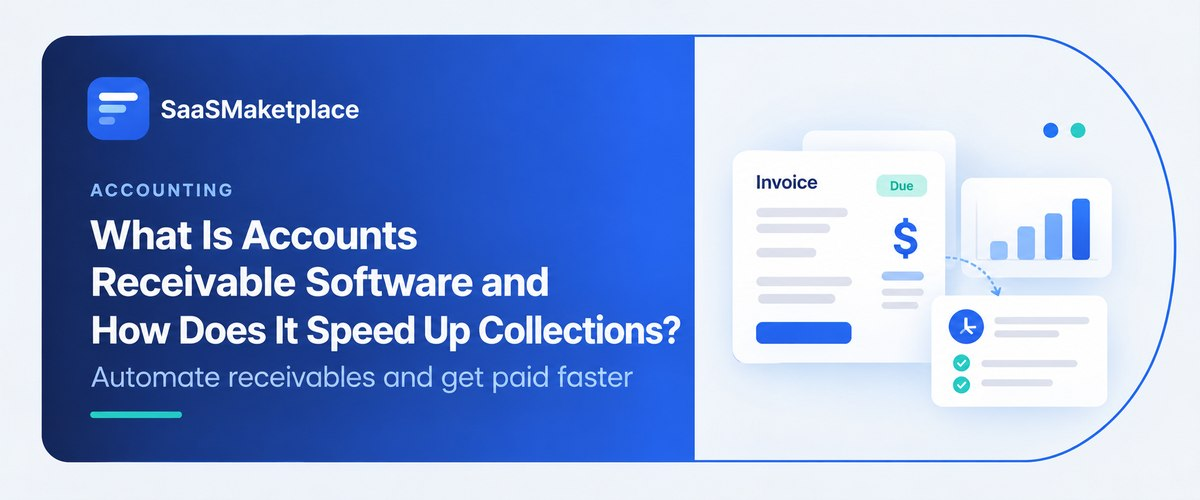
What Is Accounts Receivable Software and How Does It Speed Up Collections?
-min.jpg)
Receivables tools help bridge that divide. This system generates bills, dispatches them, monitors payment status, alerts those unpaid, and links funds to specific invoices. Rather than using spreadsheets plus calendars packed with reminder notes, users gain one location displaying precisely who owes money and when it is late.
Typically, good AR software handles several main tasks. It creates and issues invoices, even those that repeat. It allows clients to pay online using ACH, credit cards, or a payment link. It dispatches reminders based on a schedule you define. Also, it records all data into your general ledger, ensuring books remain correct without additional typing. The goal is not to make collections seem forceful. Rather, it is the reverse. When reminders are sent automatically and paying becomes simple, most customers just pay earlier, and you do not need awkward phone calls.
Operational Vulnerabilities of Manual Accounts Receivable (AR)
Depending on manual accounts receivable processes creates structural bottlenecks which impair cash flow, reduce working capital predictability, and increase credit risk. Though manual workflows might suffice for early-stage operations, they fail to scale effectively because of several core friction points:
- Delayed Billing and Late Money Taking: Uneven invoice times make Days Sales Outstanding (DSO) go up. Manual check billing loops hold back payment start points, causing bad cash flow delays.
- Inconsistent Collections Management: Manual follow-up efforts frequently cause partial account attention—focusing on bigger sums yet ignoring minor debts. Inconsistent contact methods create uneven voice, differing client encounters, and unpredictable follow-up schedules.
- Friction in Payment Processing: Complicated money movements needing manual bank moves or paper checks raise payment friction. Removing obstacles at the checkout step speeds up settlement times.
- Reconciliation and Cash Application Bottlenecks: Mismatched remittances and bundled payments need labor-heavy manual reconciliation. Late cash posting ruins AR ledger precision, creating faulty aging reports and incorrect delinquency markers.
- Limited Credit Risk Visibility: Without automatic aging analysis and past trend data, small changes in client payment habits like gradual payment delays remain unseen until accounts turn uncollectible.
How AR Software Speeds Up Collections
Invoices go out on time
Automating cuts initial delays away. Invoices get generated right from finished orders, signed contracts, or set schedules. With subscriptions or retainers, that same bill sends monthly with no human touch. Just faster billing often shrinks the time waiting for money.
Paying becomes easy
Current software puts a "pay now" button on each bill. Clients may pay via ACH move, credit card, or occasionally digital purse within sixty seconds, needing zero lookup of account digits. Less friction causes quicker settlement. Only realize that card charges include handling costs, thus many firms urge ACH for bigger bills.
Reminders happen automatically
You establish the schedule just once. Perhaps a kind reminder a couple days prior to the deadline, then again on that day, plus stricter messages at seven, fourteen, and thirty days overdue. The program dispatches these, and you may alter the tone per customer. Your most valuable long-time client receives a soft note, whereas a frequent late payer gets a tougher one.
Payments match themselves
Matching incoming funds against outstanding bills is technically known as cash application. Programs handle most of this work automatically through parsing remittance data and bank connections. This action saves many hours, ensuring accounts receivable figures show actual status instead of estimates from prior weeks.
Aging reports show trouble early
An aged report arranges unpaid bills based on their duration: current, 1 to 30 days overdue, 31 to 60, and similar categories. This represents among the most helpful perspectives within accounting. Using programs, it refreshes constantly, allowing detection of delayed accounts quickly and action prior to classification as bad debt.
Disputes get resolved faster
Most late payments stem from issues other than refusal to pay. Frequently there exists a query: the cost seems incorrect, shipment quantity fell short, or a purchase order identifier is absent. Online customer hubs and common notes allow both parties to view the bill and its record, meaning the inquiry receives resolution instead of persisting.
Cash flow becomes predictable
When you understand what remains unpaid and typical customer behavior patterns, forecasting becomes more accurate. Numerous groups additionally monitor days sales outstanding (DSO), estimating average time needed to receive payment following a transaction. A declining DSO indicates clearly that collection efforts are getting better.
Features to Look For
|
System Feature |
Strategic & Operational Impact |
|
Automated Invoicing & Recurring Billing |
Eliminates manual dispatch delays, standardizes billing schedules, and accelerates revenue recognition. |
|
Integrated Digital Payments (ACH, Cards, Digital Wallets) |
Reduces customer payment friction, accelerating settlement velocity and lowering overall DSO. |
|
Automated Dunning & Payment Reminders |
Enforces a consistent follow-up cadence while maintaining standardized, professional client communication. |
|
Cash Application & Automated Bank Feeds |
Programmatically reconciles incoming payments against open invoices, eliminating manual ledger matching errors. |
|
Real-Time Aging Analytics & Dashboards |
Delivers actionable visibility into credit exposure, cash flow trends, and delinquent account risks. |
|
Self-Service Client Portal |
Empowers customers to independently view invoice histories, download statements, and settle balances 24/7. |
|
Multi-Jurisdiction Sales Tax Automation |
Streamlines compliance with complex US state and local tax regulations, reducing audit exposure. |
|
Bi-Directional ERP / Accounting Integration |
Synchronizes transactional data automatically, eliminating redundant data entry and financial discrepancies. |
|
Enterprise Security (SOC 2, Encryption, PCI-DSS) |
Ensures rigorous data protection, regulatory compliance, and safe handling of sensitive payment credentials. |
How AR Software Fits With the Rest of Your Accounting Tools
AR does not exist by itself. It links with your remaining financial systems, and the optimal configuration relies upon the type of organization you operate.
Accounting software form the foundation level. They store your main ledger and financial reports, plus many receivables systems connect to them directly. Bills and cash receipts enter your records automatically, making monthly closings quicker.
Accounting AI tools provide prediction layers and spotting patterns. Certain systems guess if invoices might get paid late, suggest when to send reminders, or mark strange actions. This helps, yet forecasts rely on data quality, so view them as advice and keep humans involved.
Cloud-based accounting programs mean that ledgers reside online, allowing staff, bookkeepers, and accountants to view identical up-to-date figures remotely. Many recent accounts receivable utilities function within this setting and link together with minimal clicks.
Accounting systems for charities deal with money owed which differs from standard billing documents. Rather than simple client statements, such groups frequently monitor promised donations, grant income due, and charges for services provided. Every single one might possess unique rules attached to it. Specialized programs follow these amounts according to specific funds and individual givers, plus they help create reports required by funding sources and governing councils.
Payroll accounting software links with AR at one key point: staffing agencies, consulting firms, and contractors frequently bill clients according to hours logged, and these hours originate from payroll or timesheet records. When both systems communicate, invoices form from approved time, and labor expenses align with the income produced.
Most retail accounting software handles point-of-sale payments made immediately, yet accounts receivable remains relevant. Retailers possessing wholesale clients, corporate accounts, store credit options, or layaway schemes require tracking outstanding debts. Instruments merging POS information with AR simplify managing these internal accounts significantly.
Software for fixed assets might look unconnected, yet it links up during sales or trades of gear. Should a purchaser pay later, that amount counts as a receivable, and the deal makes a gain or loss versus the asset's current book value. Connecting them ensures both the asset register and your receivables stay aligned properly.
ERP systems link finance alongside sales, stock control, and buying functions. Within such an ERP, accounts receivable operates within a full "order-to-cash" workflow where an order arrives, items dispatch, billing creates, and funds gather, everything handled by single platform. This fits bigger or intricate companies well. Tiny firms usually discover that a dedicated AR utility linked to their bookkeeping program moves quicker and costs less to set up.
How to Choose the Right AR Software
You don't need a months- large project: Follow these actions and you will reduce scope fast. Check current status. Record invoice counts sent, usual payment duration, and sums past sixty days overdue. These figures form your starting point.
- Determine which systems require connection: Inquire with every vendor exactly how their software synchronizes with your accounting or ERP platform and specify what information transfers in both directions.
- Fit it to your specific field: Nonprofits require fund and grant tracking. Wholesalers require credit terms. Professional service firms might need time-based billing.
- Observe how your clients settle payments: Verify if the methods align with their actual operations, be it ACH, cards, or other means.
- Verify safety and rules: Inquire regarding ciphers, permission limits, SOC 2 papers, and PCI DSS adherence for card transactions.
- Check overall expense: Count monthly costs, per-bill fees, and transaction handling rates, then question how prices shift when scaling up.
- Test using actual data: Execute a demonstration or trial utilizing your specific clients and bills, avoiding the refined example ledger.
Best Practices for AR Automation Rollout: Strategic Framework
1. Data Foundation & Hygiene
- Remove duplicate entries, old contact info, and bad billing data.
- Ensure remittance delivery directly targets decision-makers.
2. Policy & Governance Alignment
- Standardize baseline payment terms before configuring automation logic.
- Write clear dunning rules that show tone, timing, and steps to escalate.
- Check rules following FDCPA/state rules for consumer-facing or third-party collection workflows.
3. Phased Deployment Strategy
- Pilot the system with high-frequency, dependable records prior to complete organizational deployment.
- Lessen operational risk and sharpen message alerts within the first stage.
4. Performance Tracking & Iteration
- Set monthly targets regarding DSO metrics, mean payment durations, and outstanding debt totals.
- Optimize communication timing based on observed payment behaviors.
5. Stakeholder & Sales Integration
- Align Sales and Account Management on outreach parameters.
- Use account history to divide customers needing personal contact from those suited for automatic distribution.
Conclusion
Receivables tools help issue bills faster, simplify payment processes, track reminders regularly, and spot issues early. If you select cloud accounting systems, integrate artificial intelligence modules, or operate complete ERPs, the aim remains clear: convert finished tasks to liquid funds rapidly and efficiently. Examine where capital is currently trapped. Are delayed statements, sluggish remittances, or vague chasing the cause? Resolve those items initially. Next schedule a demonstration with two or three vendors and test their solutions using actual client billing documents.
FAQ's
Accounts receivable is money customers owe your business. Accounts payable is money your business owes to vendors.
Often, yes. If you spend hours each week creating invoices, chasing payments, or matching deposits, automation can save real time and help you get paid sooner. Many affordable cloud tools are built for smaller teams.
Usually not, as long as the tone is polite and the schedule is reasonable. Most customers appreciate a clear reminder and an easy way to pay. You can also customize messages for important relationships.
No. It works alongside it. The AR tool manages billing, payments, and follow-up, while your accounting software keeps the official financial records.