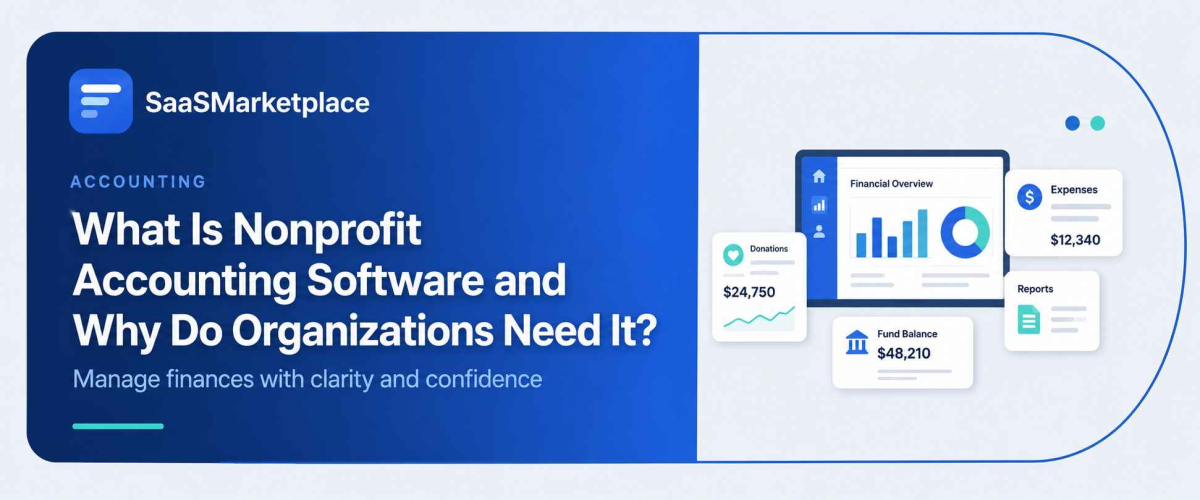
What Is Nonprofit Accounting Software and Why Do Organizations Need It?
-min.jpg)
Operating a charitable group across India involves managing complex social initiatives alongside highly strict regulatory laws. Unlike standard corporate bodies that track simple profits, social welfare groups must measure success by how efficiently they deploy resources toward their core mission. Managing these fast-moving financial pieces presents constant operational hurdles for internal administrative teams. Depending on basic accounting tools and spreadsheets often results in compliance issues, reporting inconsistencies, and slow project implementation.
 Looking for Nonprofit Accounting Software? Check out SaaS Marketplace List of the Best Nonprofit Accounting Software in USA for Your Business
 Navigating these challenges tends to lead social sector executives to one particular crossroads in their technology strategy: the point where generic software solutions give way to purpose-built systems. Transitioning your primary ledger architecture to modern Nonprofit Accounting Software ensures absolute compliance with tracking donor restrictions, managing multi-tiered grant inputs, and keeping finances fully transparent. This exhaustive guide explores the core frameworks, foundational features, and direct organizational benefits of using purpose-built tools to secure your mission's long-term future.
What Is Nonprofit Accounting Software?
Nonprofit Accounting Software is a specialized financial platform that handles the unique data structures, tracking needs, and filing requirements of charitable and non-governmental organizations. Unlike generic commercial applications that prioritize maximizing net income, this software centers completely on tracking source stewardship and verifying accountability. It changes how capital data moves through an organization by shifting the core chart of accounts away from profit-driven layouts toward designated fund balances. Many organizations also integrate Document Management Software to securely organize donor agreements, grant documents, financial statements, and compliance records in one centralized repository.
How it differs from regular accounting software
Traditional enterprise software uses a standard double-entry format to measure corporate profits, tracking general revenues against operational expenses to determine overall shareholder value. Conversely, Nonprofit Accounting Software runs on a specialized fund framework that segregates money based on specific, legally binding usage parameters set by donors. While regular business applications treat cash as a singular pool, a dedicated social ledger splits balances into separate columns, ensuring restricted funds cannot be mixed with general operational reserves.
Why Do Nonprofits Need Accounting Software?
1. Better Financial Management
Implementing specialized digital tools elevates how social sector managers execute their core Nonprofit Finance Management workflows every day. It provides administration teams with an honest, real-time look at operational cash flows across different regional branches. Instead of waiting for paper ledgers to clear, directors can track income and expenses instantly on centralized screens. Integrating Business Intelligence Software further helps nonprofit leaders analyze financial trends, monitor program performance, and make data-driven funding decisions through interactive dashboards. This direct visibility enables smarter Budget Management, allowing leadership to check variances early and keep core project spending within pre-approved targets.
2. Donation and Grant Tracking
Charitable groups handle money from a wide array of sources, including individual public donations, international corporate grants, and state welfare allocations. A purpose-built platform automates Fund Management by tagging every inbound transaction to its precise source right at the point of receipt. This continuous tracking helps compliance managers monitor donations, track remaining balances, and prove that every rupee is spent in absolute accordance with original sponsor instructions. Many nonprofits also connect CRM Software to maintain donor relationships, manage fundraising campaigns, and improve communication with contributors.
3. Improved Transparency and Reporting
Maintaining high Financial Transparency is essential for retaining community trust and securing recurring program funding. Utilizing modern financial systems enables teams to build detailed public statements and official compliance reports with a few clicks. The system removes the friction from compiling complex year-end accounts, ensuring that external auditors and regulatory bodies can verify organizational transactions easily without sifting through loose paper files. Organizations frequently use Document Control Software to maintain version-controlled financial records and ensure compliance documents remain accurate and audit-ready.
Key Features of Nonprofit Accounting Software
- Advanced Fund Accounting: Automatically separates cash assets into distinct, independent compartments to guarantee that restricted funds stay legally protected.
- Granular Expense Tracking: Tags all field purchases, vehicle costs, and program supplies to specific project codes for precise accountability.
- Integrated Donor Management: Syncs individual contribution logs with the main general ledger to simplify receipt distribution and tax exemption workflows.
- Dynamic Budget Management: Establishes flexible financial limits for different organizational areas and automatically notifies a user if they are at risk of exceeding the limits.
- Automated Accounting Software: Eliminates human errors in financial reporting by automatically entering the information from bank feeds into specified fields.
- Custom Financial Reporting Software: Allows for quick generation of financial statements, including balance sheets and income statements, as well as customized reports for review by the board of directors.
- Seamless Payroll Integration: Connects monthly staff remuneration and statutory benefit deductions directly with project-specific administrative accounts.
Benefits of Using Accounting Software for Nonprofit Organizations
Transitioning your team over to specialized Nonprofit Accounting Software delivers immediate structural enhancements to your entire administrative architecture. The most visible operational win is the massive amount of time saved across your internal finance teams. By eliminating the need for manual ledger reconciliation, you save your accountants’ time that would have been spent chasing paper trails to verify that each is authentic and correctly categorized. This time can then be redirected into strategic planning and field resource management, extracting maximum value from every employee.
In addition, automated compliance reduces the risk of human error and prevents accounting mishaps from reaching your end reports. Having tight controls on your finances and being able to report with precision enables your directors to make decisions using the most reliable data at their disposal. The ability to rapidly access project data can make the difference between launching a well-targeted awareness campaign or having to scramble to explain why a donation has not yet been applied to an account.
Finally, utilizing a dedicated platform builds an unshakeable layer of institutional accountability across your entire network. Maintaining flawless Audit Compliance through automated transaction logs and historical digital records proves to corporate sponsors that your group operates with high integrity. This solid reputation makes it much easier to clear complex regulatory audits and unlock large-scale development grants over the long term.
Nonprofit Accounting Software vs Traditional Accounting Methods
Relying on traditional manual methods forces finance teams to spend hundreds of hours building complex Excel matrices to split up restricted cash balances. This old approach creates massive data blind spots because changes made in one sheet do not update related project files automatically, exposing the group to human error. Additionally, basic business platforms lack the specific features required to isolate administrative overhead from direct program costs during year-end analysis.
Upgrading to modern Fund Accounting Software removes these structural limitations by running all operational accounts on a shared, multidimensional ledger. When an invoice is processed on-site, the application dynamically updates all connected grant tracking, project budget, and compliance lines simultaneously. This automated sync eliminates the need for manual calculations, secures complete database consistency, and shields the organization against severe regulatory compliance penalties.
How to Choose the Best Nonprofit Accounting Software?
Selecting the perfect platform requires a clear understanding of your current operational bottlenecks and your long-term program roadmap. To make your technology search straightforward, follow this structured blueprint to check different market choices:
- Review Fund Segregation Mechanics: Ensure the tool supports complex, multi-tiered fund structures natively without requiring customized plug-ins or external spreadsheet patches.
- Check Indian Regulatory Compatibility: Verify that the system handles Indian statutory requirements smoothly, including tracking foreign funding logs and structuring automated tax deduction fields.
- Assess Interface Simplicity: Test the system with your daily administrative workers and site coordinators to confirm that the user screens are clean and easy to navigate without advanced technical training.
- Confirm Software Integration Capabilities: Look for an engine that connects smoothly with your existing client tools, internal mobile apps, and primary banking networks to secure fluid data flows.
- Evaluate Deployment Timelines: Ask software providers for clear, realistic implementation schedules to ensure your organization can migrate historical data and train users without stopping current field programs.
Future Trends in Nonprofit Financial Software
The social sector tech space is shifting rapidly, driven by an urgent global demand for instantaneous financial data visibility and faster field deployment. Modern cloud frameworks are incorporating predictive automation engines that can forecast upcoming cash flow shortages by analyzing past donation seasons against current operational spending speeds. This allows administration teams to scale down overhead expenditures proactively before experiencing severe budget crunches.
Simultaneously, platforms are introducing hyper-secure distributed ledger technology to provide unalterable, transparent records for cross-border philanthropic transactions. This development lets international grant makers monitor the deployment of capital down to the exact village or field task in real time. As regional transparency compliance mandates tighten globally, deploying modern, adaptable financial platforms will be an absolute baseline requirement for any organization aiming to scale its social impact.
Conclusion
In conclusion, choosing your foundational accounting methodology shapes how securely your social organization will operate for decades to come. While manual ledgers or generic corporate tools might appear sufficient for small-scale operations, they create dangerous data silos that stall project execution and expose your mission to compliance risks. Transitioning to a dedicated Nonprofit Accounting Software setup breaks down administrative barriers by uniting your donor logs, grant files, and field expenses into a single, compliant ecosystem.
FAQ's
Nonprofit platforms run on a specialized fund framework designed to segregate cash balances into independent columns based on donor-imposed restrictions.
It automatically generates unalterable digital audit trails for every inbound contribution and outbound expense processed by the organization.
Yes, modern platforms feature automated foreign currency valuation modules that log overseas contributions at the exact exchange rate of the transaction day.
Yes, reputable software providers host your financial files inside enterprise-grade global data centers equipped with continuous monitoring and automated encryption protocols.
Spreadsheets lack built-in internal controls and automated audit tracks, making them highly vulnerable to accidental data deletion and formatting bugs.