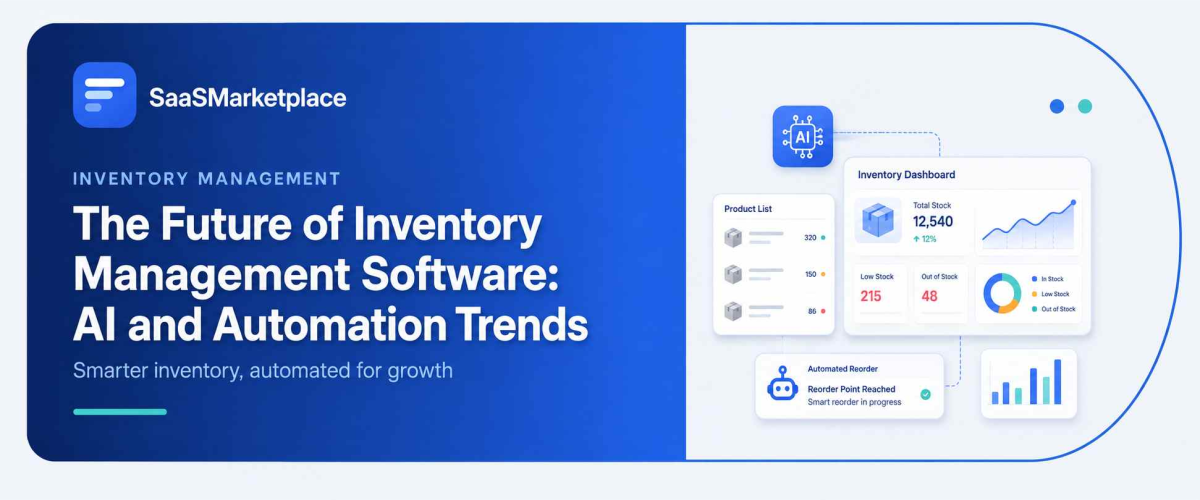
The Future of Inventory Management Software: AI and Automation Trends
-min.jpg)
The need for omnichannel capabilities, labor shortages, and supply chain disruptions is accelerating the transition of the U.S. inventory management software sector into smart, fully automated systems. Many new inventory management systems are changing from static databases into active centers of command thanks to advances in AI, IoT technologies, and automated replenishment processes. As a result, the latest versions of inventory management systems take advantage of the proper data available to U.S. businesses and help them to lower holding costs, avoid stockouts, and make supply chain management a profitable activity.
How Is AI Transforming Inventory Management Software for US Businesses?
As a result of the growing omnichannel demands, lasting labor shortages, and constant changes in the supply chain for the U.S. inventory management software market, a functional shift towards smart, self-executing processes is taking place. Today's inventory systems transition from conventional, passive databases to active centers of command based on predictive AI technology, non-stop IoT monitoring, and inventory restocking. The new generation systems are capable of processing huge amounts of different data, which include macroeconomic indicators and trends in consumer behavior, that help U.S. organizations decrease inventory expenses and increase efficiency in supply chain management.
In their working center, AI changes antiquated inventory tracking features into proactive company planning. Machine learning programs process difficult factors like hyper-local climate changes, targeted trading activities, regional shipment delays, and e-commerce cart situations to calculate the demand for inventory correctly so that they do not need human reorder controls. Instead of this, AI networks keep the right balance of safety stock between the local distribution channels, place the order automatically, and change the delivery paths depending on the actual situation of shipping in the USA.
What Automation Trends Are Shaping Inventory Management Software in 2026?
Modern inventory management systems evolve from a passive system of inventory tracking to an active system of inventory operations as a result of fierce elimination of low margins, labor deficit, and increasing prices for logistics services. The main trends of automation of inventory control comprise:
- Automatic Replenishment of Inventory: Machine-learning algorithms track changes in stock turnover and lead times and determine the level of safety stock on a regular basis and arrange suppliers' orders automatically without the participation of any human manager.
- Auto-auditing through IoT and RFID: Laborious manual inventory counting is being replaced with RFID gates, battery-less IoT sensors providing information about stock movements, and advanced warehouse systems able to measure stock levels in real time.
- Automated dynamic slotting: Artificial intelligence is able to analyze the historical data concerning the seasonal nature of high and low seasons and inform warehouse staff/automatic storage retrieval systems on the best places for storage of goods.
- Omnichannel Routing Across Multiple Nodes: Solution systems assess inventory levels simultaneously from different physical locations, regional distribution centers, and 3PL partners to achieve optimal order fulfilment based on shipment time, transportation costs, and stock status.
- Hyper-Automated Exception Resolution: Automatic software workflows utilize robotic process automation (RPA) for resolving different issues such as discrepancies in the inventory, delays in supplier shipment, and updating applicant tracking information regarding the shipment of products without human involvement in the form of manual data entry.
- Quality control via Computer Vision Technology: AI-based vision systems integrated with the software used for inspection of incoming shipments help to determine damaged packaging, ensure that the number of SKUs matches the order quantity, and update the inventory records in real time.
Why Are Retail and Ecommerce Brands Adopting AI Inventory Management Software?
Retailers and e-commerce companies are implementing inventory management solutions powered by artificial intelligence to cope with falling profit margins, soaring expectations for speedy deliveries, and extremely complicated supply chains.
- Major Decrease in Holding Fees: AI software evaluates actual sales speed in conjunction with economic changes to improve inventory software and stock management, helping to prevent the accumulation of stock and cut warehousing costs by about 20-30 percent.
- Hyper-Precise Demand Prediction: The technology leverages machine learning to analyze unconventional indicators like social media trends, local weather conditions, competitors' prices, and advertising campaigns to define the amount of stock needed at every particular store or SKU level.
- Elimination of Stockouts and Loss of Sales: Thanks to automatic monitoring and predictive orders, items that are in high demand will be received before stockouts, preventing loss of revenue and ensuring customer loyalty.
- Unified Omnichannel Inventory Visibility: Brands that sell through physical locations, e-commerce websites, social media platforms, and third-party marketplaces, such as Amazon or Walmart, acquire one consistent source of truth and no risk of double-sales or stock deficiencies.
- Dynamic Distributed Fulfillment & Routing: AI makes determinations in real-time on what the best, lowest-cost fulfillment location is for every online order by deciding between delivery from a local store, a regional third-party logistics company, or the central warehouse.
- Automated Dynamic Pricing and Markdown Strategies: The system analyzes inventory age, elasticity of demand, and shelf life so as to be able to propose or apply targeted markdowns automatically, thereby depleting slow-moving inventory before it becomes unsaleable stock.
How Does AI-Powered Inventory Management Software Improve Demand Forecasting?
The utilization of inventory management software integrated with artificial intelligence enables predicting demand accurately by replacing traditional historical reports with data powered by machine learning. Here are notable functions that AI performs in making predictions successful:
- Immediate demand sensing: The AI system utilizes the latest information obtained from point of sale (POS, shopping cart activities, and order information to spot micro-trends when they emerge so that the required stock levels can be adjusted immediately without waiting for the end of the month to analyze data.
- Multi-variable Processing of External Signals: The algorithms adopted by the system consider external factors such as recent weather conditions, background economic indicators, discounts given by competitors, and selling trends identified on social media sites that affect customers’ buying behavior.
- Precise forecasting at the SKU level: Artificial intelligence predicts demand with the highest accuracy by looking at each SKU at a specific location.
- Self-Learning Algorithms: Machine learning models continuously compare actual sales numbers against forecasts, adjusting their algorithms accordingly in order to improve the accuracy of their predictions.
- Dynamic Safety Stock Calculation: Rather than maintaining a fixed buffer inventory, artificial intelligence continuously re-evaluates reorder points and safety stock levels based on the current delays from suppliers, shipping time, and unpredictability of demand.
- Automated Forecast for Promotional Campaigns and New Products: Algorithms analyze promotion schedules and price sensitivity, and use look-alike clustering from historical information to predict sales for a product when there has not been any prior sales.
What Cost Savings Can AI Inventory Management Software Deliver?
The use of AI-enabled inventory management software has a clear and measurable financial impact in the supply chain, which allows businesses in the U.S. to free up capital and create more favorable gross margins.
- 15-30% Reduced Carrying Costs: AI technology replaces fixed reordering buffers with demand forecasting, which helps to minimize redundant inventory much better than current methods. The result of this move is lower costs of leasing warehouse space, utility expenses, costs of borrowed capital, and costs of providing insurance for inventory.
- Available Working Capital: By eliminating obsolete SKUs, a company decreases DIO. Thus, cash that has been tied up in inventories becomes free and ready for use in operations.
- 20% to 50% Drop in Stockouts: Accurate local demand forecasting averts stockouts of popular items. Organizations recover income from sales that were previously lost and do not incur costly last-minute freight charges in order to replenish stock.
- Up to 60% Reduction in Inter-Facility Transport Expenses: AI-driven inventory optimization tools help to monitor demand in U.S. supply networks, moving the stock before any regional discrepancies occur.
- Reduced Inventory Write-Offs: Sophisticated markdowns and shelf-life monitoring algorithms notify retailers in advance about sluggish items, allowing them to take measures and eliminate products before they become total write-offs.
- 60% to 80% Decrease in Manual Planning Efforts: Automating the creation of purchase orders, cycle-count verification, and addressing exceptions means fewer hours spent on administrative work, allowing teams to scale.
How Do You Implement Automated Inventory Management Software Successfully?
- Pre-Migration Data Scrubbing and Standardization: Before initiating any migration efforts, it is crucial to conduct a thorough veteran’s audit of historical data to ensure duplication of SKU codes are eliminated, consistent naming terminology is adhered to throughout the operation, intervals of erroneous lead times are corrected as well as the overall takeover of an auditable periodic valuation process the oversees inventory accuracy for this process to be completed reliably.
- Outline Current Modes of Operation: During this phase, it is necessary to capture all needed touchpoints related to physical inventory, including validation processes starting from receiving and storing goods to the execution of sales orders.
- Create Solid API Connections: In the next step, data should be seamlessly transferred from the legacy inventory platform to the new one by establishing a number of software interfaces enabling automated data delivery back and forth.
- Set up rules and minimum order Quantities: Configure the system with the primary parameters crucial to the operation of automated delivery of products.
- Implement Deployment Process and Hardware Rollout: Gradually invest in automation such as barcoding/RFID technology as well as hardware installation and testing, which includes handheld scanners, ambient sensors, and IoT devices designed specifically for warehouses.
- Conduct Job-Specific Personnel Training: Provide operations, purchase, support, and finance departments with customized training programs and detailed operating procedures to promote investment in the system and ensure the accuracy of information.
What Common Mistakes Should You Avoid With Inventory Management Software?
Inventory management software can be useless if deployed or used improperly. The common mistakes that organizations make while adopting and using inventory management software include:
- Migration of Dirty Data: Using the wrong stock counts, duplicate SKUs, or wrong supplier lead times from older spreadsheets into a new system corrupts system logic from the moment of import and creates flawed automated reorders.
- Complete Reliance on Default AI/Automation Rules: Considering automation as a tool that needs no follow-up leads to huge overstock or stockouts in case of market fluctuations.
- Using Software in Isolation from Other Main Technologies: Using your inventory software separately from ERP software, POS, e-commerce, and accounting system creates inconsistencies in data and can lead to overselling.
- The Consequences of Neglecting Hands-on Floor Staff Training: Placing significant investment in software utilities while ignoring the requirement to train warehouse employees in areas like barcode scanning, receiving procedures, and cycle counts can lead to improper decision-making and data discrepancies.
- Impact of Neglecting Physical-to-Digital Reconciliation (Cycle Counting): Assuming that the software’s dynamic records will always be accurate without carrying out timely cycle counts can create a situation where shrinkage, losses, and misplaced products continue to go unnoticed.
- Adopting Unnecessarily Complicated and Non-Scalable Solutions: The use of heavy enterprise software with unnecessary features leaves employees obliged to perform redundant tasks, while a non-scalable software system restricts business opportunities for future growth.
What Does the Future Hold for AI-Driven Inventory Management Software?
- Autonomous Agentic Execution: The world of technology is transforming from simple automation systems to systems using multiple AI agents to autonomously negotiate on restocking, redirect shipments while they are in transit, and deal with exceptions in logistics without human help.
- Dynamic Generative Pricing & Liquidation: AI agents continuously analyze the real-time speed of inventory with price elasticity and automatically introduce necessary micro-price reductions and promotions to sell off aging inventory before it turns into dead stock.
- Predictive Enterprise Digital Twins: Virtual replicas of the multi-node distribution grid help planners to carry out stress testing in terms of real-life scenarios (such as port shutdowns, bankruptcies of suppliers, and natural disasters) to adjust safety stock immediately.
- Computer Vision and Autonomous Fleet Orchestration: Warehouse overhead vision systems, drone systems, and Autonomous Mobile Robots (AMRs) directly link to main inventory software. As a result, real-time cycle counting and dynamic slotting take place.
- Hyper-Local Granular Demand Sensing: Program algorithms process macro-economic signals along with micro-level information such as local social media spikes, foot traffic, and changes in the weather in order to forecast SKU demand.
- Edge AI for Zero-Latency On-Site Processing: AI processing embedded into the IoT equipment in a warehouse ensures instant and always accurate stock counts.
Conclusion
The course of inventory management application is predictable: constant automation and smart AI are changing reactive equipment into tools for proactive growth. As American companies develop to satisfy demanding omnichannel requirements, the necessity to implement systems that allow real-time data integration, smart forecasting, and automated work processes becomes evident. To discover the perfect solution according to your business parameters, refer to SaaS Marketplace, which is a perfect source of information needed to make a wise choice about any software used in companies.
FAQ's
Traditional ERP inventory modules rely on static historical averages and manual parameters, whereas AI software uses dynamic machine learning to analyze real-time external data signals, automatically adjusting safety stock and purchase orders.
Autonomous replenishment is a software workflow that continuously monitors live stock velocity and lead times to automatically generate, approve, and route purchase orders to suppliers without requiring manual manager intervention.
Yes, modern cloud-based inventory platforms offer scalable, plug-and-play AI modules that allow SMBs to access predictive demand forecasting and automated stock alerts without massive enterprise software investments.
IoT devices—such as RFID gates, overhead computer vision cameras, and ambient warehouse sensors—continuously send real-time physical scan data directly into the inventory software via APIs, eliminating manual cycle counting.
Implementation typically takes between 8 to 16 weeks, depending on data cleanliness, API integrations with existing sales channels, and the scale of warehouse hardware deployment.