Plastic Surgery Software Explained: How Practices Stop Losing Consultations to Disorganization
-min.jpg)
The potential client contacts a cosmetic office and receives a paper intake document through the mail. She waits seven days for a telephone call to arrange an appointment. By the time an employee contacts her, she has already scheduled a procedure with a rival surgeon nearby - this situation occurs even though the surgeon possesses medical expertise and the employees assist.
 Looking for Plastic Surgery Software? Check out SaaSmarketplace’s List of the Best Plastic Surgery Software in USA for Your Business.
It happened because the practice was running on generic scheduling tools and paper charts never built for how a cosmetic practice actually operates. There is a period of inactivity that plastic surgery software exists to eliminate. It is a delay that results in more financial loss from missed appointments than office managers recognize before they monitor the data.
What Is Plastic Surgery Software?
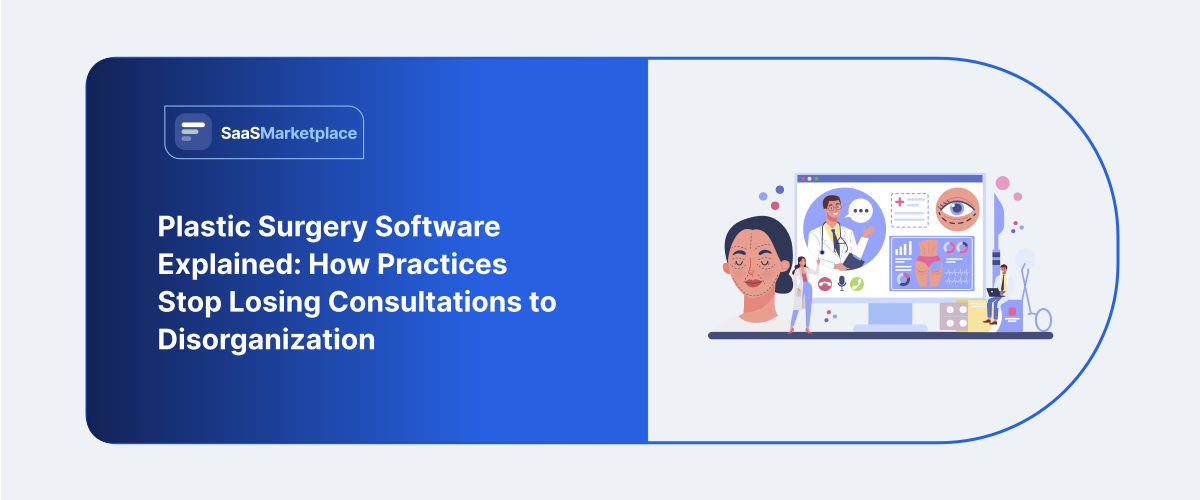
Plastic surgery software consists of administrative plus medical tools created for cosmetic and reconstructive surgeons. It integrates electronic health records, calendars, image databases, and financial transactions into a single tool. The tool functions according to the specific operational methods of those medical offices. A generic medical scheduling tool wasn't built with photo consent forms, procedure quoting, or elective surgery financing in mind. Plastic surgery software was.
On a functional level, this platform performs three tasks effectively. It organizes medical files and clinical paperwork in a manner that surgeons require - those files connect directly to surgical procedures and sets of images instead of general medical notes. The software manages a calendar that focuses on the transition from the initial meeting to the surgery rather than individual time periods.
The system processes medical billing operations for plastic surgery procedures, which involve insurance claims and patient self-payment and financing options that plastic surgeons use more often than other medical specialists. The system stores all patient management information in one database, which prevents data from spreading across multiple independent systems.
Why Cosmetic Practices Need Something Built Specifically for Them
A general medical practice management tool can technically run a plastic surgery practice, the same way a generic spreadsheet can technically run a warehouse. It works until it doesn't. The workflow of cosmetic and aesthetic practices operates in a totally different way than standard primary care clinics do. The staff must handle patient care through elective procedure choices instead of standard medical appointments.
The field demands more consultation work than other medical fields because patients need to decide on elective surgery instead of continuing their current treatment. Photo documentation holds clinical and legal value because medical facilities need to keep their before-and-after photos in protected storage while tracking patient consent and making records available for medical discussions and official documentation purposes. And payment structures often involve financing plans and package pricing that a standard billing module simply isn't built to handle cleanly.
What Plastic Surgery Software Actually Manages
Selecting the right platform requires an understanding of core capabilities. The most effective systems include tools that simplify daily tasks while maintaining high standards of patient care.
- Patient Records and Documentation: As a centralized system, plastic surgery software stores patient documents, meeting notes, surgical histories, and legal permissions in one location. No information remains in a physical metal drawer or an independent digital table. This matters both for continuity of care and for staying organized when returning patients come back for additional procedures years later. Electronic health records built specifically for this specialty also tend to include procedure-specific templates that a general EHR simply doesn't offer out of the box.
- Before and After Photos: Rather than storing images loosely on a shared drive, dedicated before and after photos tools organize images by patient and procedure, with proper consent tracking attached. A genuine consultation tool that lets the surgeon show off realistic examples to a prospective patient during the decision phase.
- Patient Scheduling: The cosmetic practice must schedule in a manner that accommodates the consultation appointment, pre-op appointment, the surgery, and follow-up appointment, often across providers, in different rooms. Generic patient scheduling tools rarely handle that sequence cleanly.
- Billing and Financing: Between insurance-covered reconstructive work and self-pay elective procedures, sometimes within the same practice, billing gets complicated fast. Plastic surgery software is usually built to handle both, along with financing plans that are common for higher-cost procedures.
Do you know?
A meaningful share of cosmetic consultations never convert into a booked procedure simply due to slow or disorganized follow-up, not because the patient decided against the procedure itself. Practices using plastic surgery software with built-in patient scheduling and automated reminders tend to see noticeably better consultation-to-booking conversion, mostly because nobody falls through the cracks waiting on a callback.
Signs a Practice Has Outgrown Generic Tools
Not every small practice needs a dedicated platform on day one. But certain signs usually mean it's time for real plastic surgery software:
- Before-and-after photos are on phones, folders, and shared drives, with no tracking of consent.
- Patient scheduling refers to the back-and-forth of manual appointment making for consultation, procedure, and follow-up.
- Patient records for returning cosmetic patients are hard to pull up quickly during a follow-up consultation.
- Hospital Billing staff spend significant time manually separating insurance claims from self-pay and financed procedures.
- HIPAA compliance concerns come up around photo storage or patient communication without a clear answer.
If a couple of these sound familiar, it's rarely a staffing issue. It usually means the practice's tools haven't kept pace with how the practice has grown, and adding more staff to compensate for disconnected systems tends to be a far more expensive fix than switching software in the first place.
Key Features Worth Looking For
When you’re deciding on plastic surgery software, there are a few features that are more important than others:
- Built-in consent tracking for after and before photo’s storage.
- Patient scheduling designed around consultation-to-procedure workflows.
- Personalized e-health records for cosmetic and reconstructive services.
- A billing system that combines insurance, self-pay, and financing plans.
- HIPAA compliance built into how patient data and photos are stored and shared.
- Patient portal access for pre- and post-operative instructions and forms.
- Reporting on consultation conversion and procedure volume over time
Not every practice needs all seven immediately, but as patient volume grows, each one starts mattering more.
How Plastic Surgery Software Changes Daily Practice Operations
The honest shift is less about doing more consultations and more about losing fewer of the ones already coming in. Instead of front-desk staff manually chasing paper forms and loose photos, patient records, scheduling, and photo documentation all live in one connected system. Time that used to go into administrative chasing shifts toward actually following up with prospective patients while their interest is still fresh.
Practices that get real value out of plastic surgery software tend to treat the consultation-to-booking window as seriously as the surgery itself, since that's usually where revenue quietly gets lost. The software handles the coordination and keeps patient engagement seamless throughout that critical decision phase, while staff focus on nurturing the actual patient relationship.
Common Mistakes When Adopting Plastic Surgery Software
Even solid plastic surgery software can underdeliver if it's set up carelessly. A few mistakes come up again and again:
- Migrating patient records without properly transferring historical before-and-after photos and consent documentation.
- Skipping staff training, so the front desk keeps defaulting to old paper-based habits.
- Treating HIPAA compliance as automatically handled by the software instead of confirming actual configuration.
- Not connecting scheduling and billing, leading to the same manual reconciliation the software was meant to eliminate.
- Choosing software based on price alone without checking how well it handles photo storage and consent specifically.

Pro-tip
Before fully switching to the new plastic surgery software, ensure that a full patient journey- consultation booking, photo upload, procedure scheduling, and billing- is done through it end to end before performing a practice-wide switch. This tends to surface workflow gaps a features list alone won't show.
How to Choose the Right Plastic Surgery Software for Your Practice
Begin by assessing what is really falling apart with the existing system, be it photo management, patient scheduling, billing complexity, or all three at once. A platform built mainly for large multi-location surgical groups might be more than a solo aesthetic practice genuinely needs.
From there, shortlist a few plastic surgery software options and check how well each one handles before-and-after photo consent tracking specifically, since that's one of the areas generic tools handle worst. If broader operational needs matter too, compare it against dedicated medical practice management software or general practice management software to see which fits the practice's actual mix of cosmetic and reconstructive work.
Price matters, but the more important question is whether the software actually reduces the administrative load on staff and improves consultation follow-through. A cheaper system that leaves photo management and scheduling disconnected isn't really the cheaper option.
Conclusion
A skilled surgeon and a strong reputation aren't always enough if the administrative side of a practice is quietly losing consultations before they ever become bookings. Plastic surgery software helps fill these gaps by integrating patient records, scheduling, photo documentation, and billing into a single solution tailored to the real-world needs of cosmetic practices. This allows fewer potential patients to fall through the cracks and allows the practice to focus less time on chasing papers and more time on the business of business.
FAQ's
It organizes patient records and schedules along with before & after pictures and billing for reconstructive and cosmetic practices.
Yes, it's built around consultation workflows, photo consent, and financing structures specific to cosmetic practices.
Most platforms support compliance, but proper configuration and staff training are still needed to meet requirements fully.
Yes, even solo practices benefit from organized patient scheduling and secure before and after photo management.
Many platforms support billing workflows for financed procedures alongside standard insurance and self-pay options.