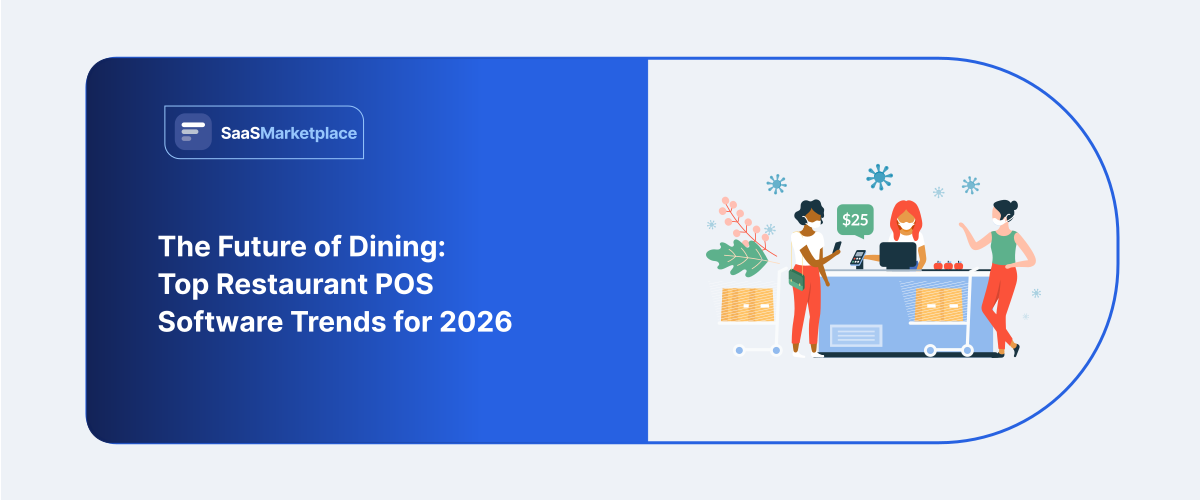
The Future of Dining: Top Restaurant POS Software Trends for 2026
-min.jpg)
In 2026, the restaurant sector is subject to a major change in line with digital technology. This transformation is mainly driven by modern POS systems that act not just as POS terminals, but as an integral element of the entire restaurant structure. Due to labor shortages and growing competition in the hospitality sector, the new POS software development trends aim at achieving ultra-efficiency in the food service business through the implementation of advanced technologies and deeper integration into the operating environment. New trends include innovative AI-powered predictive analytics for inventory and scheduling, adopting contactless and biometric payment methods, and implementing seamless omnichannel solutions to combine restaurant service, delivery, and online ordering. In general, modern restaurant POS software becomes an invisible assistant performing numerous tasks of enhancing workflows, increasing profit, and individualizing guest experience.
What Is Restaurant POS Software in the US in 2026?
Restaurant-point-of-sale (POS) software has leaped just a payment and order processing application to a cloud-enabled system of the entire hospitality system. Although the basic role of the POS in performing each of its core functions has remained the same, modern POS software unifies the operations of handheld devices, tablets that take orders from customers, and self-service kiosks into a single integrated solution. This way, the system centralizes data from many different sources and makes it possible for the restaurant to function fully through a centralized platform.
The noticeable point to remember regarding the restaurant POS software industry of the United States in 2026 is its use of computer technology, particularly AI, to grow and be successful. Restaurants have been under pressure due to thin profit margins and a lack of workers, so they turned to their POS systems and used them for all hard work, including forecasting menus and calculating the amount of inventory needed, so that their waste is minimized. The way restaurants connect with their customers has been changed by POS systems in terms of fast access to deeply personalized loyalty programs and smooth payment processing.
How Is Restaurant POS Software Transforming the US Dining Experience in 2026?
The restaurant business is becoming different in 2026 due to mobile-first technology. The old tradition of waiting for a check to be brought to the table is fading. Thanks to modern cloud-based point of sale CRM software, placing orders using smart handheld devices and paying directly from the table with the help of QR codes and biometric identification has become possible. Customers can now manage their payment process, which allows restaurants to save time, decrease the table-turn rates, and make the service better. The automation eliminates some routine actions for the people serving the food, who can concentrate on improving such aspects as hospitality and connections between people.
Moreover, the large-scale use of automated Kitchen Display Systems (KDS) connected directly to POS software greatly improved order processing and execution efficiency. The smart screens allow streamlining the orders issued for dining in, taking out, and ordering through third-party delivery services instead of managing annoying paper tickets piled into a heap. The software serves as a traffic policeman, helping to prepare the food so that a juicy steak and a light salad are ready at the same time. All the guests benefit from this system because their food is hotter, their orders are fulfilled accurately, and they can enjoy dining, whether the restaurant is full to bursting on a busy Friday night.
Modern POS systems use advanced artificial intelligence to transform regular dining experiences into a specific luxury. Because such systems connect transactions with the customer loyalty profiles, restaurants can make meaningful improvements in dining experiences without bothering customers. When a repeated visitor chooses to pay or scan a menu, the system knows his tastes and preferences, including allergies, and proposes suitable drinks it learned about before. This synergy of technology and cooking meets the customer needs of any modern person in 2026.
What Are the Top Restaurant POS Software Trends Driving US Restaurants Forward?
- Voice AI and Natural Ordering Automation: The latest POS systems are equipped with voice AI that gives them the ability to respond to phone calls and take food and beverage orders via the drive-thru. This advancement significantly decreases the possibility of order error and reduces the need for having too many employees on deck during busy times.
- AI-Powered Predictive Labor and Scheduling: POS software utilizes machine learning to examine historical data, climate, and traffic patterns to produce reliable sales forecasts. This enables managers to automatically create optimal employee schedules as needed, so they won't have to worry about either too many or too few employees on deck.
- Table-side cashless payment and checkout: The new payment systems include options like tap payments, mobile wallets, and immediate bar code billing at the table. Therefore, guests can pay immediately and leave on time.
- Tracking Inventory at the Component Level: These systems integrate real-time sales information from cloud-based systems to back-of-house storage and automatically subtract inventories based on individual ingredient consumption. The computerized system identifies any inventory discrepancies or differences between theoretical and practical use in order to ensure good profit margins for restaurants.
- Unification of the Omnichannel Services: Instead of separate tablets, there are advanced point-of-sale (POS) systems that integrate incoming orders from websites, terminals, and partners into single orders, thus eliminating the causes of slowdowns in the kitchen processes.
- Highly Personalized Customer Relationship Management: State-of-the-art POS systems instantly link payment methods to the customer’s digital profile, creating an opportunity to monitor their visit records. This allows them to receive customized discounts, recommendations regarding food or drink combinations, as well as messages regarding food allergens that might be present in their dishes.
How Is AI Changing Restaurant POS Software for US Food Businesses?
- Predictive Inventory and Auto-Ordering: AI algorithms work to analyze live sales data alongside weather predictions and ongoing events in the neighborhood to predict daily food supply needs accurately. This allows the Point of Sale to automatically prepare precise vendor orders for buying food, reducing food waste, and maintaining restaurant profit margins.
- Dynamic and Algorithmic Menu Pricing: Integrated AI models monitor peak demand periods, competitor prices in the area, and variations in food raw materials’ prices to change menu prices. This method allows to increase profitability during peak hours by using event-driven discounts when traffic is lower.
- Intellectual Interactive Voice Ordering: New-generation POS systems create orders at drive-thrus, kiosks, and on the phone through advanced natural language processing and computer technology. AI can perfectly elaborate on customer requests, remember frequent customers' choices, and conduct smart upselling at the same time.
- Intelligent Labor Management and Shift Scheduling: By analyzing sales data with the help of labor cost percentages, AI features can create efficient weekly shift schedules. The system predicts busy hours and helps to avoid staffing conflicts and possible overtime situations.
- Hyper-Personalized Marketing: AI features connect credit card information with app profiles, allowing tracking of users' ordering behaviors and frequency in different restaurants. Instead of sending generic messages, the POS sends user-oriented offers, makes guests aware of allergens, and suggests wine pairings.
- Advanced Fraud Detection: AI algorithms constantly monitor interactive inputs made by cashiers and servers during the whole day. The POS system picks up suspicious patterns such as numerous post-transaction cancellations or unusual cash drawer openings.
Why Are US Restaurants Upgrading Their Restaurant POS Software Now?
Restaurants in the United States are advancing their Point of Sales systems to counteract the huge cost-cutting environment that is characterized by difficulty in hiring qualified staff and extreme price pressure from raw materials. Traditional cash register systems are becoming inadequate at an age when labor is volatile, and ingredient prices vary daily. Cloud-based technologies empower operators to utilize the power of automation in order to maximize efficiency and enable their limited workforces to render hard-to-be services per the highest hospitality standards.
Another significant force driving the requirement of evolution is the need to tighten integration between real-life dining and online ordering processes. The modern US consumer requires a hassle-free experience, regardless of their choice to be inside the restaurant or to order online and get takeout. New technologies allow POS to operate as the center of command, thereby resolving the chaos produced by multiple devices by giving full coverage to all incoming orders.
Operators are slowly understanding that data is their most powerful tool to safeguard their business operations. Although previous solutions concealed vital data, modern-day POS systems utilize real-time tracking to identify major food wastage, forecast busy periods, and keep track of food cost differences. Replacing technology today goes beyond purchasing the latest payment device, as it involves implementing the central brain in an effort to preserve a food business’s profit level in a highly competitive environment.
How Does Modern Restaurant POS Software Improve Operations for US Dining?
- Elimination of the Wall of Tablets: Modern cloud platforms combine all incoming requests from third-party delivery services, online menus, and physical tables into a single screen. As a result, there are no more distractions in front of everyone at work and no surprise electronic rushes in the kitchen.
- Improving communication within the kitchen: Orders made via tabletop devices or portable devices are transmitted directly to digital kitchen monitors. The software will help to synchronize cooking times, ensuring all plates reach the table hot and simultaneously.
- Automatic optimization of labor Costs: The software is able to analyze the historical sales in perspective with other factors, such as the local weather, and predict the number of guests. Managers are able to automate work schedules, preventing unnecessary overstaffing during the low times and understaffing during peak periods.
- Reducing food waste at the ingredient level: The POS system is collecting information about inventory changes whenever a check is printed. The system can identify inconsistencies between real stock with expected stock and learn the reasons for shrinkage and over-portioning.
- Promotes Quick Table Turnover Rates: Handheld payment systems and QR codes allow guests to pay for themselves and even split the payment. This process saves time for waiters and offers them more opportunities in busy rush hours.
- Automated Ordering Systems: The system tracks when stocks go below a specified level. When a certain item is running out of stock, an instant order is generated, meaning that you never run out of stock of a popular item in a restaurant, and managers do not have to spend nights in the fridge section counting boxes.
- Provides Real-Time Audits: Machine learning features of the software scan thousands of transactions daily and detect abnormal behavior of the servers, like many voids, unauthorized discounts, or opening the cash drawer after the restaurant is closed.
What Should US Restaurant Owners Look for in Restaurant POS Software Today?
- Genuine Omnichannel Coordination: Look for a software application that automatically channels orders from third-party delivery applications, websites, and tablets to a common kitchen queue. This eliminates the chaos of having the tablet wall in front of the server.
- AI-powered staffing and inventory Forecasting: The system must detect historical sales patterns, local weather, and ongoing community events to determine the needed ingredients and required work shifts. The automation minimizes food wasted through miscalculations of stock and avoids excessive staff numbers.
- Seamless Contactless and Tableside Payments: Choose an option that seamlessly integrates mobile payment devices alongside QR code payment. The system allows the customer to pay at his or her convenience, speeding up the turnover process.
- 24-hour Monitoring and Ingredient-Level Control: The point of sale must be capable of monitoring the stock according to the menu items ordered. The system must provide notifications of low inventory levels and reports on transaction variances.
- Stable Offline Operation of the Hardware: Make sure that the software can successfully take orders in a disconnected environment.
Conclusion
With growing competition in the restaurant business in America, upgrading to modern, AI-enabled point-of-sale technology is now a basic necessity for survival. For operators busy running their restaurant, navigating this heavily packed technology market may be an overwhelming job. To find the system that best suits their needs, operators may take a look at top platforms such as SaaSMarketplace, which is the leading digital procurement platform enabling customers to find the right software to suit their business requirements, compare different software solutions, and make a proper purchase.
FAQ's
The dominant trend is the shift from passive payment terminals to AI-driven operational command centers that automate inventory tracking, predictive labor scheduling, and dynamic menu pricing.
It tracks inventory at a live, ingredient-level scale by automatically deducting ounces from stock as items sell, instantly flagging inconsistencies between theoretical and actual food usage.
Yes, top-tier platforms feature advanced local offline modes that securely read credit cards and queue order details, automatically syncing data to the cloud once connectivity returns.
They give guests instant control over splitting tabs and checking out, which cuts down table-turn times by up to 15% and increases server tip percentages through smoother service.
Centralizing third-party delivery apps, online web orders, and dine-in requests into a single screen eliminates host stand clutter and prevents the kitchen from getting bottlenecked.