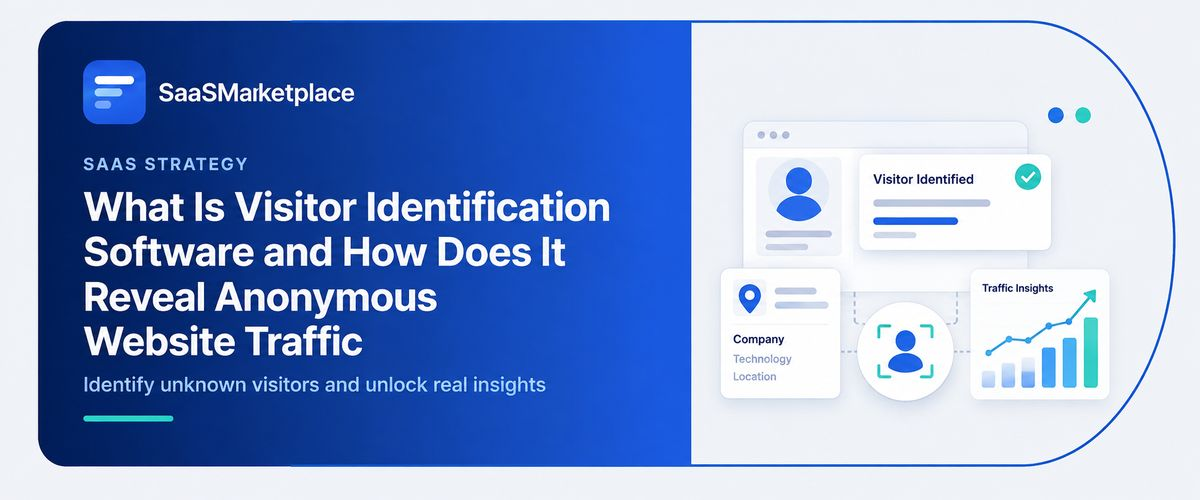
What Is Visitor Identification Software and How Does It Reveal Anonymous Website Traffic
-min.jpg)
Every day, hundreds of possible business buyers visit your website, read your product information, review feature sets, and depart without completing a single contact form. Conventional analytics systems reveal visit count but hide the particular businesses behind those page views. This visibility void leaves revenue teams guessing about which organizations are actively evaluating their solutions.
 Looking for Visitor Identification Software? Check out SaaSmarketplace’s List of the Best Visitor Identification Software in USA for Your Business.
Modern sales operations rely on visitor identification software to illuminate these invisible interactions. By combining network telemetry with enterprise databases, these systems identify the commercial entities exploring your digital properties. Transforming raw traffic metrics into actionable firmographic intelligence changes how go-to-market teams prioritize their pipeline strategy.
What Is Visitor Identification Software?
Visitor identification software is an enterprise technology solution designed to de-anonymize website traffic by converting unauthenticated network visits into actionable account-level intelligence. By working within your organization's existing network security and data governance protocols, these systems locate the actual business entities looking at your site instead of only monitoring session length or page views.
Revenue teams get direct knowledge of which target accounts are actively investigating their products by cross-referencing incoming IP addresses against worldwide domain registries and company databases.
Do You Know?
More than 95% of business-to-business website visitors look at items, move through pages, and then depart without starting contact with sales teams or submitting a lead capture form.
How Visitor Identification Software Resolves Anonymous Accounts
Converting unauthenticated web sessions into recognized business accounts requires a multi-layered data protocol. The underlying technology relies on IP address matching to map corporate network requests back to registered domain records. When an employee accesses your site from their office infrastructure or corporate VPN, the platform captures that incoming network signature.
Once captured, a reverse IP lookup evaluates the address against global internet registries and proprietary enterprise databases. This lookup matches the numeric network label against verified business domain names, industry classifications, revenue tiers, and employee headcounts. Advanced platforms execute this process in milliseconds, allowing revenue operations to instantly categorize the visiting organization.
Beyond static IP records, modern systems apply machine learning algorithms to evaluate behavioral intent signals. The platform records visit frequency, content engagement depth, and specific URL paths to construct an account-level intent profile. This ensures your sales development representatives focus on high-intent accounts rather than accidental clicks.
The Operational Architecture of De-Anonymization
To build a reliable account discovery engine, platforms use website deanonymization techniques that combine real-time network resolution with extensive data enrichment. The system evaluates every incoming HTTP request header, checking user-agent strings, geographic headers, and network ownership registries.
When evaluating vendor options within a visitor management software database, understanding how network intelligence operates across various deployment models is essential.
|
Technical Phase |
Primary Operation |
Output Generated |
|
Network Data Capture |
Intercepts HTTP headers and incoming network requests |
Raw IP address and user-agent metadata |
|
Enterprise Lookup |
Cross-references network signatures against global registries |
Matched domain and organization profile |
|
Firmographic Enrichment |
Query enterprise databases for firmographic parameters |
Employee count, revenue, and vertical tag |
|
Intent Scoring |
Calculates engagement duration and page visit paths |
Quantified buying interest metric |
Through continuous account-level website visitor tracking tools, businesses gain deep visibility into how target accounts move through the preliminary research phases of the buying cycle.
Transforming Traffic Analysis into Strategic Revenue
Although Standard web measurements provide top-level operational visibility, they lack the detail needed for executing outbound sales. Including focused account intelligence into your bigger marketing analytics software platform bridges the gap between micro-level prospect evaluation and macro-level site performance.
Classic reporting emphasizes total traffic volume and bounce rates; visitor tracking software shows which strategic accounts are looking at rival comparison websites, enterprise documentation, or pricing levels.
Knowing exact account names helps marketing leaders evaluate campaign performance beyond simple form submissions. This enables teams to allocate budget toward channels that bring verified enterprise accounts to the site, rather than chasing low-quality, high-volume clicks.
Campaign Attribution and Source Tracking Accuracy
Attributing pipeline creation to specific acquisition channels becomes vastly more accurate when you track organization-level interaction history. Connecting account resolution data with your marketing attribution software stack gives you a clear view of multi-touch enterprise buying journeys.
Often including multiple parties from the same business account seeing your website over several weeks, multi-touch buyer paths may span. By using B2B visitor tracking systems, growth managers may link early account visits back to their first advertisement exposures, content downloads, or email touches even if those early touches were made anonymously.
Having full visibility over unidentified website traffic guarantees that marketing departments do not take money from early-stage channels that produce real business research activity.
Streamlining Lead Conversion and Prospecting Pipelines
Discovering which target accounts are researching your product portfolio provides immediate ammunition for your business development team. Integrating real-time account alerts into your sales prospecting tools workflow allows outbound representatives to initiate contact precisely when prospect interest peaks.
Effective lead identification software reduces cold outreach friction by equipping representatives with contextual account intelligence:
- Identification of visiting enterprise accounts before form submission.
- Visibility into specific solution pages and documentation reviewed.
- Timestamped audit trails of account-level visit frequency and duration.
- Automated account allocation based on geography, industry, or company size.
Equipped with this awareness, sales development representatives can customize their communications to handle the exact business issues shown by the prospect's browsing history.
Optimizing Outreach and Sales Engagement Workflows
Timing is everything in modern B2B sales development. Connecting your account-level identification engine directly into your sales engagement software platform ensures high-value visitor activity immediately triggers automated, highly personalized outreach cadences.
When a target enterprise account conducts repeated visits to your pricing page, anonymous visitor tracking flags the account for instant rep intervention. Your sales staff instead offers customized collateral, case studies, and deployment instructions that precisely correspond the visitor's research behavior instead of sending general cold emails.
By presenting prospective purchasers with pertinent products while your company is front of mind, this proactive strategy greatly shortens sales cycle length.
Unifying Conversation Intelligence and Buyer Context
When account executives jump on discovery calls with newly identified prospects, past website behavior offers invaluable context. Passing web telemetry context into your conversation intelligence software setup helps account executives match discovery call questions with the account's actual digital research footprint.
Using website visitor tracking insights allows account executives to quickly confirm which features or integration requirements the buying committee researched prior to the call. This pre-call context helps representatives skip basic intro slides, steer conversations toward evaluated features, and address hidden operational concerns upfront.
Understanding pre-call research patterns yields faster deal velocity and higher close rates across key enterprise verticals.
Executive Reporting and Enterprise Dashboard Integration
Enterprise sales operations demand unified data flows across the entire technology stack. Routing clean identification streams into your business intelligence software environment gives revenue leaders clear visibility into top-of-funnel account demand trends.
Synthesizing data through robust visitor identification software allows leadership teams to track broader economic trends across target sectors:
- Aggregate volume of target industry accounts visiting core landing pages.
- Regional shifts in product interest and content engagement.
- Correlation between anonymous account visits and downstream pipeline velocity.
- Channel-by-channel ROI computed against verified corporate visits rather than raw hits.
Centralized executive reporting ensures executive strategy stays aligned with real-time buyer demand signals.
Automated Lead Handoffs and System Integration
Manual data transfers between analytics tools and sales execution platforms slow down pipeline momentum. Integrating live identification streams into your central CRM software architecture ensures newly identified corporate visits automatically update existing account records or generate clean, routed lead records.
Deploying enterprise website visitor identification tools ensures your CRM stays populated with fresh firmographic data:
- Automated enrichment of company location, industry classification, and employee tier.
- Real-time activity logging under associated corporate parent records.
- Instant task creation for account owners when priority accounts return to the site.
- Prevention of duplicate account creation through automatic domain matching.
Automating these management chores ensures frontline sales teams' customer relationship systems are current, tidy, and instantly useful.
Regulatory Compliance, Data Privacy, and Security
Strict compliance with international data privacy regulations is needed for collecting and analyzing online behavioral telemetry. Enterprise income operations need to adjust their tracking settings to meet GDPR, CCPA, and changing local privacy norms. Connecting your identity stack with certified data governance software ensures account tracking remains compliant across all jurisdictions.
Modern visitor identification software maintains compliance by focusing identity resolution at the corporate account level rather than processing personally identifiable information (PII) of unconsented individuals.
Ensuring your identity architecture respects user consent frameworks protects your organization from compliance risks while maintaining full visibility into business-to-business buying intent.

Pro-tip
Configure your system to suppress corporate resolution for residential internet service providers (ISPs). Removing non-commercial network noise helps your sales team to concentrate only on real business accounts.
Conclusion
Modern B2B revenue growth depends on turning passive digital traffic into active sales opportunities. Using visitor identification tools helps to fill the operational difference between first web hits and focused outbound activity. De-anonymizing high-intent accounts and transmitting extensive behavioral data straight into your sales stack lets your staff contact business decision-makers at just the correct time. Giving account resolution top priority helps your website to be a reliable lead-generating engine while still following strict worldwide data privacy rules.
FAQ's
Standard analytics aggregate consumer metrics anonymously, while visitor identification software resolves raw traffic into specific company names and firmographic profiles.
The software reveals the underlying corporate network by comparing incoming session IP addresses against public internet registries and company databases.
Yes, compliant systems utilize business-to-business data to identify corporate organizations instead of gathering personally identifiable information without user permission.
No, privacy-focused business solutions resolve traffic to the organizational level, showing company profiles and candidate decision-maker roles rather than unconsented individual names.
It gives sales representatives real-time alerts when target accounts investigate product pages, therefore enabling reps to start context-rich communication at maximum buyer intent.