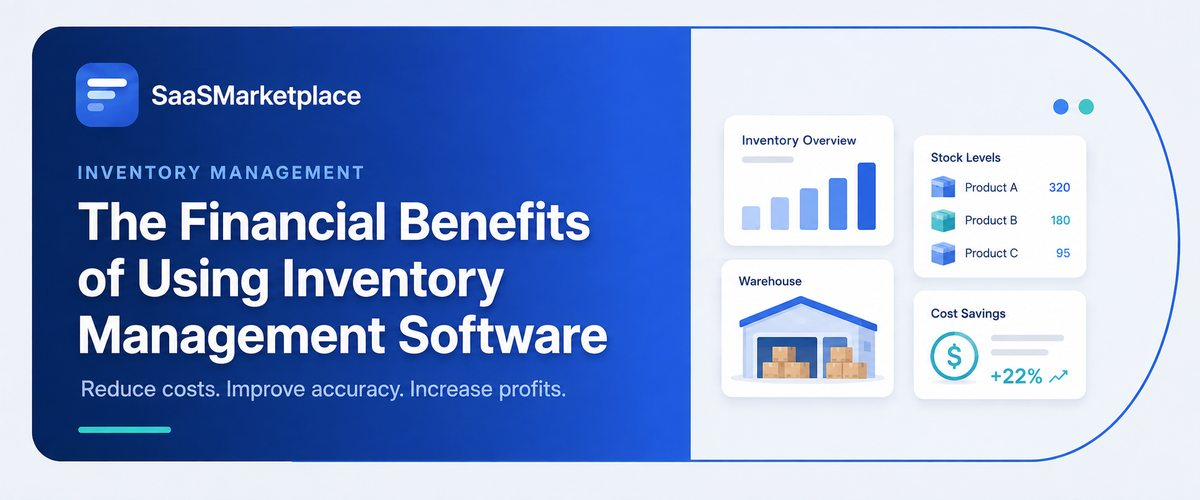
The Financial Benefits of Using Inventory Management Software
-min.jpg)
In today's fast-changing business environment, taking care of inventory can no longer be considered a hassle, but rather a serious threat to profitability. The use of sophisticated inventory management software gives up error-prone spreadsheets for the use of tracking systems that are continuously tracked and updated, allowing businesses to save dramatically in holding costs and avoid costly situations of overinventorying and stockouts. Automated purchase orders, improved order processing, as well as accurate demand forecasting transform static warehouse operations into money-generating machines that enable businesses to invest in growth.
What is Inventory Management Software and how does it save Money?
Inventory management software is an integrated software system that helps track, control, and manage the inventory of a business across the entire supply chain. This software has the ability to eliminate the need for relying on manual inventory checks or spreadsheets prone to errors. Instead, it employs advanced technology such as barcode scanning and RFID tagging so that the business can monitor the stock levels of its inventory, purchase orders, sales, and deliveries in real time.
It manages to save money since it minimizes the inventory storage costs, as well as avoids costly human errors. Holding excess inventory results in locking up needed working capital as well as huge warehouse storage costs. At the same time, unmanaged inventories may spoil or be damaged, or become obsolete over time. The software gives companies the ability to have accurate demand forecasts that allow them to know what and how much they have to buy.
How does Inventory Management Software Reduce Carrying Costs for US Businesses?
- Elimination of Excess Inventory through Visibility: With real-time visibility, businesses bug tracking slow-moving and fast-moving items in the inventory. Businesses can do away with excess stock by implementing reorder points that are based on real sales figures rather than on guesswork.
- The Demand for Smaller Storage Facilities: Frequent and lower quantity buying cycles result in less demand for storage. A leaner warehouse can help businesses save on rent, utility costs, and property taxes.
- Avoidance of Deadstock and Spoilage: Companies dealing with perishable goods, electronics, and fashionable products will lose everything to unsold inventory. Automatic monitoring will help in reducing inventory waste.
- Reduction of Insurance and Finance Costs: The higher the value of covered stock, the higher the insurance premium. Lower average inventory will have a positive effect on insurance premiums and help save working capital.
How does Inventory Management Software improve Cash Flow?
The utilization of inventory management software improves cash flow by alleviating capital stuck in surplus inventory, therefore reducing cash conversion cycle time. Any slow-moving inventory is a cash asset that cannot be utilized; it is locked up in stored stock and useless.
- Reduces Working Capital Usage: Adopting demand-driven reorder points instead of high stock safety cushions enables you to buy only necessary orders and ensures that cash remains liquid.
- Removes Dead Stock: Bottleneck and obsolete inventory require cash until it is liquidated. With software, you can identify slow-moving stock in advance and take measures to liquidate it before the money is lost.
- Speeds Up Order Fulfillment: Combined automated connectivity across inventory and sales systems means that orders can be processed in no time, which leads to quicker payments and settlements of invoices.
- Improvement of Supplier Terms: Sales data and stock turnover will help obtain better payment conditions from suppliers.
Can Inventory Management Software cut waste from expired or Dead Stock?
- Automated Batch and Lot Tracking: This process enables tracking of various lot numbers and production dates upon receipt, allowing them to follow up on each item through its full life span.
- First-In, First-Out (FIFO) Picking: The system makes sure that staff pick goods oldest first to fulfill orders.
- Automated Expiration Alerts: Retail software receives alerts in real time when batches of products come closer to the expiration date, enabling them to run promotions.
- Data-Driven Demand Forecasting: Advanced data analytics analyzes sales volume, seasonality, and past buying patterns, allowing retailers not to place excess orders.
- Identifying Slow-Moving Inventory: Dashboards show slow-moving products, enabling retailers to manage them quickly before their value drops.
- Real-Time Cross-Channel Visibility: The centralized stock figure across channels helps avoid overordering products in one place when there are already excessive supplies in the other.
- Dynamic Reorder Points: The automatic calculations of safety stock and lead time help to prevent the purchasing department from placing bulk orders.
How does Inventory Management Software lower labor costs and manual errors?
Scanning Data with Barcode and RFID Technology: Instead of entering SKU numbers, employees scan products straight into the system and avoid mistakes due to typos and wrong numbers.
- Auto-generated Pick Lists: The software determines optimal routes through the warehouse, minimizing the total labor time by up to half of the time.
- Automatic Purchasing Orders Generation: Alerts about running low on stock generate automatic purchasing orders without requiring any staffing efforts.
- Real-Time Verification of Orders: The system verifies the correct items and quantities before packing to eliminate mis-picks and costly returns.
- Multi-channel Synchronization: Instant updates prevent overstocks and eliminate staff efforts for monthly stock reconciliation.
- Faster Cycle Counting: Digital audits facilitate doing inventory checks without halting warehouse activities and without paying overtime for annual counting.
- Simple Receiving and Putting Away: Shipments are registered and placed to their bins automatically as soon as they arrive, keeping the shipment area clear and speeding up dock-to-stock processes.
Why does Inventory Management Software improve demand Forecasting Accuracy?
Inventory management software makes demand prediction more precise by replacing intuition and standard spreadsheets with high-tech processes and algorithm-generated data.
- Compiles Up-To-Date Data: The system compiles point-of-sale data automatically onto one platform, eliminating the possibility of human error.
- Analyzes Patterns: The algorithms applied in the program analyze archived purchase data in order to predict the potential growth of each SKU.
- Takes Into Account Seasonality and Trends: The forecasting models incorporated in the software consider all annual, monthly, and holiday purchase spikes to prevent any unexpected supply shortages or overordering.
- Incorporates Supplier Lead Time: The advanced systems keep records of supplier reliability and delivery failures, making automatic adjustments to order points.
- Considers Marketing and Sales Events: Integrations of the program with CRM and sales systems create an opportunity for taking into account planned promotional campaigns and the launches of new products.
- Takes into Account Anomalies: This means the latest systems keep apart cases of one-time bulk orders in order not to mislead the data and affect long-term forecasts.
- Provides Multi-Level Visibility: Firms that operate several warehouses or points of sale have the ability to analyze the regional demand independently.
How does Inventory Management Software increase profit margins?
The inventory management system improves profitability by eliminating inefficiencies, reducing inventory costs, and taking advantage of sales opportunities.
- Lower Inventory and Carrying Costs: Excessive inventory uses up capital and incurs storage, insurance, and handling costs. The program also helps maintain the right stock amount through anticipating demand and avoiding unnecessary holding costs.
- Averts Stock-Outs and Sales Losses: Stock-out of hot products leads to loss of customers. Automatic reordering establishes the points for restocking the most popular products and avoids losses.
- Minimizes Dead Stock and Expiration Dates: Unsold items usually go on sale or expire, losing money. This inventory management program uses information about the life of inventory items and First-In, First-Out policies to reduce waste.
- Optimizes Costs of Suppliers and Bulk Purchases: Correct historical data allows obtaining a better deal from suppliers for better prices, quantity discounts, or adjusting terms. Ordering the right quantities avoids paying for rush shipping and lowers production costs.
- Automation of Work and Cut Down on Admin Costs: Manual stocktaking and recording take much time and can produce mistakes. Automation shortens the time required to conduct counts, process orders, and reconcile, thus saving on costs.
- Increases Order Accuracy and Lowers Returns: Processing incorrect orders results in incurred shipping expenses and restocking charges in addition to possible losses, leading to customer churn. Using barcode scanning technology and a link with sales channels enhances correct picking and packing, which helps keep required revenues.
How does Inventory Management Software support long-term business growth?
Inventory management software forms the basis that a business needs for sustainable growth without having to increase overhead or create logistical mess.
- Allows for Multiple Channels and Locations Growth: Having centralized inventory data enables moving into new sales channels (e.g., e-commerce, marketplaces) and physical sites without desynchronizing stock or facing over-selling.
- Enables Strategizing Data-Based Decisions: Understanding historical sales data, seasonal trends, and velocity of inventory allows company management to make the right choice in product development, entering the new market, and allocation of funds.
- Promotes a Strong Supply Chain: Full visibility enables tracking vendors' lead times and observing the performance of suppliers.
- Helps Retain Customers and Build Brand Equity: The high accuracy of orders, fast delivery, and constant availability of products turn first-time buyers into regular clients, thus reducing long-term customer acquisition costs (CAC).
- Increases Working Capital for Investment: Preventing money from being stuck in unnecessary stock allows releasing funds for investments.
- Standardizes the Processes to Facilitate Introduction of New Employees: The use of automated processes and centralized software speeds up the training of new employees.
Conclusion
The application of inventory management software results in considerable financial gains as it helps in making the use of working capital more effective, reducing operational costs, and ensuring revenue security. Companies are able to keep the perfect level of goods and thus reduce the costs of storage, prevent wasting money on storage space, and save themselves from inventory impairments due to spoilage. Thanks to automated processes, acquisition becomes easier and less labor-intensive, thus leading to higher profitability. Moreover, real-time monitoring of inventory prevents lost sales due to stockouts and losses caused by the shrinkage of goods. If you would like to find the most suitable software for the size of your business, you can visit the SaaS marketplace.
FAQ's
It prevents overstocking by accurately forecasting demand, reducing unnecessary storage, insurance, and tied-up capital expenses.
Automating manual tasks like stock counting, order tracking, and reordering drastically lowers human error and labor hours.
Real-time tracking ensures older or perishable stock is prioritized for sales, minimizing product expiration and deadstock write-offs.
Yes, automated reorder triggers maintain optimal stock levels so you never lose revenue due to out-of-stock items.
Most businesses achieve a full return on investment within 6 to 12 months through improved cash flow and cost savings.