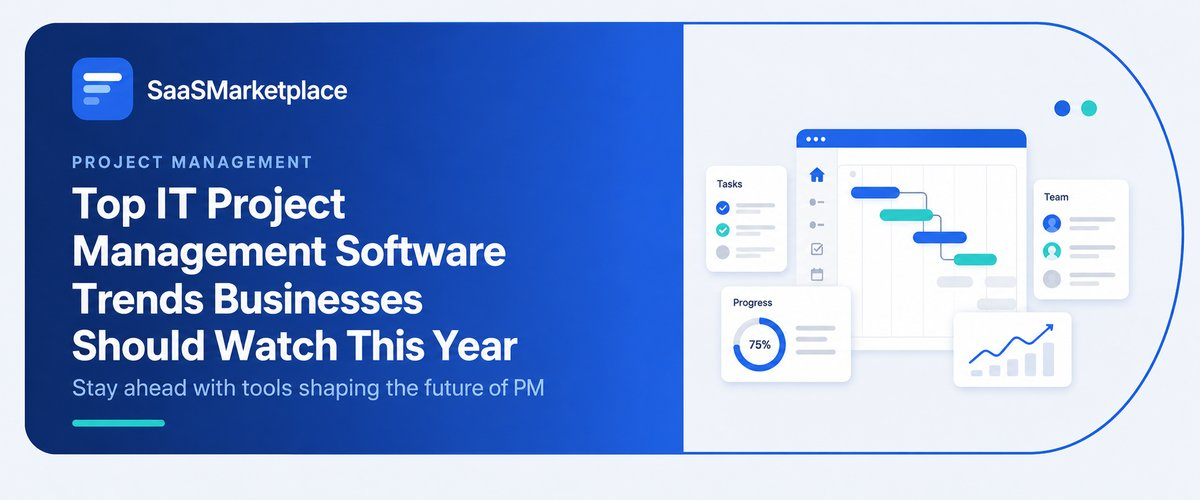
Top IT Project Management Software Trends Businesses Should Watch This Year
-min.jpg)
With the evolution in software systems, project management programs are upgrading from simple activity monitoring tools to sophisticated systems that promote the execution of important strategies. Companies are expected to take note of a number of trends in technology, such as the incorporation of artificial intelligence that makes it possible to identify possible risks and automatically distribute resources, and the use of hybrid schemes that easily combine traditional control with agile performance. Companies are starting to give priority to portfolio-level visibility instead of task management, which enables managers to get deep analytical insights.
What is IT Project Management Software, and why does it matter for US businesses?
IT project management software is a term used to define specialized online tools created to assist organizations in planning, executing, monitoring, and delivering complex technology projects. Unlike standard task management software, this type of software is designed to follow the specific technical processes of software creation, improving technical resources, and integrating systems. The main advantage of IT project management software is that it creates a virtual space where project teams may manage project processes, monitor sprint backlogs, and assign technical resources while using agile, waterfall, or hybrid methodologies.
In the rapidly changing digital economy, U.S. firms must adopt effective IT management software. Companies in the U.S. invest substantially in technology to expand their business activities, secure sensitive information, and enhance customer service, but poor management can result in overspending and delays in launching new services. Applications that facilitate cross-departmental collaboration and allow forecasting of resource shortages are essential for U.S. companies to get the most out of their technological investments and overcome challenges posed by regulatory requirements and market changes.
How is AI changing IT Project Management Software in the US market?
1. Automated Risk Detection & Predictive Analytics
Modern software solutions employ machine learning techniques for the examination of historical business data.
- Early Warning System: Timely processing technology makes it possible to determine potential obstacles, scope creep, and delays ahead of time, giving managers weeks of warning before the occurrence of any changes affecting the project timeline.
- Budget & Schedule Forecasting: Utilizing machine learning, businesses can analyze the performance management system of project teams with respect to current tasks in order to come up with accurate predictions regarding both budget and timeline instead of just an educated guess.
2. Smart Resource Distribution and Capacity Arrangements
Dealing with engineering capacity across several cross-functional projects is still a major problem facing American IT executives.
- Workload Distribution: The artificial intelligence analyzes the level of work of each member, their skills, and their previous burnout levels to decide on the most efficient allocation of tasks to avoid overloading employees.
- Dynamic Reprioritization: In case of unexpected architectural changes or changes in the market, the artificial intelligence simulates different scenarios of resource allocation to help decision-makers transfer their technical personnel with the least harm to the core objectives.
3. Automated Processes & Virtual Assistance
Typical administrative work consumes a large part of the hours of work of a project manager. AI tools are now facilitating the completion of such operations:
- Automated document Drafting: AI tools convert the content of meetings, chats between developers, etc., into structured task lists, summaries, and reports in no time at all.
- Smart workflow building: Teams can make use of natural language queries to create user stories, acceptance criteria, and dependency graphs according to the overall goals of the project.
What are the Top IT Project Management Software Trends US Businesses should Watch this Year?
-
Artificial Intelligence-based Predictive Intelligence and Risk Detection
Instead of using simple automated reminders or third-party AI plugins, the latest platforms integrate machine learning into their main systems.
- Forecasting: Using experience of sprint velocities, code commits, and delays, the AI identifies breaches of process weeks in advance.
- Scope Guardrails: Algorithms can monitor scope change by checking the connection of sudden increases in the size of the backlog against sprint capacity.
2. Strategic Portfolio Management (PPM) & Value Stream Mapping
U.S. executives are moving away from treating project software like it’s just a sort of to-do list. Instead, platforms are leaning hard into high-level portfolio visibility, and that’s tied more directly to revenue and strategic objectives.
- Goal-oriented Dashboarding: The systems connect separate technical epics to corporate Objectives and Key Results (OKRs), so leadership gets real-time sight into project ROI, not just status.
- Value Stream Tracking: IT leaders can follow the end-to-end flow of value, from the first business case sign-off through code deployment, and then they can spot process lag across departments.
3. Native Support for Hybrid Delivery Frameworks
The back-and-forth between pure Agile and pure Waterfall seems to have, sort of settled into that practical middle, well, the one where organizations can actually ship. Most modern software environments let multidisciplinary groups work with flexible hybrid frameworks inside the same platform, not as two separate worlds, exactly.
- Dual View Operations: Engineering teams can operate with a quick Kanban or Scrum lens, while executive steering committees and finance stakeholders keep the pulse using classic Gantt views and critical path guardrails and baselines.
- Cross-Methodology Dependencies: Delivery groups can set firm linkages between sequential compliance, hardware waypoints, and ongoing software deployment cadences.
How do US Businesses choose the right IT Project Management Software for their needs?
1. Zoho Projects
Mid-market to enterprise IT teams wanting a cost-effective, feature-packed project management system, with solid developer integrations, and yeah, enough depth for real delivery.
- It brings along built-in Gantt charts, Agile task boards, issue tracking, plus resource allocation that doesn’t feel bolted on. The integrations land pretty cleanly with continuous development stacks and also with the wider Zoho ecosystem, so workflows can stay in that same mental map.
- Zoho comes with native AI features (Zia); for example, it can help automate task creation, summarize status updates, and highlight resource bottlenecks before things get messy. And the mix of lower total cost of ownership (TCO) with flexible hybrid delivery frameworks makes it a serious option for tech-oriented operations, not just “basic” PM needs.
2. Quickbase
Really complex enterprise operations, PMOs, and those less conventional IT workflows that need custom low-code/no-code app creation.
- Instead of pushing teams into strict project boards, Quickbase lets IT leaders craft their own project tracking apps, you know, without doing traditional coding. It tends to do well with cross-departmental portfolio oversight, careful resource allocation that’s a bit tricky, and field-to-office coordination.
- Quickbase focuses on enterprise-level governance and security controls (SOC 2, HIPAA compliance). It supports citizen development too, while still giving IT directors centralized administrative guardrails, so it comes off as a strong choice for orgs dealing with huge, non-standard project portfolios, overall.
3. AFAS Software
Organizations that want one unified Enterprise Resource Planning (ERP) platform, where project administration is also tightly tied into finance, HR, and procurement kind of in the same flow, not separate lanes.
- AFAS, which is a leading European ERP vendor, basically treats project management from an administrative plus operational angle. It really shines at connecting project schedules straight into payroll, employee scheduling, client invoicing, and financial accounting all in one central database.
- This fits well with the Strategic Portfolio Management direction, mainly by removing operational silos between project teams and corporate finance. Still, since it is a full ERP solution, it tends to work best as an organization-wide system, not as a lightweight “task manager” substitute for developer sprints.
What Features matter most in IT Project Management Software for US teams?
1. Native AI and Predictive Risk Analytics
Today’s IT platforms weave machine learning straight into daily task flows, not just bolt-on simple plug-ins.
- Predictive Delay Warnings: AI models look at developer commit velocity, backlog volume, and past cycle times so they can surface milestone slippage early, basically before it happens.
- Automated Risk Scoring: The software keeps checking dependencies across multi-sprint initiatives, and it spotlights higher-risk engineering work items that could endanger the critical path delivery.
2. Algorithmic Resource Capacity & Workload Management
Being able to optimize tech talent without, you know, burning out developers is one of those core headaches for U.S. engineering leads.
- Real-Time Capacity Heatmaps: Systems compute the available engineer hours, they account for planned time off, then they rebalance assignments as workloads shift, so people aren’t stuck in that cognitive overload loop.
- Skill-Based Task Assignment: Algorithms take new bug reports, plus feature requests, and they pair them with developers using domain expertise and current bandwidth.
3. Native DevOps & Engineering Toolchain Integration
IT project software has to work like an operational hub, tied to the software development lifecycle kinda directly. It should feel connected, not just supporting it from the side.
- Bi-Directional repository sync: automatic updates can unintentionally move task status around when devs open pull requests or push code; sometimes it feels almost too automatic.
- CI/CD pipeline visibility: Project managers get to observe build statuses, catch the deployment stages, and examine automated QA testing outcomes directly in the project boards, not in some separate place.
4. Flexible Multi-Methodology Views, Agile, Waterfall, Hybrid
Cross-functional U.S. teams often end up operating with different methodologies inside the same enterprise, and that’s just how it goes sometimes.
- Dynamic View Switching: Developers might move through fast-running Scrum sprints or Kanban boards, but leadership looks at the very same project through older milestone applicant tracking and work charts.
- Cross Framework Dependencies: Platforms enable teams to define firm links between fixed-date compliance or infrastructure releases and ongoing software builds, kind of a cadence that still stays coordinated.
How is remote work shaping IT Project Management Software adoption in the US?
Remote and hybrid work kind of became the norm across the U.S. tech sector, and it has changed how IT project management software is viewed. It’s not just an administrative convenience anymore; it has turned into the main operational spine for distributed teams. Since engineering talent is spread around different time zones, many U.S. organizations are grabbing platforms that help with cross-distance collaboration without losing strict oversight and security, even when people are far apart.
1. Shift Toward Asynchronous First Collaboration
Since U.S. teams stretch coast to coast across time zones (and some offshore contributors too), depending on real-time status meetings is causing scheduling friction and even severe productivity drains, honestly.
- Embedded Communication Threads: Adoption is surging for tools that swap out daily syncs with inline video screen recordings, more structured comment threads, and contextual task chats.
- Automated Status Handoffs: Software can automatically notify night shift or west coast engineers when code dependencies or QA gates get cleared, so work keeps moving 24/7, without the usual live check-ins or constant chasing.
2. Stack Consolidation to Drown Out Distributed App Sprawl
When working remotely, the whole context-switching thing across scattered messaging tools, file drives, and issue trackers creates a lot of operational noise, plus some where-did-that-go lost data.
- Single Source of Truth: A lot of U.S. businesses are leaning into unified platforms, meaning task tracking, technical documentation, code repository links, and release timetables all live in one centralized workspace.
- Contextual Asset Attachment: PM platforms are becoming, kind of, digital knowledge bases now, so remote developers can pull up design specs and API documentation immediately right inside the task cards.
3. Transition from Hours-Logged to Output and Velocity Metrics
Remote work kinda made the old physical supervision unnecessary, so management software now leans more toward results tracking, instead of what people were doing in the office.
- Milestone velocity tracking is the big shift: Instead of watching active hours, many teams look for platforms that measure sprint momentum, cycle durations, and the completed story points.
- Automated deliverable checking: These tools can plug straight into CI/CD deployment pipelines, and they then validate whether a task is done based on code merges, not on that manual self-reporting people do, sometimes late or vaguely.
What are the cost and ROI considerations for IT Project Management Software in the US?
1. Per-Seat Subscription Costs vs. Hidden Multi-Tier Licensing
While the starter levels tend to sit around $7 to $15 per user /month, the more enterprise-minded IT features, like portfolio management, resource capacity planning, and custom API limits, often nudge the real spend to something like $20 to $44+ per user per month.
- Stakeholder Seat Creep: Licensing costs snowball as access keeps widening beyond developers, toward product owners, executive reviewers, finance teams, and even external contractors.
- Tier-Gated Feature Upgrades: Extra reporting, SSO governance, and compliance audit logs are routinely packaged in the higher Enterprise tiers. So you get pushed into a platform upgrade earlier than planned, whether you wanted it or not.
2. Implementation, Customization, and Migration Expenses
The initial rollout of an IT project management platform takes fairly heavy upfront spending, before teams even start feeling day-to-day returns.
- Data Migration & Toolchain Integration: Linking the project software with code repositories, CI/CD pipelines, and corporate ERP systems usually means dedicated engineering marketing hours or specialized vendor help that is billed separately.
- Workflow Configuration & Training: Moving hundreds of technical and non-technical employees away from older spreadsheet systems needs structured onboarding, a kind of blueprint crafting, and admin certification.
3. Added Expenses for AI Add-Ons and Higher-Tier Safety Measures
Today, next-generation intelligence, along with regulatory guardrails, is more and more unbundled from the base offering, like it’s part of a separate story or something.
- Generative & Predictive AI Add-Ons: Specialized AI copilots as well as predictive analytics modules are often separated into their own billed line items, so you might see it add about $5 to $20+ per user/month, on top of standard licensing.
- US Regulatory Compliance Overhead: Enterprise security features—such as HIPAA compliance settings, dedicated US data residency, and SOC 2 Type II audit reporting can lead to minimum seat thresholds or require dedicated enterprise service contracts, depending on how the vendor frames it.
What does the future of IT Project Management Software look like for US businesses?
1. Autonomous Agentic Workflows & Self-Healing Schedules
Next-gen platforms will slide past basic alerts into more autonomous execution, like the whole thing kind of handles itself. Rather than pushing project leads to manually re-adjust project boards every time delays happen, AI agents will auto-reschedule dependent sub-tasks, work around calendar availability, and reassign resources, quietly.
- Self-Healing Timelines: When a build fails, or code review takes longer than expected, the algorithms re-calculate the critical path(s) on the fly. Then they update the target release dates, without waiting for someone to notice.
- Autonomous Task Synthesis: AI models keep scanning technical threads, team messaging channels, and even customer feedback. From that, they auto-compose structured user stories and also assemble backlogs. Sometimes this feels like it’s just always in motion, not stopping for permission.
2. Transition from task management into value stream orchestration
U.S. executives are starting to ditch the usual output-based measures (like hours logged ) and instead focus on outcomes that actually move the needle. Platforms will not just track what gets built; they'll map technical deliverables to corporate financial goals and even retention targets, pretty directly.
- Real-time ROI Dashboards: Leadership will watch the direct monetary return of each software release as deployment tools feed post-launch user adoption signals back into the main management platform.
- Automated capitalization Tracking: The systems will classify developer time on its own into R and D tax credits plus capital expenditures (CapEx) versus operational expenses, which should make U.S. tax compliance feel less like a maze and more like a routine.
3. Hyper-Connected, Event-Driven Toolchain Ecosystems
Standalone project boards are slowly getting replaced by frictionless, background-running hubs. These systems operate kind of invisibly next to developer workflows and don’t really force manual status entry anymore; it’s just there.
- Zero Touch progress Tracking: Status updates happen automatically when cloud infrastructure events fire, when pull requests land, when automated QA test passes complete, and when security scans finish. Nothing has to be typed in by hand.
- Unified context layers: Engineers can pull up specs, task histories, and code dependencies directly inside their main working environment, without flipping back and forth between disconnected platforms, or open ten windows that feel unrelated.
4. Continuous AI-Powered Risk Forecasting and Quasi-Autonomous Compliance
As cybersecurity threats rise, and regulatory mandates get more tangled (think federal compliance baselines, health privacy rules, and those state-level privacy laws), compliance will basically slide into project management as an automated piece, even if it still feels kind of manual sometimes.
- Predictive Compliance Guardrails: These systems review codebases, edits, and project specifications against regulatory frameworks in near real time, so compliance slowdowns do not pop up right before deployment
- Automated Vendor Security Audits: Platforms keep track of what third-party contractors are doing, plus external access logs, to reduce supply chain security risks without waiting for the next formal review.
Conclusion
The ever-changing landscape of IT project management software can feel like juggling tasks at once, because the platforms you pick really need to match how you operate day to day and how you want to steer your strategy. With AI native predictive intelligence moving faster, hybrid delivery models, and automated compliance all kind of reshaping technical execution, the right technology stack is suddenly not just nice to have but kind of critical. To take some of the friction out of vendor evaluation, you can turn to SaaSMarketplace, which is a centralized platform meant to help enterprise leadership find, measure, and actually purchase business software that fits their real requirements. Looking at verified feature sets, how well things integrate, and the full total cost of ownership helps teams remove the guesswork and move ahead with confidence, toward the ideal project management solution for sustainable growth.
FAQ's
The primary trend is the integration of AI-native predictive analytics that automate task tracking, forecast project risks, and optimize resource allocation in real time.
Modern platforms offer asynchronous collaboration features, automated status updates, and centralized asset repositories to keep distributed teams aligned across time zones.
Organizations need flexible hybrid frameworks that combine structured executive milestones with fast-paced iterative execution to accommodate complex software development lifecycles.
Top platforms now feature native zero-trust architecture, granular role-based access controls, and automated compliance tracking for regulations like SOC 2 and HIPAA.
The biggest financial return comes from recapturing engineering hours by automating administrative status reporting, reducing scope creep, and optimizing resource capacity.