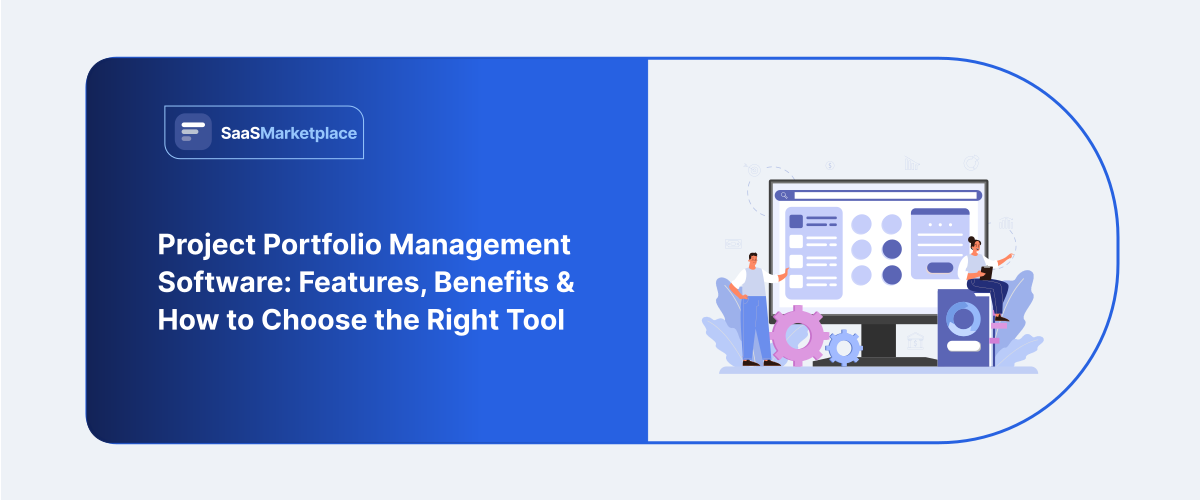
Project Portfolio Management Software: Features, Benefits & How to Choose the Right Tool
-min.jpg)
Keeping a single corporate initiative on track is already a massive headache for most teams. But when you are forced to juggle fifty or a hundred different initiatives across a whole enterprise, the wheels can fall off the wagon quickly. Teams end up stepping on each other's toes, budgets vanish into thin air, and nobody really knows which task matters most. To fix this mess, companies use specialized project portfolio management software to bring actual order to the chaos.
 Looking for Project Portfolio Management Software? Check out SaaS Marketplace List of the Best Project Portfolio Management Software in USA for Your Business
 Furthermore, high-performing enterprises do not let these tools run on a standalone island. Instead, they link their centralized governance system directly with foundational core applications like comprehensive ERP Software to ensure that ground-level operational costs instantly match up with high-level financial tracking accounts.
What Is Project Portfolio Management Software?
Let’s cut through the corporate jargon right away. At its core, project portfolio management software is an overarching platform that collects, tracks, and evaluates all of a company's active projects, programs, and sub-portfolios in a single location. It isn't just a basic digital to-do list for small teams. Instead, project portfolio management software is high-level governance infrastructure designed to help decision-makers look at the bigger picture, weigh operational risks, and see how everything performs as a whole.
To make these high-level macro evaluations truly accurate, the tool often pulls data directly from underlying Business Intelligence Software stacks. This combination allows leadership to spot complex operational trends, predict project bottlenecks, and back up every single executive decision with raw, verified company metrics.
1. How PPM works
Such a platform would work by serving as a huge data vacuum that sucks in information from various departments within the organization, relaying the figures to executive leadership in a dashboard format. This means your project portfolio management software becomes the ultimate truth teller for your business health.
For technical departments, the platform synchronizes seamlessly with specialized IT Project Management Software engines. Before a manager can just launch a new technical project out of nowhere, the platform evaluates how it impacts your current workload, proving whether you actually have the money and people to pull it off.
2. PPM vs. project management
A very common point of confusion is mixing up this corporate-level system with everyday team tracking tools. Let's make the distinction clear: traditional project management software is built for ground-level execution. Teams use that tactical project management software to assign daily tasks, track bug fixes, and hit immediate weekly sprint deadlines.
To bridge this gap in engineering environments, portfolio tracking frequently feeds down into specialized DevOps Software pipelines. While those automated engineering tools ensure code moves smoothly through testing, a dedicated portfolio management software suite tells you if you should be funding that software product in the first place to maximize your market return.
Why Is Project Portfolio Management Important?
1. Aligning projects with business goals
The biggest reason to take project portfolio management seriously is that it stops your teams from working on the wrong things. Without a strong project portfolio management strategy, different departments naturally turn into isolated silos. They waste months building tools that have zero impact on the company’s bottom line.
For instance, a company might accidentally funnel millions into optimizing logistical networks through complex Supply Chain Management Software updates when the executive board has actually decided to pivot away from physical shipping to focus entirely on digital product delivery. Incorporating project portfolio management software establishes strict review gates, meaning an initiative simply will not get funded unless it directly supports major targets like hitting a specific revenue goal or expanding into a new region.
2. Managing resources
When projects suddenly stall or miss deadlines, the culprit is almost always poor capacity planning. By using a centralized portfolio management software solution, resource planners can see exactly who is doing what across the entire company. You don't have to guess if your top engineers are free next month. The data inside your portfolio management software highlights exactly who is overworked and who can take on more, preventing team burnout before it destroys your timeline.
3. Prioritizing projects
Every department leader thinks their specific proposal is the most important thing in the world, leading to endless internal arguments. Implementing clear project portfolio management guidelines strips the emotion right out of these corporate debates. By leveraging modern PPM software, leadership teams can grade every single request against objective metrics like expected ROI, resource drain, and execution risk. This lets you rank your roadmap clearly, putting your money where it actually matters.
4.Improving decision-making
Making massive financial decisions based on a gut feeling is a recipe for disaster, especially when your data is trapped in scattered spreadsheets. Bringing professional portfolio management software into your stack changes the game by giving you clean, validated, real-time analytics. When leaders have clear visibility through their PPM software system, they don’t have to wait for an end-of-quarter post-mortem to see a failure. They can spot a failing project instantly and pivot resources long before a budget goes off the rails.
Key Features of PPM Software
1. Portfolio dashboards
The core of any enterprise portfolio management software setup is its visual dashboard interface. These screens within the selected PPM software provide a convenient visual representation of multiple operational data points related to the organization’s performance. It reduces executives’ burden to track the status, expenditures, and time management of thousands of individual tasks undertaken by project managers by a single click of a button.
2. Project prioritization
To protect your cash flow, high-tier PPM software provides built-in prioritization frameworks like scoring matrices. This specific feature inside your project portfolio management software allows users to input clear business goals and automatically rank new proposals against the work you already have on your plate.
3. Resource management
True resource management means looking way beyond a basic shared calendar. This capability inside your portfolio management software helps planners run smart capacity simulations, find critical skill shortages, and balance workloads across remote teams so that your key people never get stuck working on three competing initiatives at once.
4. Budget and cost tracking
Tight financial governance is built straight into the DNA of project portfolio management software. This module tracks your planned budgets directly against your real-world invoices as they happen. By keeping a close eye on these financial metrics inside your PPM software, your finance team can spot cost overruns early and adjust your funding lines immediately.
5. Risk management
Every single business initiative comes with its own set of risks, whether that means unexpected supply chain delays or sudden shifts in compliance laws. Enterprise project portfolio management software provides risk registers to track and handle these problems. Teams log threats directly inside the portfolio management software, giving each one a clear probability score so they can build a backup plan before things go south.
6. Reporting and analytics
The reporting features that modern portfolio management software provides can be used to design highly detailed reports and presentations that make you look good in any boardroom. From an investor call that requires a bird's-eye view of the situation, to operational details that your managers may need to review, the analytical power of your PPM software can churn out the numbers for you.
7. Scenario planning
Markets change fast, and companies have to adapt just as quickly. The scenario planning features in leading project portfolio management software let executives run "what-if" models, showing exactly what happens if budgets get cut or if a major team gets reassigned. This feature keeps your business incredibly agile when things get unpredictable.
Benefits of Project Portfolio Management Software
1. Better resource allocation
Rolling out a solid project portfolio management software setup fundamentally changes how you deploy your workforce. Instead of dealing with constant scheduling fights between managers, the platform shows you exactly where your human capital is sitting, letting you maximize your team's output across the whole corporate portfolio.
2. Improved project visibility
A massive win when moving to project portfolio management software is getting rid of company blind spots. Team leaders and executives across the entire organization can log in anytime to check actual progress, building a culture of complete transparency across different business units.
3. Reduced project risks
With the automated tracking tools found inside modern project portfolio management software, PMO leads can spot struggling projects before they sink completely. The system uses real data to flag late milestones and budget leaks early, which dramatically lowers your overall project failure rates.
4. Better strategic alignment
Using project portfolio management software makes sure your ground-level teams are actually executing the goals set by executives. The platform serves as a filter that kills off low-value vanity projects, focusing your company's time and energy entirely on high-impact wins.
5. Improved portfolio performance
At the end of the day, the main reason to invest in project portfolio management software is to get a better return on your company's investments. With this framework running your governance, your business will consistently cross the finish line on time, stay under budget, and deliver exactly what was promised.
Project Portfolio Management vs. Project Management Software
To build a highly efficient corporate infrastructure, leaders must clearly distinguish between enterprise-level portfolio governance and the use of basic project management software. The standard tools for project management are, first and foremost, intended to manage a single project, with an emphasis on project tasks, schedules, and team communications in order to manage day-to-day project delivery. In other words, these tools are meant to support the day-to-day running of a particular project and team collaboration within that project.
In turn, true project portfolio management requires a comprehensive system that can review and evaluate the overall performance of all major project management tools used in a company to ensure strategic interrelation of all ongoing tasks. Project management software can differ between various departments that undertake their own projects, however, executive management will use a single unified project portfolio management software to assess the total risk, value, and expense of all ongoing endeavors. In this manner, companies can operate with two types of project management software, where tactical-level tools are interconnected through an overarching project portfolio management software in order to facilitate continuous data exchange and improved operational efficiency.
How to Choose the Right PPM Software
1. Identify business requirements
The main challenge in choosing portfolio management software is understanding what stage your current operations are at and what problems you need to solve. Therefore, before searching for vendors, analyze your existing PMO practices, identify where the data gets tangled, and list all requirements that the new system should fulfill.
2. Evaluate features
As you explore the many project portfolio management software options, make sure that the features in each potential solution align with your real-world requirements. You'll want to invest in a tool that thoroughly addresses your day-to-day needs, including robust resource scheduling, financial forecasting, and prioritization modeling.
3. Check integrations
Your new platform cannot be walled off and isolated on an island - it has to be able to communicate with the rest of your technology ecosystem. The software needs to integrate with your ERP, HR systems, financial databases, and the project management tools that your teams already use and rely on to do their work.
4. Consider scalability
An enterprise system is a long-term play, meaning your choice has to grow alongside your business. Pick a vendor that can handle a smooth transition from tracking a dozen active initiatives to managing thousands of complex global programs down the line.
5. Review security
You will be providing your business with essential corporate and financial data to the platform, so its security needs to be a top priority. Choose only providers that ensure compliance with worldwide regulations, offer data encryption, role-specific access rights to the information, and up-to-date SOC 2 Type II certification.
6. Compare pricing
Lastly, make sure you calculate the total cost of ownership very carefully. Look past the basic sticker price per user and factor in implementation timelines, team training curves, ongoing customer support plans, and any extra customization fees.
Conclusion
Picking and launching the right platform is a massive win that completely transforms how your business takes action on its high-level strategy. By opening up complete visibility, automating resource tracking, and keeping project prioritization totally objective, the right tool turns messy, chaotic work into a highly predictable growth engine. Do not let old spreadsheets and messy data hold your organization back.
FAQ's
PPM software, which stands for project portfolio management software, is a centralized corporate platform built to help companies plan, manage, and track a collection of projects to reach their core business goals.
Project portfolio management software pulls data together from every department to help leadership teams prioritize new ideas, allocate team resources properly, track spending, and lower overall portfolio risks.
Standard tracking focuses completely on execution, dealing with daily tasks and timelines for a single project, whereas project portfolio management software deals with high-level strategic governance across all company initiatives.
A solid project portfolio management software platform needs to feature visual executive dashboards, project prioritization tools, deep resource allocation features, real-time budget tracking, and reliable risk management registers.