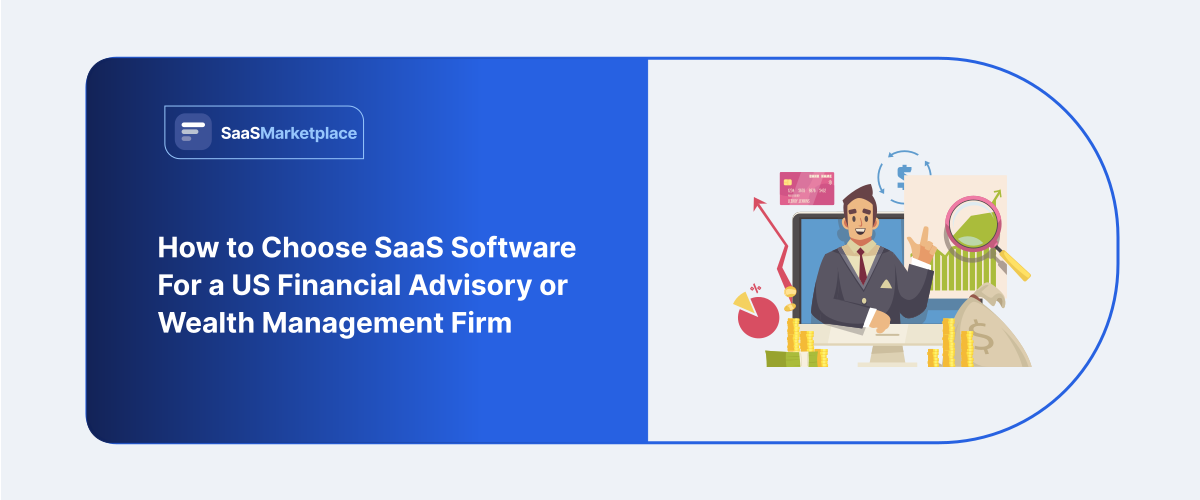
How to Choose SaaS Software for a US Financial Advisory or Wealth Management Firm
-min.jpg)
An advisory firm in the Midwest failed a routine compliance review last year over something that had nothing to do with how they managed client money. An examiner asked for a full communication record tied to one specific account change. The firm couldn't produce it cleanly. The CRM held part of the story, the portfolio management system held another part, the email archive held a third, and none of it cross-referenced. Nobody had done anything wrong with the client's assets. The firm just couldn't prove it fast enough, and that gap turned a routine exam into a much longer, far more expensive one.
That kind of scenario happens more often than firms like to admit, and it points to something specific about buying software in this industry. A general-purpose CRM or project tool might work fine for most small businesses out there. An advisory firm answers to a level of scrutiny most businesses never touch, and the software it runs on has to hold up under that scrutiny, not just make the daily workflow a little smoother. Choosing SaaS for a wealth management practice isn't really a technology decision first. It's a compliance decision that happens to involve technology.
Why Wealth Management Firms Can't Just Buy What Everyone Else Uses
Most SaaS buying advice assumes a fairly generic business. Pick something with good reviews, decent support, reasonable pricing, and move on. That approach breaks down fast for a registered investment advisor or broker-dealer, because a large chunk of what the software needs to do never shows up in a demo at all.
Books and records requirements under the Investment Advisers Act mean certain communications and transactions have to stay retained, searchable, and producible on request, sometimes years after the fact. A tool that looks polished on a sales call can still fail this test completely if it was never built with that obligation in mind. Firms that skip this check tend to find out the hard way during an exam, not before, which is exactly the wrong moment to discover a gap like that.
Then there's the custodian relationship, which doesn't really exist as a concept in most other industries buying software. Schwab, Fidelity, and Pershing each run their own data feeds, their own quirks, their own appetite for integrating cleanly with outside platforms. Software that looks great in isolation but can't pull account data from whichever custodian a firm actually uses is close to worthless in practice, no matter how good everything else about it looks on paper.
What to Evaluate Before Signing a Contract
Custody and Portfolio Management Integration
The first real test of any platform is whether it connects cleanly to the custodian holding client assets. Manual data entry between systems isn't just tedious; it's a genuine source of error, and errors in account data create exactly the kind of discrepancy that turns into a client complaint or a compliance flag down the line. Ask vendors point-blank which custodians they have live integrations with, not just partnerships announced in a press release somewhere, and ask how often that data actually refreshes.
Smaller firms sometimes assume any platform advertising custodian support works the same way across the board. It doesn't, not even close. Some platforms pull basic balance data and stop there. Others sync holdings, transactions, and cost basis close to real time. That gap matters enormously for reporting accuracy, and it's worth nailing down before signing anything at all.
Compliance and Audit Trail Requirements
A platform built for this industry should generate documentation almost as a side effect of normal use, not as a separate task someone has to remember to run. Communication archiving, version history on client documents managed, timestamped records of who changed what and when none of that should require a workaround or a third-party add-on bolted on afterward.
Regulators have made clear over the past several years that they expect firms to demonstrate genuine oversight of their technology, not just point to a box labeled "compliance software" somewhere in the stack. A platform with built-in audit logging and retention policies matching SEC and FINRA recordkeeping rules puts a firm in a much stronger spot during an exam than one where compliance has to get reconstructed by hand after the fact.
Client Portal and Reporting Expectations
Clients today, especially younger ones inheriting wealth from parents, expect the same self-service access they already get from their bank or brokerage app. A clunky, dated client portal doesn't just look unprofessional. It actively nudges clients toward firms that make it easier to check a balance or pull up a statement without picking up the phone.
At the same time, the portal has to balance usability with security in a way most consumer apps simply don't have to worry about. Multi-factor authentication, granular permission settings for households with multiple account holders, clear audit trails on what clients themselves accessed all of that matters more here than in a typical business intelligence software purchase.
Common Mistakes Advisory Firms Make When Choosing Software
A handful of patterns keep showing up across firms of very different sizes.
Choosing the platform an advisor used at a previous firm, without any independent evaluation: Familiarity feels comfortable. It isn't the same thing as fit. A tool built around a large wirehouse's compliance structure can be a poor match for a small independent RIA sitting under a completely different regulatory footprint.
Underestimating the cost of switching custodial data providers mid-contract: Some platforms lock a firm into a specific data vendor relationship that's expensive, or just slow, to unwind later. Reading the contract managed terms around data portability before signing saves a lot of pain two or three years down the road.
Treating compliance features as optional add-ons instead of core requirements: A firm might save some money upfront by skipping the compliance module, only to pay far more later when an exam turns up a documentation gap that a built-in feature would've closed automatically, without anyone thinking about it twice.
Skipping a real trial with actual client data: A demo environment stocked with sample accounts rarely reveals how a platform handles the actual quirks of a firm's book of business complex trusts, multiple beneficiaries, unusual account structures. A short pilot with a handful of real accounts tends to surface problems no canned demo ever will.
Assuming one platform needs to do everything: Some firms go looking for a single tool that handles CRM, portfolio management, Financial CRM, and compliance all at once. That kind of all-in-one platform does exist here and there. More often, though, firms end up better served by a genuinely capable core platform connected to a couple of specialized tools through solid integrations, rather than one mediocre tool stretched thin across five different jobs.
Overlooking who actually reviews the vendor contract: Software agreements in this industry often bury data ownership clauses, liability limitations, and service-level commitments that matter enormously if something goes wrong during an exam or a breach. Getting compliance or legal to review the contract alongside whoever's evaluating the product, rather than after the decision's already locked in, catches problems while there's still room to push back.
Where SaaS Fits Alongside Custodial Platforms
Worth being clear here: SaaS advisory software doesn't replace the custodian relationship itself. Schwab Advisor Services, Fidelity Institutional, and platforms like them still hold the actual assets and execute the trades. What a well-chosen SaaS layer does is sit on top of that relationship, pulling data out, organizing it for reporting and compliance, giving advisors and clients a usable interface the custodian's own systems typically don't offer on their own.
Firms getting the most out of their tech stack treat this layering as deliberate, not something that just happened by accident. A CRM that can't pass data cleanly to the portfolio reporting tool, or a planning tool that requires re-typing account software-managed balances already sitting right there in the custodial feed, just recreates the same data silos the firm was supposedly trying to eliminate by going digital in the first place.
Measuring Whether the Software Is Actually Working
Adoption numbers only tell part of the story here. An advisor logging into the CRM software every day could still be tracking client communications in a separate notebook, simply because the CRM's workflow doesn't match how they actually work. A more useful measure is whether specific pain points have genuinely gotten better: how long it takes to pull a complete client record for an exam, how often data needs manual reconciling between systems, how many client complaints trace back to reporting errors or slow information.
A few months into a new platform, checking in directly with the advisors using it day to day tends to reveal more than any usage dashboard. An advisor who admits they still keep a personal Configure the spreadsheet because the built-in reporting doesn't match what clients expect to see is flagging a real gap, not just a preference. Worth addressing head-on rather than assuming it'll fade with a bit more training.
When On-Premise or Legacy Systems Still Make Sense
SaaS isn't automatically the right call for every advisory firm. Larger institutions especially sometimes have solid reasons to hold onto more customized or on-premise systems. A firm managing highly complex institutional accounts, or one bound by especially strict data residency requirements tied to a specific client base, may need a level of customization or control that a standard multi-tenant SaaS platform just isn't built to offer. A firm in the middle of a merger, or one whose current system is already deeply woven into its compliance infrastructure, may also be better served by stabilizing what already works instead of layering a full platform migration on top of an already messy transition.
Conclusion
Choosing SaaS software for a financial advisory or wealth management firm was never really about finding the tool with the most features or the friendliest interface. It's about finding a platform that holds up under regulatory scrutiny, integrates cleanly with the custodian actually holding client assets, and gives clients the kind of self-service experience they already expect from the rest of their financial lives. Firms that get this right treat the evaluation process as a compliance exercise as much as a technology purchase, testing real data before committing rather than taking a vendor's marketing at face value. For firms still weighing their options, the better starting point usually isn't which platform has the best reviews. It's which specific gaps in the current setup are creating the most risk right now.
FAQ's
Not necessarily the same platforms, but the same underlying requirements around compliance and custodian integration still apply, regardless of firm size. Smaller firms often benefit from SaaS specifically because it opens up compliance and reporting capabilities that would otherwise need a much bigger in-house technology budget to build.
Usually the single most important factor, honestly. Poor integration creates manual work and data errors that undermine everything else the platform is trying to do, no matter how good the rest of the feature set looks on paper.
Incomplete or inaccessible records during a regulatory exam. A platform that doesn't retain and organize communications and transaction history properly can turn a routine exam into a much longer, far more expensive process, even when nothing was actually done wrong along the way.
Depends on the firm's complexity, but a genuinely capable core platform connected to a couple of specialized tools through solid integrations often beats a single tool trying to handle everything only moderately well.
A pilot period of a few months with real client accounts, not just demo data, tends to surface issues no sales demonstration ever will, particularly around how the platform handles unusual account structures or genuinely complex client situations.