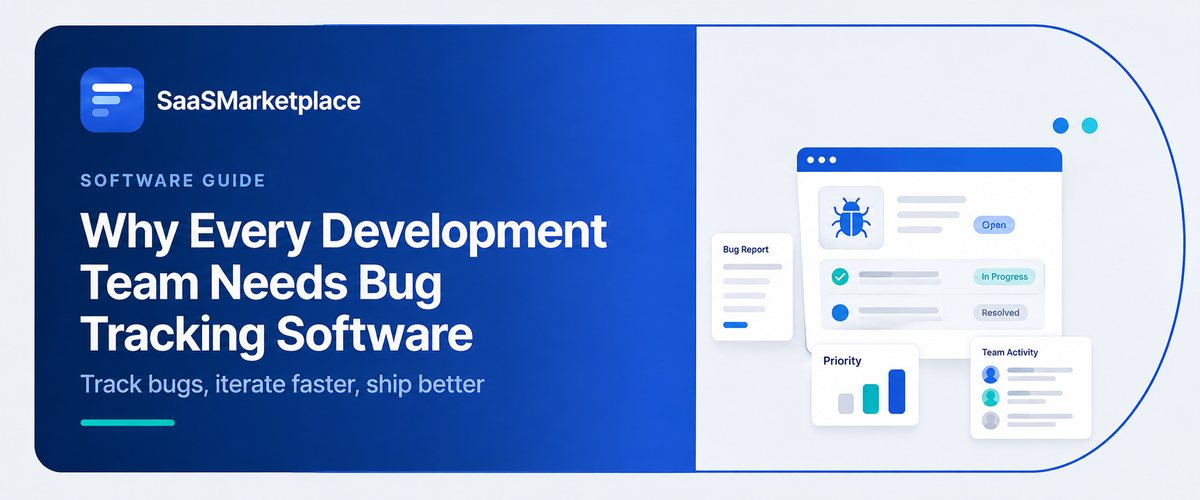
Why Every Development Team Needs Bug Tracking Software
-min.jpg)
Bug tracking software is an indispensable operational tool for teams because it helps turn those messy and informal issue reports into one centralized and visible workflow that keeps software quality and team efficiency on track most of the time. Without some dedicated system, important defects tend to slip under the radar, inside emails, or chat logs, and then forgotten errors pile up. When teams bring bug reports into one single source of truth, they can triage in a more systematized way, sorting by severity and assigning explicit ownership, while the whole resolution lifecycle plays out in real time. Plus, tracking software gives historical signals that are actually useful, like recurring defect patterns and time-to-resolution trends.
What is Bug Tracking Software and why does every Development Team need it?
Bug tracking software is basically a specialized application made to log, keep an eye on, and manage software defects, misbehaviors, and also those we need this feature gaps across the whole development lifecycle. Instead of letting technical issues just sit around in scattered chat threads, emails, or a couple of messy personal spreadsheets, a bug tracking tool works like one centralized spot where developers, QA testers, and product managers can collect every anomaly. Each entry usually includes the key ingredients like step-by-step reproduction guidance, system logs, screenshot proof, severity levels, and the engineering owner who’s expected to handle it.
A lot of development teams end up needing bug tracking software because software flaws are unavoidable when you’re building complex applications, and casual communication starts to break down once codebases get bigger. Without a dedicated tracking lane, truly critical defects can slide past, and then you get unassigned tickets, repeated engineering work, and slower release cycles overall. When you establish one single source of truth, the team can triage fresh problems in a more methodical manner, prioritize the most painful vulnerabilities that affect core user paths, and also make sure every attempted patch gets properly checked before it reaches production systems.
Beyond basic issue wrangling, bug tracking software becomes this engine for process tuning and cross-team visibility, in a practical sense. Engineering leaders get to see up-to-the-minute analytics along with historical measures, for example mean time to resolution and repeating defect patterns, and this is what helps surface architectural weak points; then it also improves future sprint scheduling. At the same time, customer support groups and product teams can finally see what’s actually happening with particular fixes, which makes communication with customers way cleaner and more timely. Bringing in a strong tracking setup moves engineering teams away from that reactive, fire-fighting mode, into a steadier, predictable delivery pipeline that's driven by quality instead.
How does Bug Tracking Software boost productivity for Software Companies?
Bug tracking software boosts engineering efficiency by replacing scattered manual troubleshooting with structured, automated workstreams.
- It removes Duplicate Work: A centralized database does an automatic scan for existing entries before new reports are logged, so multiple engineers don’t end up chasing the same incident at the same time.
- It cuts down on Context Switching: Developers get tickets that already include reproduction steps, error logs, runtime details, and screenshots, which reduces the need for back-and-forth with the person reporting it, overall.
- Automates Routing and Assignment: Right away, intelligent triage engines route incoming defects toward the right code owners by system components, tags, or severity levels- fast and dependable.
- Streamlines Root Cause Analysis: With historical ticket logs in hand, teams can look up prior remedies for similar errors, which tends to bring down mean time to resolution (MTTR) a lot.
- Cut Down Admin Work: By linking straight into your version control system, developers can just tweak ticket states, tie pull requests together, and automatically wind down issues mostly via those basic commit lines that everyone already uses.
- Avoids Priority Mix-Ups: When you keep a steady severity, people usually focus on the business-critical blockers, not every small UI polish item during the sprint window.
- Speeds Up QA Checks: Testers get a quick heads up as soon as something lands in staging, so they can re-test right away and often wrap up the done tickets with no extra waiting.
Which Bug Tracking Software features matter most to engineering managers?
- Automated Technical Context Capture: Tools that auto-attach system logs, stack traces, device specs, and network payloads cut out a lot of that boring back-and-forth between QA and engineering, or at least it seems less annoying.
- Customizable Triage Workflows: With flexible status pipelines, engineering leads can enforce tighter quality gates and set transition rules that match their team CI/CD routines, pretty directly.
- Bi-Directional VCS Integrations: Deep links into version control systems let managers auto-close tickets or adjust status fields through commit messages and pull requests, no extra hunting around.
- Granular SLA plus escalation Rules: There's built-in time-to-resolution tracking that flags those stagnant high-priority tickets so managers can shuffle engineering resources before customer SLAs actually get breached.
- Real-time velocity Analytics: Customizable dashboard views give useful insight into cycle times, defect density, and burn-down rates, making it easier for managers to tune sprint planning as well as team capacity.
- Automated duplicate Detection: AI-driven or tag-based scanning quickly spots identical error reports, so developers aren’t stuck redoing the same work, and the whole fragmented discussion threads situation stays under control.
How does Bug Tracking Software improve team collaboration on complex projects?
- It establishes a Single Source of Truth thing: it centralizes all error reports, edge cases, and feature requests into one place, so no more mixed signals popping up from different Slack channels, emails, or even spreadsheets.
- Bridges the Technical and Non-Technical divide a bit: it gives a shared interface so QA testers, product managers, customer support reps, and developers can talk to each other. Using standardized ticket templates plus visual attachments, everyone has the same context, and it works almost like a common language.
- Preserves in-context Discussion: Threads keeps code-level back-and-forth, those little design decisions, and reproduction questions pinned to the exact bug records, instead of spreading it all out over external messaging tools, and you know how that gets.
- Clarifies Cross-functional Dependencies: It draws out the tangled relationships between issues, like blockers and tasks, plus downstream dependencies, so the team understands how their code changes ripple into other sub-systems, without guesswork.
- Provides Real-time Operational Visibility: It lets engineering managers and product leads quickly glance at issue status, progress stages, and likely resolution routes without having to interrupt developers for those constant check-in status things.
- It automates cross-department Notifications: When an issue priority shifts, when a pull request gets linked, or when the fix moves into staging for verification, the right stakeholders get real-time alerts.
- The Asynchronous handoff part: Where it keeps rich technical metadata, reproduction logs, and historical context right inside each issue. That way, distributed teams across multiple time zones can pass the task back and forth with far less friction, like a guided relay.
Can Bug Tracking Software speed up issue resolution and reduce downtime?
- Instant Incident Detection & Triage: Modern trackers plug right into monitoring suites (like Sentry, Datadog, or PagerDuty). Once a major fault or outage starts, a ticket is spawned right away and handed to the on-call engineers, which cuts down the detection window from hours to mere seconds.
- Complete Technical Diagnostic Data: These tickets often include auto stack traces, memory usage, API payload snapshots, and even environment variables. So developers don’t have to spend any time asking “how do I recreate it”; they just jump into the fix with fewer detours.
- SLA-Driven Escalations: A priority scheme makes sure that high-severity blockers in production trigger immediate paging plus escalation workflows automatically. That helps ensure serious service interruptions get the full, all-hands attention.
- Faster Deployment Verification: CI/CD pipeline integrations keep everything synced by updating tickets when a change passes staging, then deploys to production. QA can validate on the spot, and the feedback loop closes faster, clean.
- Proactive Defect Prevention: By scanning past incident records and bug logs, teams can spot repeating failure patterns and fragile code areas earlier. Instead of letting things snowball into a full-scale outage, they address the weak link up front.
How much Money can Bug Tracking Software save your development Team?
1. Cuts down on Engineering hours that get wasted:
Engineers tend to lose, like roughly 20–30% of their time, hunting vague bug reports or dealing with duplicate issues; with structured tracking, you get that time back, and it turns into something real, like saving 15,000–30,000 each year per developer from salvaged payroll.
2. Stops expensive last-Phase Fixes (10x–100x savings):
IBM Systems Sciences Institute says that if you fix a defect once it is already in production, it can cost as much as 100x more; think 10,000–25,000 per production issue, compared to spotting it early during development, which usually lands around 100–250.
3. Helps avoid Churn and Revenue getting drained:
By preventing serious user-facing bugs, SaaS recurring revenue stays steadier; even a 1% drop in monthly customer churn from better platform stability can protect tens of thousands in annual recurring revenue ARR.
4. Eliminates the pricey Emergency hotfix tax:
When production outages pop up, teams end up pulling senior engineers off planned sprints to ship emergency releases; this pauses scheduled feature rollouts too, and the opportunity cost gets massive.
5. Saves room in Customer Support:
Centralized bug tracking means support agents can quickly verify ticket progress and connect new incoming tickets to known issues, which shortens how long each support ticket takes and reduces support operations spend.
Does Bug Tracking Software scale as your Software Company Grows?
- Supports Multi-Team Hierarchy: When engineering orgs start breaking apart into specialized pods like frontend, mobile, and infrastructure most bug tracking platforms let you keep subprojects and nested issue boards in place, plus cross-team dependencies, so the individual developer view does n ot feel crowded.
- Enforces Role-Based Access Control (RBAC): For enterprise growth, security can’t stay casual; these tools usually give granular permissions, single sign-on (SSO), and audit logging so access stays controlled across internal teams, contractors, and even external vendors.
- Automates Large-Scale Workflows: As ticket volume climbs from tens to thousands each month, built-in automation manages auto-assignment and auto-prioritization, and it also triggers SLA based escalation rules, which reduces the manual triage workload that people often end up doing anyway.
- Handles High-Volume API and CI/CD Integrations: Scaled systems connect up pretty smoothly with enterprise asset management, secure code repositories, continuous integration pipelines, and automated testing suites, so massive log volumes get managed automatically.
- Provides Portfolio-Level Analytics: Executive dashboards pull together bug metrics across different products and releases, giving CTOs as well as VPs of Engineering that wider, big-picture view into systemic quality patterns, defect density, and deployment hazards.
What's the next step to choose the right Bug Tracking Software for your team?
The next step is to run a structured selection process to evaluate tools against your team's stack, budget, and operational workflow.
1. Take a good look at your present tech stack and tools
First, figure out the main systems your team touches every day. Then consider this: any software you pick should integrate natively, so you are not doing manual data entry all the time or getting stuck bouncing between contexts.
2. Define Your Primary Evaluation Criteria:
- External vs. Internal Needs: Figure out whether customer support or outside clients actually need direct portal access, or if this whole platform is only for internal engineering teams. Sometimes external shows up late though, so watch that.
-
Scale & Security Requirements: Confirm whether you need enterprise-grade controls like SAML SSO, Role-Based Access Control (RBAC), and SOC 2 compliance, because those items can slow things down if you find them too late.
3. Try to get a cross-functional assessment committee assembled:
With people from Engineering, QA, Product Management, and Customer Support. The big thing is this: the platform we end up choosing has to be solid technically, but it also has to look believable and reasonable for the more non-technical crowd too. Not only for one group, you know. It can’t be just an engineering situation even if the engineering side is super important. It still needs to hold up for the rest of the team as well, product and customer support included, and that whole crew.
4. Run a 14-day pilot sprint, like a trial
Spin up a free trial with just one project team, not more. Ask them to log live bugs, then push through a sprint, and make sure commit messages get linked up too. At the end, have the system generate reports, so you can judge real-world usability and also velocity, basically how fast things actually move in practice.
5. Collect feedback, then add up the real Total Cost
Review what they said during the trial based on how easy it is, how quick it feels,and whether people actually get on board without extra hassle. After that, calculate the total yearly spend too, including per-seat licensing, possible tier upgrades, and that ongoing administrative upkeep before you decide whether to buy for good.
Conclusion
Putting in bug tracking software is a non-negotiable step for development teams that want to ship dependable software while also keeping engineering velocity stable and not hurting overall operating margins. When you swap scattered conversations with one centralized operational hub, engineering orgs tend to tackle serious defects faster, cut down on expensive downtime, and generally keep elevating code quality from sprint to sprint. And if you’re trying to pick the ideal tracking system that really fits your technical stack, take a look at the SaaS Marketplace- this centralized place where you can discover, compare, and acquire pretty much any business software, so your engineering team gets more momentum, and you can keep flowing with continuous software delivery.
FAQ's
Bug tracking software is specifically engineered for software development, offering specialized features like automated stack trace capturing, version control integrations, and code-level triage that generic project tools lack.
Yes, even small teams benefit significantly by establishing organized quality assurance habits early, preventing technical debt from accumulating, and keeping issue tracking manageable as the codebase scales.
Modern bug trackers link directly with code repositories like GitHub or GitLab, CI/CD deployment pipelines, and incident tools like Slack or PagerDuty to update ticket statuses and log crash context automatically.
By enabling teams to catch and fix critical defects faster before they reach production, bug tracking software reduces software outages, improves application stability, and ensures user-reported issues are resolved promptly.
Audit your team's tech stack, establish key feature needs, and test 2–3 leading platforms during a live 14-day trial sprint to evaluate developer adoption and workflow compatibility.