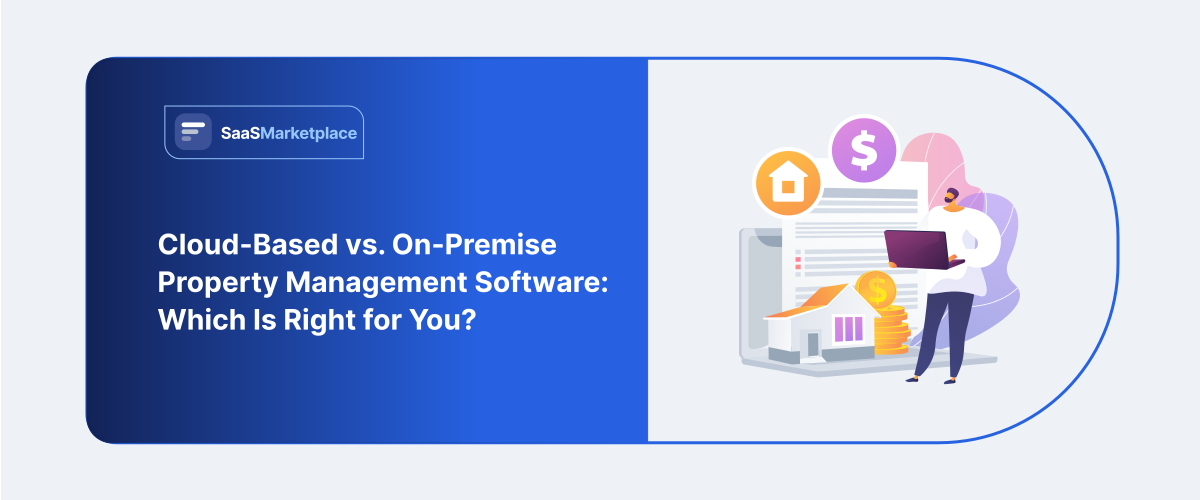
Cloud-Based vs. On-Premise Property Management Software: Which Is Right for You?
-min.jpg)
In today's fast-paced U.S real estate market, it kinda comes down to a tradeoff when you’re picking cloud-based versus on-premise property management software; mostly it’s about how much operational freedom you want versus how tightly you wanna keep data controlled. Property managers across the United States are adapting to remote work, and tenants expect more and more digital portals. Plus, portfolios keep expanding, so cloud-based platforms feel pretty practical because you can access things from anywhere, the pricing model tends to be more consistent, subscription-style, and scaling up is usually quicker without paying for heavy IT groundwork. On the other hand, on-premise tools still pull in established enterprises and institutional owners who really care about having maximum command over sensitive data; they may also want custom local integrations, and they’re comfortable with fixed long-term licensing costs. Choosing the right system isn’t only a tech upgrade; it’s more like a strategic move that can shape tenant happiness, your operational margins, and how well your portfolio competes in this digital-first environment.
What is Cloud-Based vs. On-Premise Property Management Software?
When choosing property management software in the U.S. market, the main difference kinda comes down to where the system lives and how you access it day to day. Cloud-based software (Software as a Service, or SaaS) runs on secure external servers that the provider keeps up and maintains. Then property managers, maintenance techs, and landlords can log in from pretty much anywhere, like any web browser or mobile app. With this model, automatic updates and backups usually happen in the background, plus data security is handled for you, which makes the whole thing feel more predictable. You pay a monthly or yearly fee, and you don’t have to think about hardware setup. Because of that zero-install, cloud software has grown into the industry default for fast-expanding portfolios and teams that need real-time access to tenant portals, digital leases, and online rent collection while moving around.
On-premise software is basically the opposite. It’s installed directly onto your company’s own local servers and even onto individual desktop computers. That approach often starts with an upfront license fee, and it gives your internal IT team full control over settings, local database storage, and any custom integrations you want to build. The upside is it can reduce ongoing subscription costs, and it doesn’t depend on outside cloud servers owned by a third party. But the tradeoff is that your business takes on the responsibility for data security, manual updates, and the day-to-day hardware upkeep. So in practice, on-premise solutions are usually picked by bigger, established U.S. real estate firms that have dedicated IT departments and stricter in-house rules for data governance.
What is Cloud-Based Property Management Software, and how does it work?
Cloud-based property management software is kind of a modern web-hosted setup; it’s meant to help with day-to-day real estate chores, but without you having to rely on local servers or do any software installs on site. Instead of locking your office to a few desktop computers, the whole thing runs on secure remote servers. Those servers are usually run by third-party providers, think AWS or Azure. In the U.S. market, you’ll see offerings of this tech as a subscription, and then property managers, landlords, and leasing agents get quick access to tenant records, bookkeeping tools, and lease paperwork using basically any standard web browser or a mobile app.
It leans on a centralized cloud database that’s connected to AI workflow automation, usually through secure application programming interfaces (APIs). So, when a tenant pays rent online, say via ACH or credit card, the software will update your financial ledgers right away, notify your accounting team, and route the money toward your business bank account in real time. Maintenance requests tend to work in the same style. A tenant snaps a photo of a leak, uploads it from their phone, and then the platform automatically sends a work order to the right vendor, while also giving a heads-up to the property manager who’s on site.
Since the infrastructure is handled fully off-site, these cloud platforms keep running data backups, system upgrades, and cybersecurity patches, all without making your business pause. With that, real estate firms across the U.S. can increase their unit count more easily, bring together remote staff with fewer headaches, and offer tenants those more modern digital perks, while keeping operating costs kind of steady and predictable, paid as you grow.
What is On-Premise Property Management Software, and who uses it?
On-premise property management software is kind of a traditional desktop application that gets installed straight onto a real estate firm’s local physical servers and employee computers. Instead of the newer web-style approach, the program runs locally behind the company’s internal firewall, so it does not rely on continuous internet connectivity or third-party web hosting. And, rather than paying that ongoing recurring monthly subscription model, businesses usually buy a perpetual software license upfront. Then, the in-house IT team ends up taking full responsibility for the physical servers, doing the manual upgrades, setting up data backup protocols, and protecting sensitive tenant records, too.
How it works is mostly about localized network control: employee workstations connect directly to the central on-site server through a local area network (LAN), and from there they process leasing, accounting software, and maintenance workflows. Legacy desktop versions tend to follow exactly this structure. Because the data basically never leaves the office perimeter without special or custom configuration, the system can provide a lot of autonomy over system customizations, database structures, and third-party software integrations. Of course, that only works well if your team has enough technical expertise to build and keep all that stuff running.
In the U.S. market, on-premise solutions are mainly used by large enterprise real estate firms, institutional property owners, and government housing authorities that already have established portfolios. They often stick with on-premise setups because strict data sovereignty matters, the reporting needs are pretty complex, or they have to follow tight institutional security protocols. Also, some legacy operators who invested a lot into dedicated IT infrastructure years ago keep using on-premise software so they can maximize the hardware they already have, and avoid third-party cloud services… as much as possible.
How does cost differ between Cloud-Based and On-Premise Property Management Software?
1. Starting Spend & Upfront Licensing
- Cloud-Based: Pretty low at the beginning. Teams pay a small setup fee, then start paying every month or yearly with a subscription, usually tied to something like unit count or active seats. No real hardware is needed, like nothing to buy up front.
- On-Premise: More money right away. Property firms have to purchase perpetual licenses for every user or workstation. And on top of that, there are big early payments for customizing the software, plus installing it inside their own systems, with more steps than people expect.
2. Real Hardware & Local Server Stuff
- Cloud-Based: $0 for hardware. Hosting, compute power, and storage sit off-site, managed by the cloud provider (like AWS, Microsoft Azure ).
- On-Premise: Costs for local equipment, and it adds up. Firms need to acquire physical servers, network switches, uninterruptible power supplies (UPS devices, firewalls, and separate server racks or cabinets for the rack space.
3. Ongoing System Maintenance and Software Upgrades
- Cloud-Based: Maintenance and updates are folded into the subscription cost. New features, security patches, and even regulatory updates (like state tax code revisions) tend to arrive automatically; no added bill for that.
- On-Premise: This usually means you need an annual software maintenance contract (often somewhere around 15%–22% of the original license price). When major releases show up, upgrades may also call for a paid migration effort, or you end up paying new license fees too.
4. Internal IT Staffing and Facility Overhead
- Cloud-Based: Typically less internal overhead. Since the provider keeps the system design and troubleshooting, many firms don’t really have to staff a dedicated in-house IT engineer just to babysit the software, not as a rule.
- On-Premise: Bigger operational overhead. Organizations must keep dedicated IT staff or bring in managed service providers, MSPs, to maintain local servers, control network security, plus deal with utility bills for server room temperature and electricity.
Which is more Secure for US Businesses: Cloud-Based or On-Premise Property Management Software?
1. Physical Server Security and Facility Control
- Cloud-Based: Data is stored in high-security, Tier 3 or Tier 4 data centers with biometric access, 24/7 armed guards, perimeter fencing, plus climate controls.
- On-Premise: Data sits on server hardware inside your local office. So the safety is basically tied to your building’s physical access rules, and that makes servers more prone to theft, break-ins, or plain physical damage from fires, floods, and power surges.
2. Cybersecurity Defense and Automated Patching
- Cloud-Based: Ongoing automated vulnerability patching plus AI-driven threat monitoring helps guard against zero-day exploits. Also, top-tier PMS vendors deploy dedicated, around-the-clock cybersecurity staff to stop ransomware and DDoS attacks, in real time.
- On-Premise: Security patches and firewall updates are something your internal IT group has to download and install manually. If updates come late, legacy software stays vulnerable to known software vulnerabilities and ransomware attempts.
3. Data Backups, Redundancy and Disaster Recovery
- Cloud-Based: Automatic continuous data replication across geographically separated server regions keeps business going fast. If a hurricane or power outage hits your office, your team can basically log in from anywhere and not lose tenant or financial records.
- On-Premise: Disaster recovery is fully dependent on your backup routine. If local servers fail and there aren’t recent off-site copies, firms can face permanent loss for lease agreements, tenant SSNs, and accounting ledgers.
4. Identity & Access Management (IAM)
- Cloud-Based: Usually there are built-in enterprise authentication standards like Single Sign-On (SSO), Multi-Factor Authentication (MFA/2FA), and Role-Based Access Control (RBAC) that help limit who can get in without permission, across web browsers and mobile apps, in a more disciplined way.
- On-Premise: With on-premise, the access gate kind of depends on local network configurations. Turning on remote access for off-site leasing agents often means you have to arrange Virtual Private Networks (VPNs) or remote desktop gateways. But if those are misconfigured, you can accidentally open fresh security loopholes, and nobody notices right away.
What Support and updates come with Cloud-Based vs. On-Premise Property Management Software?
1. Delivery and Installation of Software Updates
- Cloud-Based: Software updates roll out by themselves through the cloud with near-zero downtime and basically no manual clicking. Bug fixes, security patches, and those newer feature releases deploy overnight across every user device, kinda seamlessly.
- On-Premise: Updates need to be timed, downloaded, and installed by hand across each physical server and desktop workstation inside your office network. That usually means planned operational downtime, plus there can be software conflicts.
2. Upfront Costs and Recurring Spend for Upgrades
- Cloud-Based: All feature improvements, security patches, and regulatory or compliance updates are packed right into your monthly or annual subscription with no extra fees.
- On-Premise: Upgrades often mean paying for an ongoing Annual Software Maintenance Agreement, usually around 15%–20% of your original license cost. Bigger upgrades (like moving to a totally new release) typically demand buying fresh software licenses and also paying for implementation assistance.
3. Technical Support and Channel Availability
- Cloud-Based: You get vendor support on multiple channels, including 24/7 live chat, phone hotlines, web ticket portals, and an AI assistant that can route requests or open tickets. This is generally baked into the service tier.
- On-Premise: Support can be restricted to tiered maintenance arrangements, or else it’s limited to inflexible business-hours phone lines. And when a local database hiccups, or physical hardware errors pop up, you’re looking at your own internal IT crew, or you hire an external Managed Service Provider (MSP).
4. Continuous Regulatory & Accounting Compliance
- Cloud-Based: The top U.S. vendors keep updating their software features in real time, so they can match state and federal requirements as they shift. That means tax rules like 1099-MISC filings, tenant protections at the local level, and even payment standards such as PCI-DSS compliance can adjust automatically. Sometimes it feels almost effortless, because the platform just handles it.
- On-Premise: With on-premise setups, staying compliant usually turns into a manual routine. You have to track legislative changes yourself, then apply the right software patches before anything breaks or falls out of alignment. If updates slip, firms can end up exposed to compliance errors quietly, and often later than anyone wants.
5. Vendor Responsiveness to Bugs & Error Fixes
- Cloud-Based: Because hosting is centralized, if one property manager somewhere in the U.S. finds a bug, the fix can be pushed out globally. That means every customer receives the correction at basically the same time, not weeks later after a special request.
- On-Premise: When something goes wrong with code or a local database gets corrupted, troubleshooting is rarely “copy and paste”. It often requires bespoke support sessions, those one-off kinds of fixes. Vendor support technicians may need to remote in, or they might arrange physical service on your local servers, which can slow everything down.
Conclusion
Choosing between cloud-based and on-premise property management software really comes down to what your operation values most. Cloud solutions tend to support modern teams better, with mobile access from anywhere, automatic upgrades, and lower upfront entry costs. On-premise options can appeal if you want direct control of your local server environment, plus more predictable long-term license costs and custom configurations, especially if you run an enterprise team with in-house IT. Ready to check your options? Go to SaaS Marketplace, the kind of ultimate place where you can discover, compare, and buy business software matched to your portfolio’s real needs.
FAQ's
Cloud-based software is hosted on secure external web servers accessible from any browser, whereas on-premise software is installed directly onto your local physical servers and computers.
Cloud-based software requires minimal upfront cost with a monthly or annual subscription, while on-premise software demands heavy upfront investments in software licenses and server hardware.
Cloud software provides instant remote access via web and mobile apps, whereas on-premise systems usually restrict access to the local office network unless configured with complex VPNs.
Cloud systems update automatically over the web at no extra cost, while on-premise updates require manual installation by your IT team and often involve paid version upgrades.
Cloud-based software scales effortlessly as you add units or users by simply adjusting your subscription tier, while scaling on-premise software requires purchasing additional hardware, licenses, and server capacity.