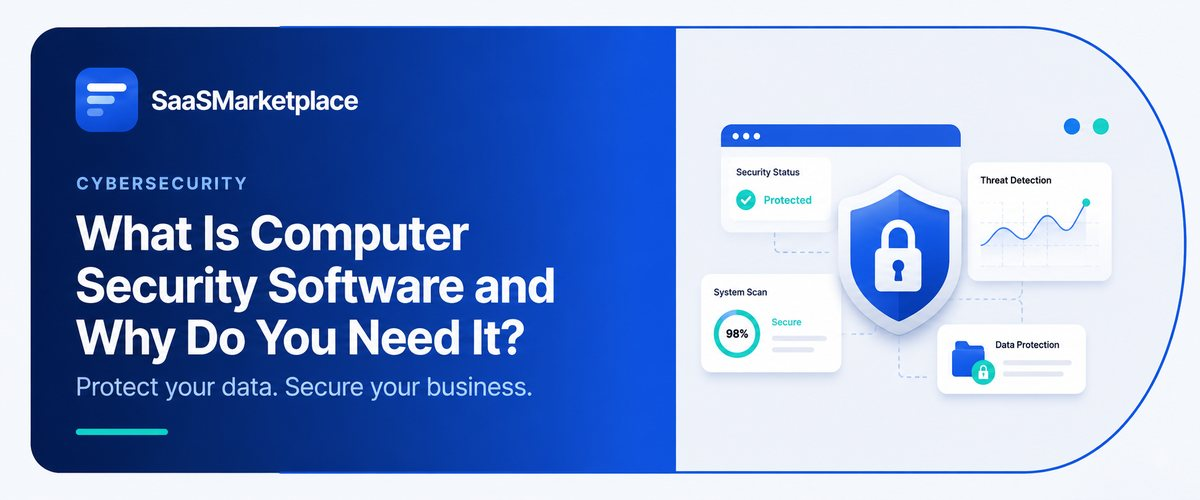
What Is Computer Security Software and Why Do You Need It?
-min.jpg)
Managing current data flows throughout India or running a business involves negotiating a hyper-connected digital terrain that is more and more complicated. The amount of useful data kept on local networks keeps growing quickly as companies move their primary daily operations to digital systems. This digital transformation exposes people and companies to complex, continuous operational hazards even if it offers amazing speed and efficiency. Not getting these active endpoints often causes a lot of company downtime, money loss, and damaged customer relationships.
 Looking for Computer security software? Check out SaaS Marketplace List of the Best Computer security software in USA for Your Business
 Overcoming these systemic vulnerabilities brings modern enterprise executives to a vital infrastructure crossroads: moving away from weak, unprotected network nodes toward advanced Computer security software. Deploying professional Cybersecurity Software ensures absolute integrity in shielding user identities, locking down private business records, and keeping modern digital operations fully optimised. This exhaustive guide explores the core frameworks, foundational mechanics, and direct operational benefits of using advanced digital shields to protect your systems against growing Cyber Threats in 2026.
What Is Computer Security Software?
Computer security software is a collection of sophisticated protocols, technical tools, and organized defenses meant to guard laptops, servers, and data systems against unwanted access and harmful change. This specific framework works as an active digital gatekeeper rather than leaving an operating system exposed to incoming network demands. Instead of leaving an operating system exposed to inbound network requests, this specialized framework acts as an active digital gatekeeper. It continuously intercepts file modifications, inbound web packets, and external hardware connections to ensure no unauthorized code executes within your system environment.
Role in protecting systems and data
The primary role of modern Security Software for Computers is to preserve the confidentiality, integrity, and availability of an organization's digital assets. It builds an active perimeter around the core operating kernel, constantly verifying the execution privileges of background applications. By executing deep script analysis and continuous file indexing, the software shields structural operating folders from malicious alterations, keeping your local data assets fully protected against internal and external manipulation. Organizations can strengthen this protection with Data Loss Prevention (DLP) Software, which helps prevent sensitive files and confidential information from being copied, transferred, or shared without authorization.
Why Is Computer Security Software Important?
1. Protection Against Malware
Running a business without dedicated Computer Protection Software leaves your complete hardware fleet exposed to destructive automated vectors. Modern cybercriminals disable key operations by deploying automated payloads that could infect vulnerable systems in seconds.
- Viruses: The program finds self-replicating scripts that attach to valid files and keeps them from harming the main systems of the computer.
- Trojan: Advanced detection systems find dangerous apps disguised as benign tools and stop them from opening secret backdoors into your business network.
- Ransomware: To prevent hostile scripts from locking down your sensitive databases and seeking significant financial rewards, the system sets active Ransomware Protection limits.
2. Preventing Data Breaches
Maintaining a robust layer of Data Security Software is vital for preventing unauthorized extraction of proprietary company assets. Encryption Software can add another layer of protection by converting sensitive business data into unreadable formats that unauthorized users cannot easily access.
- Protect Sensitive Information: The software locks down employee records, patented codebases, and financial documentation from external corporate espionage.
- Reduce Cyber Risks: Automated network filters eliminate configuration errors, minimizing the overall digital attack surface of your entire enterprise footprint.
3. Protecting User Privacy
Modern online habits generate vast trails of private metrics that data miners and identity thieves constantly try to harvest.
- Prevent Unauthorized Access: Advanced Data Privacy Protection controls block rogue browser components from tracking your local activity logs or copying keystrokes during secure financial sessions.
How Does Computer Security Software Work?
To maintain complete digital defense, a professional endpoint platform executes a multi-layered security cycle completely in the background:
- Threat Detection: The engine applies signature matching to identify known bad code while leveraging advanced Malware Detection models to flag suspicious application behaviors.
- Real-Time Monitoring: The platform watches your operating environment around the clock, analyzing every active memory thread and incoming network link as they open.
- Security Scanning: Scheduled and on-demand diagnostic scans parse every deep storage sector, indexing system files to verify that no hidden rootkits are sleeping in the background.
- Threat Removal: When a danger is verified, the system instantly halts the process, quarantines the compromised file block, and executes a deep system cleaning to erase residual registry tracks.
Types of Computer Security Software
1. Antivirus Software
A core tier of Antivirus Software functions as the first line of defense for individual workstations and shared office machines. It continuously cross-checks active file operations against massive global databases of known digital signatures, providing baseline Virus Protection to keep common computing bugs from infecting standard user spaces.
2. Anti-Malware Software
Advanced malware protection software modules do more than just check file signatures. They look at how programs behave while they are running to detect threats. This lets the system spot hidden threats that haven't been seen before, tricks that inject code into memory, and tricky files used for tracking that normal scanners might miss.
3. Firewall Protection
Deploying advanced Firewall Software creates a secure barrier between your local computer infrastructure and the public internet. It acts as an active customs agent, inspecting the header data of every single inbound and outbound network connection to block unauthorized web traffic. For organizations operating cloud-based infrastructure, Cloud Security Software provides additional protection for cloud applications, workloads, identities, and stored business data.
4. Anti-Spyware Software
This specialized layer focuses on maintaining strict Online Security by intercepting tracking cookies, adware loops, and dangerous keyloggers. It stops malicious actors from recording your screen layout, stealing your passwords, or transmitting your personal identity profiles over the web.
5. Endpoint Security Software
For modern corporate ecosystems, Endpoint Security Software connects all individual devices to a central management console. This allows enterprise IT departments to deploy uniform safety settings, monitor laptop threats remotely, and push out instant Cyber Threat Protection updates across the entire corporate network simultaneously.
Benefits of Using Computer Security Software
Implementing a unified suite of Digital Security Software delivers immediate structural enhancements to your entire corporate framework. The most critical benefit is securing comprehensive data protection across your entire organizational ledger. Locking down your active files prevents the catastrophic leak of customer profiles, protecting your business from severe regulatory penalties and legal liabilities.
Furthermore, running uniform Device Security configurations ensures your physical computing gear remains functional over a longer lifecycle. It stops rogue applications from burning out processing chips, hijacking network bandwidth, or causing constant system blue-screens. This optimization minimizes unexpected hardware maintenance costs and prevents sudden operational friction across your workforce.
Ultimately, deploying these protective suites safeguards overall business continuity by preventing destructive cyber attacks from halting your production pipelines. Ensuring your team can log transactions, process client orders, and manage communication channels safely fosters a highly productive work environment. This structural stability keeps your brand's market reputation intact and secures long-term commercial growth.
How to Choose the Right Security Software?
Finding the Best Computer Security Software requires a clear look at your daily computing habits and your hardware infrastructure. Assess your alternatives against these four fundamental criteria to simplify your review process:
- Total Protection Features: Check if the package includes a complete solution that encompasses web protection, proactive anti-ransomware features, and dedicated identity theft protection systems.
- Easy to Use: Look for a solution with automated alerts and user-friendly graphics so that your personnel can easily manage alerts without the need to involve IT support.
- Cross-platform friendliness: Make sure the program runs perfectly on all of your Windows, macOS, and Linux server operating systems free from system lag.
- Regular Updates: Look for a security engine backed by a continuous threat intelligence network that rolls out live virus definitions automatically every day.
Conclusion
In conclusion, deciding your foundational data defense strategy shapes how securely your organization can scale its operations in an increasingly dangerous online landscape. Relying on basic built-in tools or outdated scanners creates massive technical blind spots that expose your business files to sudden exploitation. The adoption of computer security software that is highly advanced will eliminate the structural risks by incorporating real-time scanning of files, network defence, and automatic elimination of threats.
FAQ's
Conventional antivirus software operates on a single computer and thus is confined only to dealing with file-based threat detection and cleansing.
The firewall acts like a barrier between the user machine and the internet, keeping an eye on all the web traffic coming and going.
Yes, modern security systems feature proactive behavioral tracking that detects the specific cryptographic footprint of ransomware activity.
Older security platforms frequently caused noticeable system lag because they executed heavy, unoptimized hard-drive scans.