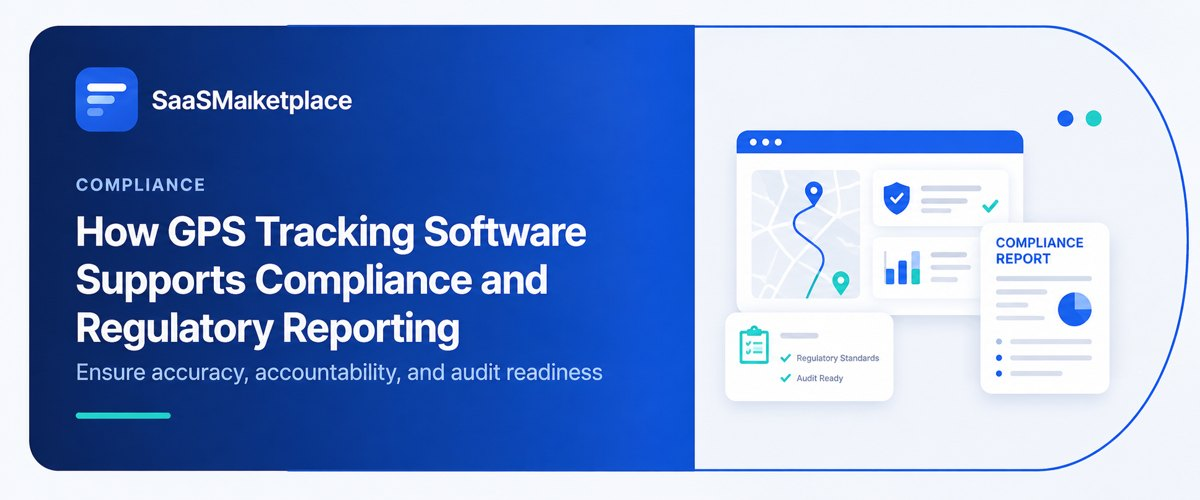
How GPS Tracking Software Supports Compliance and Regulatory Reporting
-min.jpg)
GPS tracking systems are important due to their ability to help in compliance management for vehicles going on the highways. With the ability to keep collecting and storing the crucial information regarding the movement of the vehicle (e.g., where the vehicle is situated, with regard to its route and location), the systems are capable of eliminating unnecessary paperwork. GPS tracking is of great importance for the compliance procedure because it allows the managers to get valid documentation of their fleets. As a result, GPS tracking is greatly affecting the process of compliance for vehicles.
What is GPS Tracking Software and why does it matter for US fleet compliance?
GPS tracking software is a central combined management system that uses hardware telematics, satellite signals, and onboard vehicle diagnostics (OBD) to enable an appropriate overview regarding the location, movement, and performance of commercial vehicles. In this regard, it serves as a digital logbook and the central hub for fleet operators in the US and can convert raw driving data into actionable operational insights. The software eliminates log-based records and instead gives fleet managers detailed route history, idling time, speed, and engine state information for all vehicles, thus providing nearly instantaneous visibility into every asset and how it is being operated.
It is such technology that has become crucial for US fleet compliance with FMCSA and DOT regulations that leave no room for error. The software eliminates the risk of logbook fraud and reduces fatigue by complying with strict requirements such as Electronic Logging Devices (ELD) to track Hours of Service (HOS). In this way, it makes the accounting of taxes from state to state very easy by automatically tracking mileage for International Fuel Tax Agreement (IFTA) filings. GPS tracking software protects motor carriers from catastrophic penalties by providing automated, tamper-proof, time-stamped records that hold driver safety scores high
How does GPS Tracking Software help meet FMCSA ELD mandate requirements?
- Engine Synchronization in Direct Mode: The system interfaces with the car's engine control unit (ECU) and records the engine's performance status, movement of the vehicle, total distance traveled, and hours of operation automatically without the involvement of manual input.
- HOS Automatic Logging: The movements of the vehicle tracking software are converted into digital records of duty status (RODS) automatically changing the driver logs in real time to show whether there was driving on duty or off duty time.
- Violation Warnings in Real Time: Alerts from the system inform drivers and operators when the driver nears the limit of 11 hours of drive time or 14 hours of functioning time thus preventing violations of hours of service requirements beforehand.
- Data Transfers Following Standards: With the help of the software drivers can instantly transfer unalterable duty sheets to the FMCSA inspection officers during roadside inspections using the data exchange methods like internet services, Bluetooth, and USB connections.
- Detection of Vehicle Movement Without Driver Registration: The unreserved vehicle operations are monitored by the application without the need for the driver to be on board and logged in before the work of the vehicle takes place. In this case, the fleet manager must reconcile records of operations for compliance with the FMCSA rules.
- Electronic DVIRs: DVIRs can be filled out by drivers by means of the application on a portable device, thus enabling linking the safety checklist from pre-trip and post-trip inspections to the logbook in automobile history.
- Secure Log and Tracking of Changes: The records of movement and engine operations of the automobile are locked through the means of the application so that the driver and carrier can track changes without losing the original version of the data.
In what ways does GPS Tracking Software simplify DOT audits and inspections?
- Instant Access to Audit-Ready Digital Records: Combines the data logs of drivers together with the timings of places visited, records of speed and time registers, and puts it all into one system in the cloud and no more requiring the submission of physical copies of paperwork.
- Automated IFTA Mileage Tracking: Keeps the records of accurate number of miles traveled geographically along state boundaries taking shape in the maps, providing exact and genuine reports on distances among the states required for audit purposes of IFTA.
- Digital DVIR Management: Arranges eDVIRs together with certificates indicating that defects were spotted and repaired before putting the vehicle on the road.
- Quick Data Reception While Inspected on the Road: This service allows using navigation technology or Bluetooth to transmit ELD information while on the road.
- Getting Maintenance and Inspection Records: This records a employee scheduling of repairs, history of services and DTCs or codes that record what problems the vehicle had.
- Unassigned Driving Records: This service helps in getting logs of movement that took place without the driver being logged and provides managers with reports to justify such movement in case of a check.
- Driver Safety Profile Tracking: Monitors driving habits like speeding, abrupt stops, quick acceleration, and seatbelt use, which allows carriers to keep their Safety Measurement System (SMS) score low, according to the Federal Motor Carrier Safety Administration (FMCSA)’s CSA program.
How does GPS Tracking Software keep driver logs and Hours of Service accurate?
The software for GPS tracking offers reliable logs of the driver and the hours of service, as it substitutes everyday paper logs by advanced hardware-backed tracking.
- Direct Communication with the ECM: The software communicates directly with the engine control module of the vehicle. The software depends on the employee performance of the vehicle in order to understand that the vehicle is moving; thus, the driver does not need to complete the logs, which makes it more accurate.
- Automatic shifting of statuses: As soon as the vehicle reaches the speed of 5 mph, the software changes the status of the driver to Driving. In case the vehicle stops for a long time, the software will either remind the driver to change the status or update the status automatically to On duty (not driving).
- Precise GPS logging: The system calculates the precise geographical coordinates at certain intervals, as well as in the case of changes of driving status; starting or stopping engine and other movements of the vehicle.
- Alerts before finishing each limit: The compliance rules of the power engine take into account the various limits, such as the limit of 11 hours of driving time, for instance. They send alerts in advance
- Proactive Threshold Alerts: The compliance engine rules that are built into the system count the unused driving hours such as 14 hour duty, 11 hour driving and 60/70 hour weekly limits on an ongoing basis. Notifications are sent in real-time to both the dispatch and the driver so as to prevent any violations from taking place.
- Co-Driver & Team Driving Tracking: The application is used by the drivers to log in using their unique credentials. Moreover, in case of team driving, the application manages each driver separately by taking into consideration their individual duties, thus safeguarding from driving hour miscalculations.
- Immutable Audit Trails: All modifications made in the log of the system do not overwrite the previous records in the log, thus making it possible to trace the changes made and the reasons for the changes.
Can GPS Tracking Software improve fleet safety and reduce regulatory violations?
1. Getting Rid of Dangerous Driving Habits:
Integrated telematics allows you to spy on car data through behavior sensors and vehicle diagnostics.
- Alerts Inside the Cab: If harsh braking, fast acceleration, sharp turns, or speeding occurs, drivers are notified immediately with sound signals.
- Speed Control and Geofencing: Fleet managers can set local speed limits, resulting in a decrease of speeding, which is one of the primary causes of FMCSA penalties.
2. Decrease of FMCSA CSA Basic Scores
The FMCSA assesses the risk of the fleet using Safety Measurement System (SMS) of telematics. It deals with the most influential safety factors.
- Unsafe driving Score: The system allows one to lower the number of speeding, aggressive driving, and distractions.
- Hours-of-Service Score: The system also prevents violations due to fatigue by tracking the driving time.
- Vehicle maintenance Score: The system detects problems early and ensures breakdowns do not prevent vehicles from being on the road.
How does GPS Tracking Software automate IFTA and mileage reporting for fleets?
Automating International Fuel Tax Agreement (IFTA) filings and reporting through the GPS tracking program means eliminating the use of manual trip sheets for data collection and reporting. It allows you to find, obtain, and sum taxes owed to several jurisdictions in four steps:
- Tracking Geofenced Jurisdictions: The GPS technology sets the virtual borders of states and provinces. No sooner does a truck cross any state line than measures of time, position, and odometer reading are registered by the telematics system which means no information from the driver.
- Distance Measuring Automatically: The program connects to the vehicle's ECM (Engine Control Module) thanks to which the program measures the distance traveled proving that there is no inconsistency when using the odometer manually.
- Using Fuel Cards: Fuel telematics systems are integrated with fuel cards used by commercial fleets. So, as soon as a truck is filled with gas, the system collects information on the transaction date, place, volume of fuel bought, etc.
- Calculating Fleet MPG and Taxes Automatically: The program calculates how much fuel has been used per each state and the tax to be paid accordingly.
- Simple Generation of Quarterly Reporting: Following the exit of each filing quarter, the system automatically accumulates the respective vehicle data into either PDF format or CSV quarterly reports, ready for submission on base-jurisdiction state portals.
What compliance data should GPS Tracking Software capture for regulatory reporting?
HOS and Duty Status Data
- Engine Powered On: System automatically registers the times the engine is turned on and off and detects when the vehicle exceeds the speed threshold.
- Record of Duty Status: Monitors changes in a driver’s duty status, including when that driver is Driving, On Duty (Not Driving), Off Duty, and when they are in the sleeper berth.
- Driver ID and Sign-Ins: This feature of the ELD records unique identification IDs of the drivers working in the ELD, profiles of co-drivers, and the exact time when they log in and out.
- Unassigned Vehicle Activities: This capability captures inappropriate or unauthorized movement of the vehicle when there is no assigned driver logged into the system.
Vehicle Diagnostics and Engine Data (ECM)
- Odometer: This feature records the exact values of the odometer at the start and the end of a trip for the vehicle.
- Engine Hours: This records the total time the engine has been running to ensure accurate calculations of driving intervals.
- Diagnostic Trouble Codes (DTCs): This feature logs the fault codes and alerts when the vehicle is operating normally.
Geolocation & Jurisdiction Information
- GPS breadcrumb path tracking: Points out the exact location every 60-minute intervals while in motion, changing duty status and turning the engine on/off.
- State/jurisdiction border crossings: Records the time when the vehicle enters into a different state, along with the coordinates and mileage for IFTA purposes.
How do you choose GPS Tracking Software that supports long-term compliance needs?
- Confirm Official FMCSA Registration: It is crucial to confirm whether the hardware of the chosen software vendor appears on the list of active FMCSA registered ELDs. Typically, self-registration is doubtful to be certified as it lacks a proper technical and audit history.
- Request Multi-Channel Roadside Data Upload: Look for a solution that allows several alternatives in data transfer during road checks. The designed software has to be able to send duty status data through various means, such as wireless Internet connection, Bluetooth, and USB cable, which is necessary in case of the loss of connection.
- Make Sure Cloud Scalability and Open API: Make sure to use the open version of the API platform, which can be easily linked to the existing systems of Fleet Management Software (FMS), Dispatch, Payroll, and Enterprise Resource Planning (ERP) in order to meet the demands of the constantly increasing fleet.
- Check on Update Frequency and Compliance with Legislation: Verify that the vendor’s solution is provided with regular updates via the over-the-air (OTA) solution which will allow the software to comply with the new regulations, like changes of HOS exemptions, modification of IFTA tax rates by states, etc.
Conclusion
GPS tracking software acts as an essential compliance engine for present-day fleets by transforming intricate operational data into audit-compliant records. It facilitates the ELD logging process, makes IFTA mileage calculation easier, and keeps secure records of safety inspections that cannot be altered. This approach makes sure that carriers are saved from heavy penalties for regulatory violations while also eliminating paperwork. If you need to select the right tracking system that suits the needs of your operations, do not forget to visit SaaSmarketplace, the best place where fleet managers can easily find any needed business software.
FAQ's
It automatically records driver hours and duty status in real time to prevent fatigue-related violations and ensure ELD mandates are met.
The system tracks exact mileage driven across state or provincial borders, generating accurate mileage logs for seamless fuel tax filings.
It digitizes Driver Vehicle Inspection Reports (DVIRs) and sends automated alerts for routine maintenance to keep fleets road-worthy.
Yes, it automatically logs accurate, tamper-proof historical route and driver data that can be generated instantly for compliance audits.
Real-time tracking detects dangerous behavior like speeding or harsh braking, enabling fleet managers to enforce safety standards and avoid costly fines.