What Is Immigration CRM Software and Who Actually Needs It?
-min.jpg)
Picture an immigration attorney juggling forty open cases, each with its own filing deadline, document checklist, and USCIS status. One client's priority date just moved. Another's RFE response is due in eleven days. A third emailed again, the fourth time this month, asking why their case is taking so long. None of that is out of the ordinary. It's just what immigration practice looks like day to day, and it's exactly the kind of complexity that overwhelms a system not built to track it.
 Looking for Immigration CRM Software? Check out SaaS Marketplace’s List of the Best Immigration CRM Software in USA for your business.
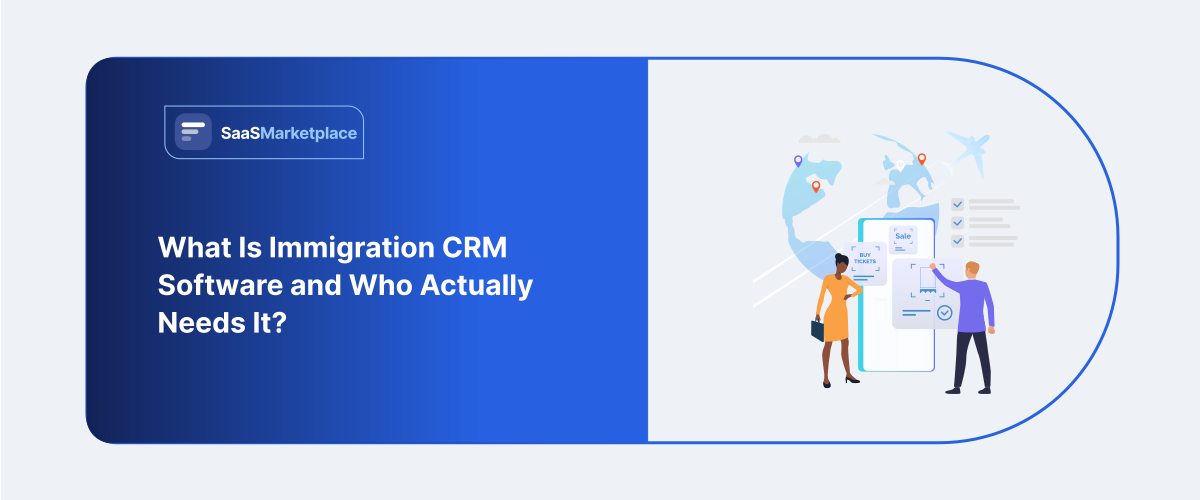
That's the reason immigration CRM software exists. Rather than a generic contact tracker stretched to fit, it's a case and client management platform built around the actual mechanics of immigration work: visa categories, filing deadlines, document collection, government processing stages. Firms and organizations handling more than a handful of cases at once tend to find that specificity matters more than whatever a general-purpose tool offers. What follows covers what immigration CRM software actually does, how it differs from a standard legal CRM software, roughly what it costs, and who genuinely needs one.
Key Takeaways
Case tracking, deadline management, client communication: a good immigration CRM keeps all of it organized around the actual shape of immigration law: visa types, filing stages, government processing timelines. That's what sets it apart from generic ai CRM or case management tools, which don't come with built-in logic for priority dates, RFE deadlines, or the document checklists tied to a given visa category. The real payoff shows up in deadline reliability, and in this line of work a missed filing window isn't just a scheduling slip internally; it can genuinely hurt a client's case. Expect to pay $50–$250 per user per month, with immigration-specific platforms usually running higher than generic legal CRMs because of all that specialized workflow logic baked in. It's most worth it for firms and organizations juggling higher case volumes or multiple visa categories at once; solo practitioners with a smaller caseload sometimes get by fine without it.
What Immigration CRM Software Actually Does
At the core, an immigration CRM tracks every case a firm or organization is handling, tied to the specific visa or immigration category involved H-1B, family-based petitions, asylum, employment-based green cards, and so on. Each case carries its own timeline, document requirements, and government processing stage, and the software is built to reflect that structure rather than forcing it into a generic pipeline.
A plain contact database doesn't know how immigration cases actually move; this does. A platform built for this work understands that an H-1B case has different milestones than a family-based green card petition, and flags deadlines, RFE responses, priority date movements, and visa expiration dates automatically, based on case type, rather than making someone configure that logic by hand.
Client communication runs through the same system. Automated status updates, document requests, and appointment reminders reduce the volume of "what's the status of my case" calls that eat into staff time at busier firms, though the value of that automation depends heavily on whether staff is actually keeping case data current in the first place.
How It Differs From a General Legal CRM
This distinction matters more than it might seem at first glance. A general legal CRM handles client intake, case notes, billing, and calendar management across any practice area personal injury, family law, immigration, whatever the firm handles. It's flexible, but that flexibility usually means immigration-specific workflows have to be built manually, case type by case type.
Immigration-specific platforms come with that structure already in place. Visa category templates, government form tracking, priority date monitoring, and document checklists tied to specific case types are built into the software rather than something a firm configures from scratch. For a firm handling immigration work exclusively, or as a major part of its practice, that prebuilt structure usually saves significant setup time compared to adapting a general legal CRM.
The trade-off is that immigration-specific platforms are less useful for firms with a broader mixed practice. A firm doing immigration work alongside family law and personal injury cases might find a general legal online CRM more practical, even if it means building out immigration workflows manually, simply because managing one system across all practice areas beats juggling two.
Who Actually Needs One
Immigration law firms handling a meaningful caseload are the clearest fit. Once a firm is managing dozens of active cases across multiple visa categories, tracking deadlines manually in spreadsheets or a general calendar system becomes a real liability, not just an inconvenience.
Corporate immigration teams inside larger companies, managing visa sponsorship for employees, also tend to benefit heavily, particularly when there's a high volume of H-1B, L-1, or green card cases moving through at once and multiple stakeholders HR, legal, and the employee who all need visibility into where a case stands.
Nonprofit legal aid organizations handling immigration cases, often asylum or humanitarian visa work, benefit differently: less about managing high case volume for billing purposes, more about ensuring vulnerable clients don't fall through the cracks in a system where a missed deadline can have serious consequences. Case tracking reliability tends to matter more than reporting or billing features for these organizations.
Core Features to Expect
Most immigration CRM platforms cover a similar core set of tools:
- Visa category templates: ready-made workflows for the common case types (H-1B, family-based, asylum, and so on)
- Deadline and milestone tracking: automatic alerts for filing windows, RFE responses, and shifting priority dates
- Document management: checklists and secure storage tied to specific case requirements
- Client portal: a self-service way for clients to check status and upload documents without calling the office
- Government form integration: pre-filled forms or direct integration with USCIS filing systems where available
- Reporting: case volume, processing times, and staff workload across the practice
Larger firms and corporate immigration teams sometimes add more advanced reporting for compliance auditing or workforce planning. Smaller practices usually get most of the value from the core case-tracking and deadline features alone.
What It Costs
Solo practitioners or very small firms usually pay $50–$100 per user per month at the entry level: basic case tracking, document management, client communication. Established immigration law firms tend to land in the $100–$200 range, where deeper automation, client portals, and reporting come standard.
Push into large-firm or corporate-immigration territory and per-user costs can climb past $250 a month, especially once advanced compliance reporting or custom government-system integrations get added. Nonprofits should ask directly about discounted or grant-eligible pricing; several immigration-focused vendors offer reduced rates specifically for legal aid work.
Implementation and data migration costs deserve their own line in the budget. Moving active cases from spreadsheets or a general sales CRM into an immigration-specific platform, without losing track of live deadlines during the transition, usually takes more staff time than firms initially expect.
Common Implementation Mistakes
Migrating active, time-sensitive cases without a careful transition plan is probably the riskiest mistake specific to this kind of software. A deadline that gets lost during a system migration isn't just an administrative headache in immigration work; it can genuinely harm a client's case.
Underestimating staff training time is another frequent issue. Immigration case management involves enough procedural nuance that staff need real hands-on time with the new system before it's trusted for live deadline tracking, not just a quick walkthrough during onboarding.
Choosing a platform based on visa category coverage alone, without checking how well it actually fits the firm's caseload mix, is a subtler mistake. A platform with excellent H-1B workflows doesn't help much if the firm's caseload is mostly family-based petitions with a different set of milestones and requirements.
Skipping a real client-portal rollout plan tends to backfire too. If clients never get walked through how to use a new self-service portal, they usually just keep calling the office anyway, meaning the firm's paying for automation without seeing the call-volume drop it was supposed to deliver.
When It's Not Worth Adopting
A solo practitioner or very small practice handling a modest, steady caseload can sometimes manage well with a general legal CRM or even a carefully maintained calendar and spreadsheet system, particularly if the caseload is concentrated in one or two visa categories with predictable timelines.
The case for a dedicated platform strengthens once caseload grows past what one or two people can track reliably by memory, once multiple visa categories are in play simultaneously, or once missed deadlines have already caused a real problem. Below that threshold, the cost and setup time of an immigration-specific platform can outweigh what it delivers.
How to Choose One
Start by mapping the firm's actual caseload mix, which visa categories make up most of the work before evaluating platforms, since coverage quality varies significantly between vendors depending on case type. A platform with excellent employment-based visa support isn't necessarily strong on humanitarian or family-based work.
Ask specifically about government system integration and how the vendor handles regulatory changes, since immigration law and USCIS procedures shift periodically, and a platform that requires manual reconfiguration every time a rule changes creates ongoing risk. Trial the client portal from the client's perspective, not just the staff side, since a confusing portal experience often means clients bypass it entirely. And talk to current users at firms with a similar caseload mix, since immigration-specific software reviews online often skew toward large corporate immigration teams whose needs look very different from a small family-immigration practice.
Conclusion
Immigration CRM software works by building the specific mechanics of immigration case management visa categories, government deadlines, and document requirements directly into the system, instead of forcing that structure on top of a generic case tracker. Deadline reliability is where the real value shows up, and it matters more here than in most legal practice areas: a missed filing window can genuinely harm a client's case, not just create administrative friction. Pick a platform that matches the firm's actual caseload mix, plan the migration of active cases with real care, and give staff proper training time before trusting the system with live deadlines.
FAQ's
Yes, immigration-specific platforms include built-in workflows for visa categories, government filing deadlines, and document requirements that general legal CRMs typically require firms to build manually.
Typically $50–$250 per user per month, with pricing driven mostly by firm size and how much automation and reporting depth is included.
Not always. A solo practitioner with a modest, steady caseload concentrated in one or two visa categories can often get by fine with a general legal CRM or even a well-maintained calendar system.
Often yes. Several immigration-focused CRM vendors offer reduced rates or grant-eligible pricing for nonprofit and legal aid work, so it's worth asking directly.
Losing track of active deadlines during the migration itself. A careful transition plan for live cases matters more here than in most software switches, since a missed filing window can directly harm a client's case.