How to Choose the Right Property Management Software for Your Portfolio
-min.jpg)
When you look around for the best property management software out there, it can feel kinda daunting because every single one of them says it does everything, like tenant screening and automated maintenance tracking. But honestly, there isn’t one-size-fits-all property management software. The most fitting choice usually depends on things like the size of your portfolio and what kind of properties you actually have, residential or commercial, or maybe a mixed-use setup. If you are running a few single-family homes, then you don't really need the same stuff as someone dealing with hundreds of multi-family properties. So you should take a moment and kind of match the tool to your own specific workflow, because otherwise it can feel a bit off. When you do that, you’ll save hours, avoid payment problems, and keep your renters pretty satisfied.
What Is Property Management Software?
Property Management Software refers to, as the name suggests, a type of digital business platform that is designed to replace old-school practices such as manual paperwork, separate spreadsheets, and different tools that need to work together. The software can also be viewed as a relatively simple, yet very efficient instrument for managing real estate businesses, including managing entries of new apartments, performing background checks on tenants, managing rent payments via credit cards or ACH transfers, and issuing work orders to contractors for repair.
By digitizing the aforementioned routine processes, PMS has opened new doors for landlords and property managers, who can not only reduce the time needed for managing their operations, but also maximize their management and operational efficiency. The evolution of property management software has made it a vital backbone in the U.S. market due to the huge growth of the rental sector, the increase of the single-family rental portfolio, and the investments made by institutions in the multi-family property field.
The leading software-as-a-service platforms for real estate requirements. It includes core accounting functions that allow tracking collected deposits, completing 1099 tax report forms, and generating reports from trust accounting systems. Modern PMS provides property managers with AI-based tenant screening tools and integrates platforms with major listing companies in the U.S., which helps real estate operators maximize their profit and have a high occupancy rate.
Why Does Property Management Software Matter for US Portfolios?
In the rapid-fire U.S. rental market, importantly, the utilization of manual spreadsheets and paper checks isn’t just ineffective; it is also a detriment to profit margins. When it comes to overseeing operations from various locations, there are many aspects to consider, from marketing properties on competitive syndication platforms to managing a fast-paced turnover of units. Property management software makes all these tasks much easier by bringing all accounting, communication with tenants, and operational aspects together into one digital system, allowing property managers to save time spent on chasing late payments, filing receipts, and focusing on strategic growth, preserving assets, and acquiring properties.
Operating in the United States also means you’re basically walking through a complex, highly regulated legal area where one small compliance misstep can turn into expensive legal disputes. Federal mandates like the Fair Housing Act lay down pretty strict rules for tenant screening, yet individual states then come in with their own more rigid rules about things like security deposit escrow accounts, lease disclosures, and even eviction timelines.
Modern property management software is built specifically to reduce those American landlord exposures, as it insulates you from a bunch of liabilities. It does this by standardizing the application flow, securely storing digital lease signatures, keeping financial records that are audit-ready, and then automatically generating the end-of-year 1099 tax forms. So in practice, your property portfolio stays compliant without needing a full-time legal team, or at least without needing one constantly on standby.
Past efficiency and legal cover, property management software basically slides into better financial outcomes by lifting occupancy and making net operating income (NOI) feel more predictable. Right now, most American renters expect that same digital-first ease they get from online shopping, like mobile marketing payments, 24/7 digital maintenance requests, and lease renewals that happen right away. Buildings that actually provide those smooth portals tend to keep better quality tenants, and turnover starts to drop, sort of automatically. Also, the reporting side is more granular and real-time, so real estate investors get a clear look into cash flow, utility costs, and even how vendors perform. With that visibility, they can catch those small money leaks early, then tune their revenue across the entire portfolio, instead of finding out late.
What Features Should You Look for in Property Management Software?
1. Built-In, Multi-Bank Accounting And Escrow Oversight
Generic accounting software often ends up a bit short for real estate, mainly because it usually doesn’t track things at the actual property level. A really strong property management platform should include a tightly connected general ledger that keeps income and expenses separated by property and unit. Importantly, for the U.S. market it needs to handle multi-bank setups, so your security deposit escrow money stays neatly partitioned from operating funds. That way you keep compliant with state trust accounting rules, which nobody wants to mess up. Also check for built-in bank reconciliation, automatic late-fee monitoring, and a one-click end-of-year 1099 output for both vendors and property owners.
2. Digital Tenant Portals With Automated Remittances
Automating rent collection is basically the quickest route to a steadier monthly cash flow. The software should provide a tenant web portal, plus a dedicated mobile app, where residents can schedule repeating ACH (e-check), debit, or credit card payments. And beyond just processing, the portal should work like a centralized communication center where tenants can download copies of their signed lease, see balance status in real time, and get system-generated payment nudges before late fees start to apply.
3. Integrated maintenance workflows & vendor management
Instead of taking repair requests via scattered text messages, phone calls, or email marketing software, your platform should kind of centralize those maintenance tickets in one dashboard. Tenants can submit maintenance requests through their app, with photos, pretty detailed descriptions, and also permission to enter notes. After that, the property managers can turn the request into a work order, assign it to a pre-approved vendor, watch the job progress, and then link the contractor’s final invoice straight to the property’s financial ledger for the payout.
How Does Property Management Software Handle Tenant Management?
In the U.S., property management software kind of flips tenant management from a reactive hassle into a more streamlined, digital-first kind of experience. From the moment an applicant sends an online inquiry through syndication sites, the platform quietly automates the whole onboarding flow so it runs FCRA-compliant background and credit checks, it generates state-specific e-leases, and it securely handles security deposits into compliance-ready escrow accounts. Then once the tenant finally moves in, pretty much every day-to-day interaction gets funneled into a self-service mobile portal where renters can arrange automatic ACH payments, drop 24/7 maintenance tickets with photos, and get automated SMS reminders for lease renewals coming up or community updates that are relevant.
3InFor for property managers and landlords, this central hub really wipes out the chaos that comes from scattered text messages, paper checks, and lost paperwork. Like, every message, payment transaction, and repair request gets logged right into the tenant’s digital profile in real time, so you end up with a clear, time-stamped paper trail that helps defend against legal disputes, and it also makes eviction or lease dispute processes less of a headache if they ever pop up. Plus, by automating the routine administrative tasks and giving renters that instant digital convenience they expect, U.S. property owners can substantially improve tenant retention rates, reduce turnover-related expenses, and stay fully within legal compliance across the whole portfolio.
What Are the Cost Considerations for Property Management Software?
1. Subscription and Pricing Structure Models
Most software providers tend to bill in basically one of three ways, if you look at it closely:
- Per-Unit / Per-Month (PUPM): You’re charged a fixed amount per door (usually something like $1.00–$3.50 per unit per month). This tends to work well for expanding portfolios, though higher-tier platforms often add a monthly minimum spend, for example $250–$300/month even if you have fewer doors than expected.
- Flat Monthly Tiers: Pricing comes in set bands (like $50/month for up to 20 units, $150/month for up to 80 units). It feels steady and easy to forecast, but the cost jumps can get kind of sudden when you cross a limit.
- Freemium & Pass-Through: The monthly subscription is minimal or sometimes zero, and then the platform earns by taking transaction fees or application-related charges from tenants.
2. Onboarding, Setup & Data Migration
Moving active tenant ledgers, current leases, vendor history, and property information out of spreadsheets and into a new platform takes some time and a bit of technical energy.
- Even though basic platforms often advertise free self-service onboarding, mid-to-enterprise options usually come with a one-time implementation charge, sometimes from about $200 to $2,000+ for dedicated setup folks, plus guided data migration, all that kind of thing.
3. Payment Processing & Gateway Fees
When you collect rent digitally, there are processing costs that change depending on how tenants pay :
- ACH (Direct Bank Transfer): Typically $1–$3 per transaction, or in certain cases free, if the software vendor decides to absorb it.
- Credit/Debit Cards: Usually around 2.75%–3.5% as a processing percentage.
- Key consideration early: Figure out whether your business will absorb these transaction fees as an everyday operating cost, or instead pass them along directly to tenants.
How Scalable Is Property Management Software for Growing Portfolios?
1. Automation of high-volume operational workflows
As the portfolio starts to grow, doing the day-to-day work by hand turns into a real throttle on expansion. Instead of manually laboring through everything, scalable software uses automated rules and a few surprisingly simple setups: Automatically computing and posting the monthly rent charges, breaking down utility splits, and applying late fee amounts.
Routing maintenance requests straight to external contractors using the priority level or the property location as a guide. Sending out automated SMS and email payment reminders, lease renewal alerts, and inspection timetables, all on schedule.
2. Role-Based Access Control & Team Permissions
Trying to manage 20 units might mean one or two people who end up doing everything, but once you’re around 500 units it really needs specialized roles like leasing agents, accountants, maintenance projects managers, regional directors, and so on. Good platforms scale by offering granular, role-based permission settings that limit what each staff member can see. In practice, they only get access to the properties, the financial data, and the tools and functions they actually need for their job, which helps keep data security solid and keeps operations more orderly.
3. Multi-Entity Financial Architecture & Combined Reporting
When real estate portfolios expand, it’s common to run separate legal entities, like LLCs or partnerships, for each property or each acquisition. This is often done to help isolate liability. Scalable software typically supports a multi-entity general ledger, so you can manage separate bank accounts, track independent balance sheets, and even issue distinct 1099s per entity. At the same time, you still get aggregated, portfolio-wide financial reports, which makes it easier for leadership to do high-level performance analysis.
4. Support for Diverse Asset Classes (Mixed Portfolios)
Investors frequently grow by branching out into new kinds of property, like going from single-family rentals (SFR) to multi-family buildings, commercial retail, industrial spaces, or even student housing. A flexible platform fits these different lease models at once, so everything shows up on one dashboard. It can manage residential monthly leases, and then also commercial Triple Net (NNN) leases, plus Common Area Maintenance (CAM) reconciliations, and those escalation clauses that tend to change over time.
How Does Property Management Software Integrate With Other Tools?
1. Listing Syndication and Marketing Platforms
Instead of having to manually create and keep rental listings updated across dozens of separate websites, property management software can connect straight into listing portals.
So, when a unit’s status is set as Vacant in your PMS, the system automatically sends out the listing photos, lease terms, and pricing to external marketing channels.
Then lead inquiries feed right back into your PMS lead pipeline, so you avoid lost inquiries and cut down the days-on-market, like a lot.
2. Specialized Accounting & Financial Systems
Most property platforms include a built-in general ledger, but larger portfolios or corporate setups sometimes need an enterprise accounting system.
With two-way financial synchronization, rent roll transactions, owner distributions, and AP invoices go from the PMS into your main accounting database.
This keeps corporate-level bookkeeping in line with what’s happening on the property side, without forcing you to do manual ledger cross-referencing or endless double data entry.
3. Smart Locks, IoT and Access Control Systems
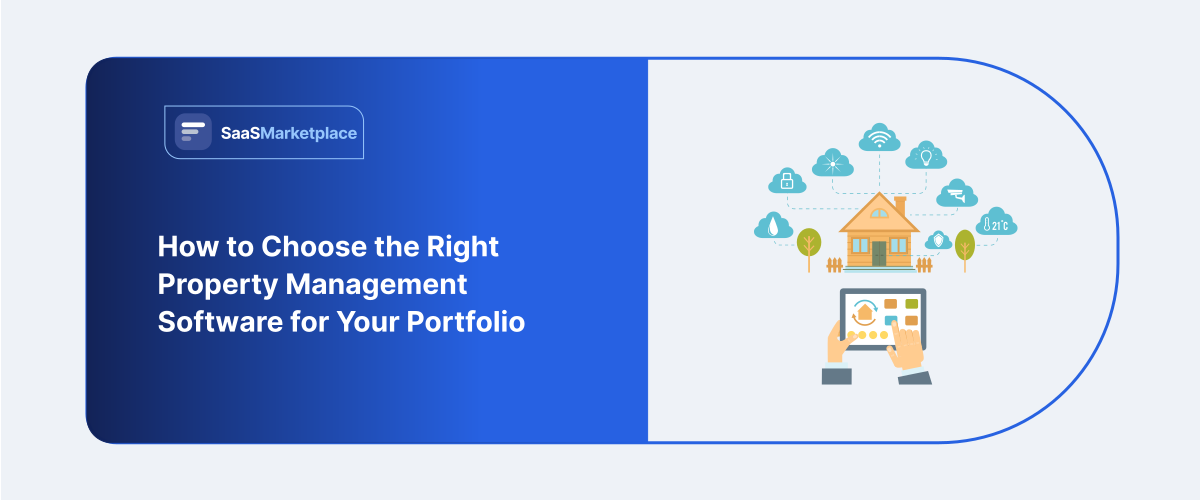
Modern property management software kind of connects straight into smart home and electronic access gear, like August locks. Instead of anyone emailing back and forth, the system produces short-lived access codes that are time-sensitive and linked to particular lease moments, or even maintenance work orders.
Prospective renters get automated self-guided tour codes, pre-vetted contractors receive a temporary passcode to handle a plumbing issue, and at move-in/move-out, the lock resets are done automatically- no physical key handoffs, no awkward exchanges.
How Do You Choose the Best Property Management Software?
1. Start by mapping your portfolio’s actual day-to-day operational needs
First, do a clean inventory of portfolio size, what kinds of assets you hold(residential, commercial, or mixed-use), and the current areas that feel stuck. A platform made for single-family rental properties will usually need totally different core features than software for high-density multi-family complexes or commercial triple net leases. Figuring out if your near-term focus is speeding up rent collection, making maintenance requests more automatic, or leveling up owner reporting helps you judge software based on what’s really happening in the business.
2. Check for multi-bank support and real estate accounting compliance
Property accounting gets complicated fast, mainly because state rules cover security deposits and trust accounts. The better options usually come with a strong general ledger that can separate income and expenses down to each property and even unit level. Also confirm the system handles multi-bank account management, so security deposit escrow money stays apart from operating accounts and doesn’t blur together. It should include automated bank reconciliation, plus end-of-year tax filing reports for both vendors and property owners.
3. Evaluate the Tenant & User Mobile Experience
Software adoption really lives or dies by usability. Sure, the platform might have a lot of back-end depth, but if the mobile screen feels clunky or hard for tenants to move through, then rent collection and maintenance messages tend to slow down or get messy. It’s worth testing the tenant portal on an actual smartphone, just to confirm that tasks like setting up automated ACH payments, submitting maintenance requests with photos, and reviewing lease documents feel intuitive and easy enough for people who aren’t really technical.
Conclusion
Picking the right property management software mostly comes down to how well you balance what you need right now with where you want to grow later. Look at your current portfolio size, double-check the key accounting capabilities, and take a close look at mobile accessibility. That way, you can find a solution that cuts down on administrative friction and keeps tenants satisfied. When you get to the point of evaluating top-rated platforms, compare real user reviews and check pricing side by side. If you want a place to do it quickly, visit SaaSMarketplace, the one-stop spot where you can discover, compare, and buy any business software, and make the final call with full confidence.
FAQ's
Pricing ranges from flat monthly fees ($50–$150/month) for small portfolios to per-unit/per-month rates ($1–$3.50/door) with monthly minimums for larger operations.
Yes, enterprise platforms offer localized lease templates, multi-bank escrow isolation, and automated 1099 tax generation to meet state-specific housing regulations.
Basic self-service onboarding takes a few days, while enterprise data migration with custom accounting setup typically takes 2 to 6 weeks.
No, accessing mobile portals is free for tenants, though standard processing fees may apply for credit card payments depending on your account setup.
Yes, most modern platforms allow you to export and transfer tenant ledgers, lease documents, and financial records via secure CSV or API data migrations.