Integrating Sales Engagement Software with Your CRM for Maximum Impact
-min.jpg)
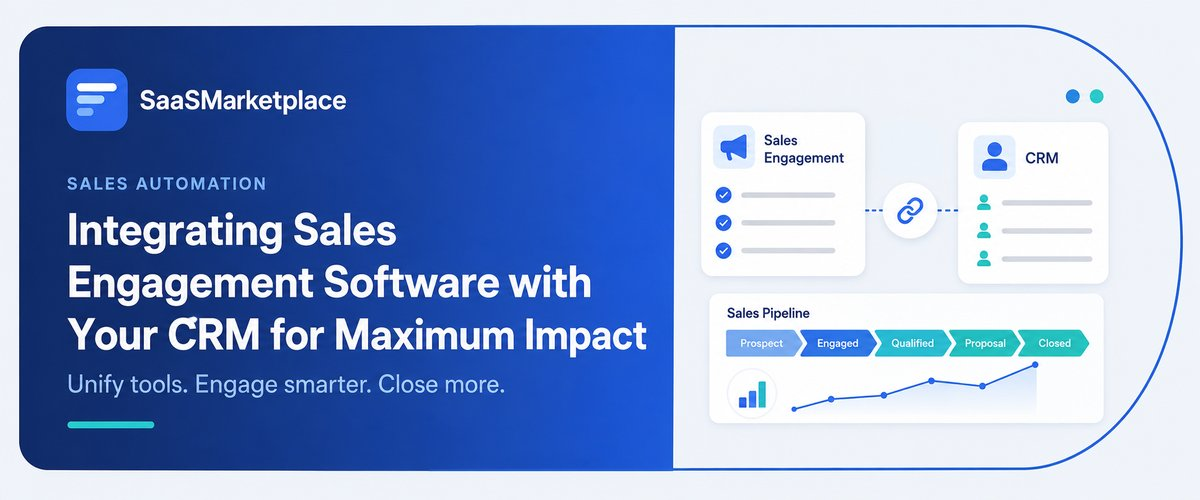
The merger of the sales engagement software with the CRM brings both scale outreach and the data collected to organize sales operations, thus turning chaotic activities into efficient profit-making machinery. Automated operations providing for synchronization of email transmission, phone call notes, and sequence updates contribute immensely to the productivity of the accounting personnel by replacing laborious administrative work with profitable sales activities. Leveraging accurate data exchange provides revenue decision-makers with real-time insight into their sales pipeline and performance numbers, which facilitates accurate business forecasting and better decision-making by executives. Furthermore, prospects receive consistent and tailored experiences in all regions of the US without worrying about competing salespeople or cold calling. Utilizing precise data eliminates the risk of violating US laws regarding communication as marketing departments become perfectly synchronized.
What is Sales Engagement Software, and why does it matter for your CRM?
Sales engagement software is a type of software that allows for the execution of sales activities for sales development representatives (SDRs) and account managers. Unlike a standard CRM, which is a simple database that only records details like account information, contact information, and deal stages, sales engagement software is a platform on which actual sales activities occur. The platform allows for the use of multiple automated communication channels, including email campaigns, telephone calls, connecting with potential clients on LinkedIn, as well as taking care of other tasks. In this way, the software can be used by sales representatives in their everyday routine in order not to lose any valuable leads and avoid the hassle of different forms of outreach communications.
The need for integrating sales engagement software and CRM should be obvious. Despite the computational power of the commonly used CRM systems, if not integrated with sales engagement software, sales representatives will have to spend hours logging their activities in separate systems, copying data about emails and calls, and updating their deals’ data in two systems.
The incorporation of engagement software alters the way organizations utilize their CRM. Instead of being an underwhelming backup tool, the CRM is now generating revenue. Companies learn exactly what kinds of outreach techniques yield high response rates, how fast leads are moving through the pipeline, and where delays are taking place. By integrating clear metrics of client engagement into executive dashboards, companies are able to forecast sales flow accurately, apply the successful sales strategies in other locations, and maximize return on investment.
What are the Biggest Benefits of Sales Engagement Software with your CRM?
- Automates Bi-Directional Sync to Avoid Manual Data Input: The CRM records all emails sent, calls made, and sequences updated automatically. Thus, sellers are relieved from monotonous tasks and can spend more time selling. Leaders can see what impact the outreach made on the deal process. When checking the CRM, they can see current activities.
- Facilitates High-level Personalization of Outreach: The reps can use the information in one user-friendly CRM software and implement personalized and multi-channel outreach initiatives through phone, email, and social media.
- Boosts Reporting Accuracy and Forecasting Reliability: The continuous availability of data eliminates the need to rely on the sales representatives to fill in the system, making it possible for executives to use accurate information for creating their dashboards.
- Avoids Overlapping and Redundant Messaging: By synchronizing the status of contacting the leads, the automated system eliminates cases when one sales representative contacts the same account in parallel or sends cold emails when a deal is negotiated with the lead.
- Ensures Adherence to Regulations in Different Regions: Automated monitoring respects the act of opting out, unsubscribing, and the aspects of contact preferences in both networks, assuring compatibility with US regulations such as CAN-SPAM and TCPA.
How do you set up Sales Engagement Software to work smoothly with your existing CRM?
-
Polish your CRM Information:
Get rid of duplicate contacts in your CRM, organize the custom fields, and deal with incomplete contact records. Entering erroneous information into your engagement software will create failures in syncing the two systems and create embarrassing outreach situations.
-
Integrate via API and Examples of Users:
Join the two platforms via their built-in connections or OAuth integrations. Make sure that individual CRM accounts of each sales rep are the same as their login accounting in the sales engagement system to see that attribution of activities of salespeople is the same and ownership is established.
-
Setting up Custom Fields and Synchronization Regulations:
Ensure that corresponding data fields such as Lead Status in your CRM match Sequence Status in your communication platform. Create exact rules for the two-way syncing operations and for the one-way transfer of information.
-
Setting Up Trigger Rules and Exclusions:
Establish rules concerning the automatic inclusion and exclusion of contacts from sequence flows. Create global suppression lists (eg., current deals, existing customers, non-confirmed emails) to make sure that leads are automatically excluded from the cold sequence as soon as they respond.
-
Establishing the Method of Opting Out and Legal Regulations:
Synchronize all unsubscribe links, do-not-contact statuses, and preference centers across platforms. This makes sure that whenever someone opts out of a specific list, both systems automatically comply with the regulations required by United States legislation, such as CAN-SPAM and TCPA.
-
Testing the Workflow on the Sample Group of Sales Representatives:
Carry out all workflow testing by using a small group of successful representatives before the actual launch of the process. Be in control of the integrity of the bi-directional activity logs, and double-check the accuracy of the field alignments.
How does Sales Engagement Software keep your CRM data synced and accurate?
- Real-Time Activity Logging: The system keeps track of all emails sent out, emails received, phone calls, and LinkedIn conversations of the business marketing automation by saving the information on a CRM entry.
- Two-Way Field Mapping: Changes made in one application are simultaneously mirrored in the other. The updates may include phone number changes, job title updates, or changes in the stages of deals.
- Automatic Changes of Leads’ Stages: The software automatically updates a record of a lead in the CRM system to signify lead interest upon opening an email, following a link, or replying positively to a communication.
- Duplicate Prevention and Detection Functionality: The more advanced software uses different algorithms that allow identification of duplicates appearing in the leads list without creating wasteful records.
- Automatic Sequence Elimination After Response or Meetings: When a potential client replies or sets up a session, the engagement tool will cease its automatic data transmission process and inform the CRM system in order to prevent any overlapping messages being sent to the same client.
- Prompt Unsubscribe and Opt-Out Actions: Global events concerning compliance (such as click-to-unsubscribe actions or complaints about spam) are promptly synced to the CRM and updated with Do Not Contact reminders.
- Synchronization of Custom Fields and Objects: Information from outreach campaigns such as email bounce reasons, call notes, or cadence finish dates is synced to custom fields in the CRM for enhanced reporting.
Can Sales Engagement Software improve your team's daily sales workflow?
- Combines Tasks into a Unified Interactive Queue: Representatives need to authenticate to the one unified platform every morning that will automatically arrange their to-do list based on prospects' engagement indicators.
- Allows for Standard Processes to be Completed: Email marketing programs, regular emails, and follow-ups can be conducted automatically in the background. Thus, representatives spend their time only on hot leads.
- Improves Phone Call Generation Process: Built-in dialers with automatic call recording and click-to-call options make the process of preparing phone calls easier.
- Provides Company Messaging and Ready-to-Use Templates: Organizations provide representatives with ready-to-use emails, call scripts, and message templates, thereby ensuring consistent principles in messaging.
- Provides Immediate Notifications: Representatives receive information on the activities of the prospects only after they have opened the emails, links clicked, or proposals viewed.
- Facilitates Booking Process: Calendar booking links help get rid of endless email correspondence while allowing customers to make an appointment directly.
How do you boost Team adoption of Sales Engagement Software across your Sales Floor?
- Get Buy-In from Sales Managers First: Make sure that team leads and managers are trained before starting to roll out tools to the sales reps.
- Designate Peer Leaders in the Sales Team: Decide on the best SDRs and account executives to use the tool first. Their stories would be a better motivator for using the tool than any management decision.
- Make Training About Specifics: Focus on demonstrating how the use of the tool helps the individual rep in his/her daily routine, including making data entries to CRM systems faster and receiving useful calls.
- Offer Ready-to-Use Sequence and Template From the Start: Ensure a smooth transition for your salesforce by providing predesigned templates and email sequences that allow them to implement customer outreach with no hassle.
- Connect the Tool Usage with Employee Performance: Make sure that salesforce activities such as the addition of sequences and call logging go through the software to be considered in quotas and commission payments.
- Make it Fun Through Competitive Perspective: Make sure to check how often the platform is logged in, what customer sequences are created, and what sales pipeline is produced to reward best customers.
What common challenges should you expect with Sales Engagement Software, and how do you solve them?
- Email Deliverability and Domain Reputation Threats: Sending a large number of automated outbound sequences may activate the spam filters and compromise the health of your primary domain. Response: Set strict daily limits, use secondary sending domains, and warm up email accounts before increasing the frequency of sending.
- Data Sync Issues & Duplication of Records: Sometimes mismatched field mappings or bi-directional rules can lead to overwriting of CRM records or creating duplicated contacts. Response: It is better to introduce unambiguous master-data hierarchy rules in your CRM, enforce strict field validation, and treat emails as primary unique identifiers.
- Misuse of Automation and Messaging: The misuse of bulk templates by salespeople can result in sending inappropriate messages or spamming. One possible solution is to implement compulsory personalization measures (e.g., a minimum of 20% personalized content for each contact) and create a common pool of approved messaging templates curated by the sales enablement team.
- Low acceptance and use of the Tool: New engagement software may be perceived by sales representatives as unwanted extra control and duplication of their existing CRM. To tackle this problem, it is recommended to train sales reps in their roles, which would help them to see how to benefit from using it.
- Discrepancy between Sales and Marketing Messaging: Marketing materials are often underused while salespeople spend time creating messaging that is not authorized or aligned with corporate branding. The solution lies in organizing regular monthly meetings between marketing and sales in order to provide salespeople with email templates and guides.
- Over-Contacting & Multi-Rep Overlap: Multiple vendors may independently schedule various communications with similar accounts, which could create an undesirable experience for potential clients. Use account suppression procedures, enable views based on accounts, and set automatic exclusions in the system in case there are any active CRM leads.
- Legal Violations in Several Jurisdictions: Breaching federal legislation (such as CAN-SPAM, TCPA) as well as state privacy regulations (CCPA/CPRA) through the misuse of opt-outs or through the use of automatic dialing. Centralize the global opt-out list, automate the update of do-not-contact statuses in various systems, and limit auto-dialing use to law-abiding lists of contacts.
Conclusion
By incorporating the sales engagement system into the process of managing a company’s customer relationships, companies will be able to turn their existing and mostly static data into a financially positive machine. That will be realized thanks to automated bi-directional updates, removal of manual input of tasks in the system, and implementation of personalized multi-channel contacting possibilities through the system.
FAQ's
It automates activity logging and data synchronization, giving sales reps more time to sell while keeping prospect records accurate.
Real-time bi-directional syncing immediately updates contact statuses across both platforms, preventing duplicate outreach and messaging overlap.
Yes, maintaining clean CRM data and automated opt-out syncs protects your domain reputation and keeps outreach compliant with US email laws.
Basic native API integration takes just a few hours, though full custom field mapping and team rollout usually take 1 to 2 weeks.
Yes, every outbound email, call log, and meeting scheduled automatically reflects in CRM reports and executive dashboards.