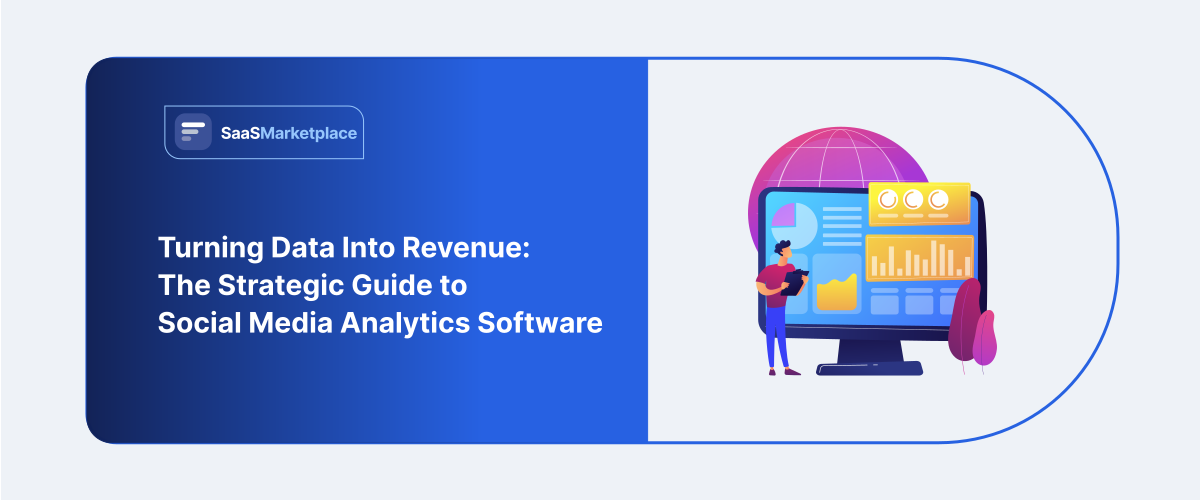
Turning Data Into Revenue: The Strategic Guide to Social Media Analytics Software
-min.jpg)
Running social media in the year 2026 involves way more than just posting. It involves understanding what is effective, what is unproductive, and how your brand is advancing towards genuine business impact. This is where social media analytics software is valuable. Whether you’re a one-person marketing department, a small team, or a growing brand, the objective is the same: make better decisions, faster, using social data.
 Looking for Social Media Analytics Software? Check out SaaSmarketplace’s List of the Best Social Media Analytics Software in USA for Your Business.
Using dedicated social media analytics software overcomes this essential challenge by bringing together all dispersed sources into one reporting model. Teams can assess the entire path or journey from original organic impression to website conversion or completion, rather than in isolation using likes and shares. Marketing leaders can allocate resources better and justify the return on campaign investments and message fine-tune performance signals.
What Is Social Media Analytics Software?
Enterprise social media analytics software is a specialized technology that collects, standardizes, and analyzes performance data from various public channels. Even though native platform insights cover only internal channel activity, centralized social media analytics software connects cross-channel behavior to larger commercial objectives, ensuring every phase of content creation directly supports measurable business growth.
Analysing patterns across a number of metrics, such as follower count, instead of just checking a number:
- Engagement rate
- Reach and impressions
- Content performance
- Audience demographics
- Follower growth trends
- Campaign results
- Conversion signals
Good reporting turns social data into action. It can also support strategy across different activities, including:
- Social media management (posting, community updates, content planning)
- Social media advertising (paid campaigns and optimization)
- Social networking growth strategies (audience building and retention)
In other words, analytics connects your publications to the benefits your business gets from them. Essentially, a dedicated social media analytics software solution goes beyond mere reporting. It organizes random audience interactions, measures campaign movement, and reveals underlying customer trends.
Why Social Media Analytics Software Matters in 2026
Social networks change regularly. These algorithms are subject to change and continue to evolve. So, you cannot depend on guesses. Software for social media analytics assists you in answering questions.
- Which posts brought real engagement, not just temporary likes?
- Are your best results coming from specific topics, formats, or posting times?
- Is your audience growing in the right direction?
- Are paid campaigns generating measurable outcomes?
- What should you improve next week, not just next quarter?
When you track performance consistently, you stop repeating mistakes. You also gain confidence when you present results to leadership or clients. Expectations for analytics are also higher in 2026. Teams desire reporting that is easy to understand and clearly connected to targets like awareness, leads, site visits, and sales.
That is why many marketers now separate basic monitoring from actual performance analysis. Basic monitoring tells what happened. Analytics helps in understanding the issue and taking action to solve it.
How to Think About It Through Social Media Analytics
Most content teams start with a posting schedule. Then they measure likes and comments. But social media marketing requires deeper evaluation.
Using social media analytics software correctly makes you start treating social media marketing as a system:
- Set goals (awareness, leads, conversions, retention)
- Choose content and targeting strategies
- Measure results with consistent metrics
- Improve through testing and learning
This is how you move from posting consistently to growing strategically.
Do You Know?
Many teams think better content automatically increases results. Typically, results improve more rapidly when using social media analytics software to detect which content the audience responds to; success reproduction is simpleringu 5-6 more uses per customer.
Key Metrics You Should Track (So Your Reports Are Useful)
Not every metric matters for every business. The trick is to choose metrics that match your goal.
1) Engagement Metrics (For Content Quality)
These metrics help you understand how people respond to what you publish.
Track:
- Engagement rate
- Likes, comments, shares
- Saves (especially for platforms where saving matters)
- Video completion or watch time signals (if available)
Insights you should look for:
- Which topics earn the strongest engagement?
- Do certain formats outperform others?
2) Reach and Visibility Metrics (For Awareness)
Engagement is not always your first step. Sometimes you need visibility.
Track:
- Reach
- Impressions
- Follower growth over time
Insights you should look for:
- Are your top-performing posts reaching new people?
- Is your audience expanding or staying flat?
3) Audience and Behavior Metrics (For Smarter Targeting)
If you understand who is watching, you can improve your messaging.
Track:
- Follower demographics (where available)
- Location trends
- Audience growth by segment
- Active times and day patterns
Insights you should look for:
- Are you attracting the right audience?
- What time windows produce the most meaningful engagement?
4) Conversion and ROI Signals (For Business Results)
This is the section most teams struggle with. They run social media advertising and feel unsure if it is paying off.
Track:
- Clicks and click-through rate
- Landing page engagement (if connected)
- Leads or sign-ups (if tracked)
- Conversions tied to campaigns
Insight you should look for:
- Which campaigns generate the highest-quality clicks?
- Are paid campaigns driving outcomes, or only traffic?
Building a Balanced Metrics Framework
To prevent reporting overload, organizations should structure their measurement strategy around clear operational tiers. Relying on a single vanity number usually misleads leadership regarding true campaign health.
|
Metric Category |
Key Indicators |
Primary Business Purpose |
|
Visibility & Reach |
Impressions, reach, share of voice |
Measure overall market presence and brand awareness |
|
Engagement Depth |
Saves, shares, comment depth, click-through rate |
Evaluate audience resonance and message quality |
|
Conversion & Revenue |
Lead volume, customer acquisition cost, direct sales |
Quantify financial return and commercial pipeline contribution |
|
Community Health |
Response speed, resolution rates, net sentiment |
Monitor brand reputation and customer support efficiency |
By configuring custom views inside your social media analytics software, each stakeholder receives data tailored specifically to their operational needs. Executives view financial return metrics, while content creators inspect post-level engagement nuances.
How Social Media Analytics Software Connects Social Media Management and Social Networking
Social media analytics software is valuable because it turns social activity into measurable progress. When you use social networking with a clear process, you can:
Here is a helpful way to see it:
- Social media management involves implementing measures such as scheduling, posting, commenting, and monitoring.
- Social networking is concerned with relationship building, supporting visibility, and increasing engagement.
- Social media analytics software can benefit both, as it provides clusters in response behavior.
For example, you might notice:
- Community posts drive better comments than promotional posts
- Educational content improves saves and shares
- Shorts/reels perform best during specific time periods
- Paid content increases reach but needs better landing pages to convert
The message is that when you see those patterns, you plan your content better.
What to Look for in Social Media Analytics Software
Data collection is only useful if it directly improves operational execution. An effective social media analytics software setup bridges the gap between historical reporting and future content production.
- Cross-Platform Reporting: Most brands publish across multiple networks. Your reporting should consolidate performance so you do not compare data in separate places.
- Clear Dashboard Layouts: You want business dashboards that show the right metrics quickly. If you need multiple clicks to find basic performance numbers, reporting will slow down.
- Campaign Level Data: For social media paid campaigns, being able to distinguish results across various campaigns, ad groups, or creative themes is advantageous
- Scheduled or Automated Reporting: For weekly reports, automation can be a huge timesaver and error minimizer.
- Export-Ready Results for Leadership: Occasionally, presentations or downloadable reports are needed for internal presentations.
Step-by-Step: Build a Simple Social Media Analytics Process in 2026
Selecting the optimal social media analytics software requires a structured review of your organization's technical needs and reporting maturity. You do not need a complicated system to get strong results. Use this simple automated workflow.
Step 1: Choose Your Goals And Define Success
Pick 1–2 primary goals for the next month, such as:
- Increase website clicks
- Increase qualified leads
- Improve engagement rate
- Grow followers in a relevant niche
Step 2: Decide Your Weekly Reporting Structure
Use a consistent template:
- Top posts (best engagement)
- Audience changes (growth and reach)
- Campaign outcomes (paid or promoted content)
- Notes: what worked and what failed
Step 3: Track Performance By Content Type
Instead of only tracking overall performance, compare:
- Educational vs promotional posts
- Videos vs images
- Short-form vs long-form
- Carousel posts vs single posts
Step 4: Keep A Small Testing Plan
Run small tests each week:
- Test a new hook
- Change posting time
- Try a different caption style
- Adjust CTA placement
Then use social media marketing analytics to measure results.
Step 5: Turn Insights Into Content Decisions
Analytics should change what you publish next. If nothing changes, the data is not helping.

Pro-tip
Create one simple reporting template for every week, same metrics, same sections, same questions. Promoting consistency helps to identify trends and accelerates social media marketing improvement even more so than random, infrequent monitoring
Conclusion
Measuring real campaign success is hampered by the capture of disparate native data. Using dedicated social media analytics tools brings the visibility to trim media spend, simplify scheduling, and deliver tangible ROI in every network you operate in. When all your data is fed to a single source of truth, cross-platform scalability is not a leap of faith but a strategic pathway to revenue.
FAQ's
It gathers and structures social performance metrics, so that you can monitor outcomes and refine the strategy
Engagement rate, reach, audience growth, and conversion indicators for paid and organic outcomes.
At least weekly, more often during large campaigns.
Social media management is execution; analytics is measurement and refinement.
Yes, analytics helps you understand your community's behavior and optimize content for better relationships.