The Role of Inventory Management Software in Demand Forecasting
-min.jpg)
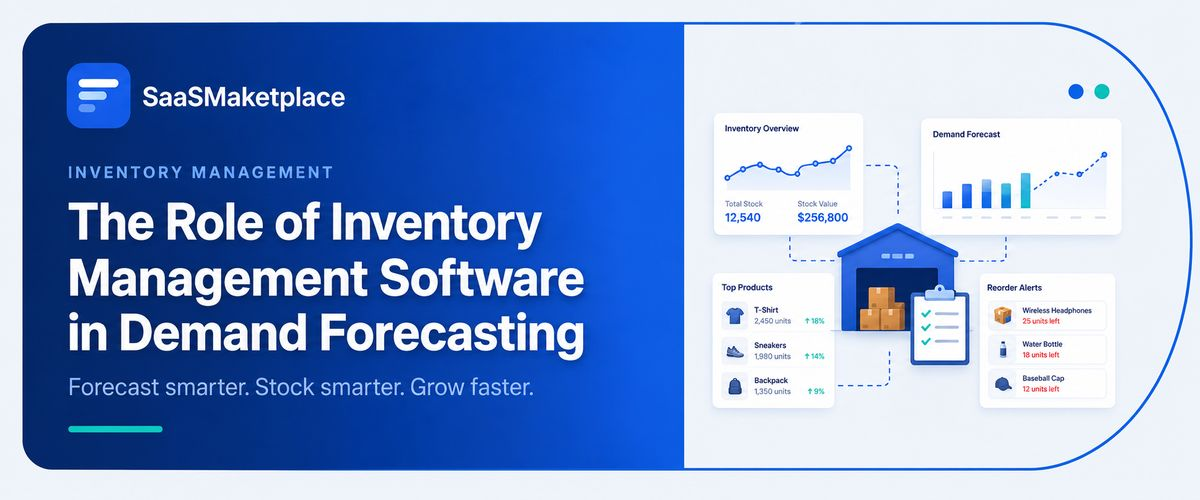
Regarded as a major contributor to the success of supply chains, the inventory management software possesses high predictive capability and processes historical sales data. The inventory management software is able to utilize the technologies of real-time tracking and process data with the aid of automated analysis to do away with the element of uncertainty in the inventory management process. The inventory management software implements many complex variables, such as seasonality, market conditions, and lead time. Consequently, businesses are able to maintain the desired level of inventory and eliminate the additional costs of keeping excessive inventory and the risks of running out of stock. Thus, companies able to apply the advanced software to make demand forecasts do not have to be in a reactive mode anymore and may control their supplies in accordance with the consumers’ needs.
What Is Inventory Management Software, and How Does It Support Demand Forecasting in the US Market?
Inventory management software is a computerized centralized tool utilized by various businesses in managing, monitoring, and controlling stock levels through the entire supply chain. Unlike the conventional counting methods and usage of spreadsheets, this software is fully integrated with various components of the supply chain like the point-of-sale systems, warehouses, and e-commerce platforms, thus providing visibility to the product throughout the supply chain. Every transaction occurring in the supply chain process becomes a data input for the software, which forms the basis for the planning and forecasting activities.
Talking about demand forecasting, the technology performs as a machine that converts past sales data into future buying plans. The new demand forecasting technology uses both predictive analysis and machine learning technologies in analyzing past sales quantities based on many factors like seasonality, promotion influence, vendor lead time, etc. Therefore, instead of counting the number of units required for the earliest replacement order done by managers, the technology automates forecasting and generates needed reports on the stock that will be sold.
Since this approach based on capabilities is needed in the rapidly changing environment of the USA, the supply chains of US companies are also shaped by some of the characteristics of these chains, such as the level of consumers’ expectations regarding shipping time (one or two days), rise or fall in demand due to specific occasions like Black Friday and other holidays, and delays in transborder delivery. As a result, the utilization of demand forecasting software will enable organizations to control their inventory without having excess supplies in their stores.
How Does Inventory Management Software Collect and Analyze Sales Data for Forecasting?
Omnichannel Integration and Automatic Data Collection: The initial step consists of receiving all raw sales transaction data from different channels into one location. The inventory management software makes contact directly with POS applications, online stores, e-commerce platforms, and ERP software. Every time a customer buys a product, returns a product, or places an order, the software scans and logs all required information, including SKUs, timestamps, locations, quantities, and prices. The automated logging process allows system error elimination and ensures that the software tracks consumer behavior at any time.
Clearing the Data and Historical Normalization: Once collected, the system cleans up and normalizes the data it receives before applying statistical models. Software algorithms will identify and correct anomalies or outliers that may distort future forecasts, such as anomalous bulk stock purchases, downtime in the system, and artificial sales spikes caused by deep-discounted clearance sales. Furthermore, the software considers stockout periods where sales were at zero due to lack of stock rather than actual declining demand and therefore normalizes historical figures.
Statistics as well as Machine Learning in Analysis: When well-formed historical data is present, advanced analytic systems can analyze trends in sales over different time periods with the help of algorithms developed specifically for this purpose. The program applies time series analysis (for instance, moving average and exponential smoothing) and machine learning models to find hidden patterns in data, uncover changes in seasons and product development trends. Combining historical rate of sales with other factors such as future marketing campaigns, price elasticity, and changes in lead time.
How Does Inventory Management Software Help US Businesses Reduce Stockouts and Overstock Situations?
- Automation of Reorder Points: The application automatically computes minimum safe stock levels and commences new orders immediately, eliminating any risk of stockouts.
- Forecasting Demand Trends: By studying sales histories and seasonal patterns, the software can predict purchasing requirements.
- Centralized Control of Multi-Channel Inventory: Businesses can manage their inventory management software across all of their warehouses and sales channels at the same time in order to prevent overselling in one area while having excess stock available at other locations.
- Customized Lead Times: The application takes into account vendor lead times and any delays during shipping in order to make sure orders arrive when needed and without the need for buffering.
- Automatic Notification of Date Expiration: Built-in inventory tracking means that promotions can move slow-selling items before they die on the shelf.
How Does Inventory Management Software Use Historical Trends to Predict Future Demand?
Inventory management software utilizes historical data to carry out demand forecasting through the following processes:
- Sales History Analysis: Historical sales numbers, whether daily, monthly, or yearly, are analyzed to determine the baseline description of demand for a product.
- Seasonality and Cyclicity Recognition: Periods of increase in product demand that are repeated (such as holidays or periods of changing seasons) are recognized in order to predict various times of high product demand in advance.
- Trend and Velocity Tracking: Moving average calculations allow for determining the increase, level, or decline of the whole product over a certain period.
- Lead Time and Supplier Influences: Inventory management software combines the previous performance data of suppliers as well as their lead times with sales rates to determine the exact moments for reordering items so that there are no stockouts anymore.
- Promotion and Events Impact Filtering: The software is able to filter out all spikes in demand from the past that were caused by discounts and marketing events to give a clearer idea of the usual demand standard.
- Machine Learning and Statistical Forecasting: The latest inventory management software makes use of historical data and different algorithms to make
How Does Inventory Management Software Integrate With Supply Chain Operations in the US?
- Vendor Procurement (EDIs and APIs): The system has the ability to directly interact with suppliers through electronic data interchange and APIs for placing automated orders, creating ASNs, and adjusting reorder points per suppliers’ lead times in real-time.
- Warehouse Management System (WMS): The system can talk to physical warehouses in order to monitoring moving goods, assign warehouse bins, organize packing routes, and deliver ATP in real-time.
- Logistics and Third Party Logistics partners: The system integrates with shipping carrier companies in order to receive shipping notifications, print shipping labels according to regulations, and provide transit time estimates.
- Enterprise Resource Planning (ERP) and Finance: The system provides information in real-time about inventory value, COGS, and obligations about purchasing directly to accounting software for keeping accounting instruments and cash flow estimates accurate.
- Omnichannel Sales Touchpoints: The system collects real-time data about purchases in online e-commerce shops, terminal POS cashiers in stores, and marketplaces like Amazon and Walmart to avoid overselling and deliver stock to fulfillment centers.
How Does Inventory Management Software Improve Accuracy in Seasonal Demand Forecasting?
- Multi-Year Seasonal Indexing: Seasonal indices are determined with the help of software and the assessment of sales data from historical periods (such as sales taking advantage of peak demand seasonality in some months).
- Granular Time-Bucket Analysis: Divides historical demand performance into periods such as days or weeks so that micro-seasonality-related changes (e.g., weekend demand surge) can be analyzed.
- Weather and Regional Pattern Correlation: Moves beyond production and incorporates the regional climate chapter into the equation to adjust inventory accordingly based on season fluctuations.
- Lead Time-Adjusted Reorder Timing: Takes the vendor’s lead times into account, which are changing during the peak season, to calculate the exact order placement dates.
- Promotional Lift Disaggregation: Differentiates seasonal demand surges from lift in sales that happened due to previous promotions and price alerts.
- Stockout Demand Reconstruction: Analyzes the previous trends of stockouts during the holiday season and tries to evaluate lost sales so that future seasonal forecasts could rely on projected demand.
- Dynamic Safety Stock Optimization: Expands safety stock reserves before peak season and empties seasonal inventory afterwards, thus saving money on maintaining unnecessary stock.
How Does Inventory Management Software Help US Retailers Cut Costs Through Better Demand Planning?
- Decreased Expense for Holding and Storing Products: Effective order management can ensure that stock is not over-purchased, thus decreasing total storage expenditures along with expenses involving utilities and insurance, as well as making sure that there are no blocked liquid assets.
- Reduced Risk of Unplanned Markdowns: Precise ordering will contribute to the decrease in surplus stock, which would result in lower levels of discounts or markdowns at the end of the product's lifecycle.
- Minimized Risk of Dead Stock Losses: Usage of automated inputs to monitor the expiration date of the goods as well as low demand trends allows to eliminate losses or write-offs of slow-moving stock.
- Removal of Expenses Related to the Urgent Shipment: Practical planning of lead time and the automation of order processes will save on rush delivery charges at suppliers due to quick response to stock shortages.
- Reduced Operating and Handling Costs: Optimization of inventory flow shall allow companies to transfer inventories faster without any additional investments in storage and labor management.
- Avoided Revenue Loss from Stockouts: By ensuring sufficient safety stocks, high-demand items are available on stores’ shelves and revenues that might have otherwise gone to competing retailers are captured.
- Strengthened Supplier Volume Discount Opportunities: Reliable demand forecasts enable businesses to consolidate their orders and obtain price discounts from suppliers in advance.
Conclusion
Currently, in modern-day supply chains, automated inventory management solutions form the basis of accurate forecasting by converting complicated sales data into meaningful information. These solutions allow businesses to eliminate human errors, detect emerging trends, and link warehouse activities with contemporary customers' needs. To ensure you have the right solution for your specific processes, visit the SaaS Marketplace, a great platform to find, compare, and buy quality software products to optimize your technology systems and improve your business.
FAQ's
It analyzes historical sales trends, seasonal patterns, and real-time stock levels to predict future customer demand with precision.
Yes, by generating automated reorder alerts based on forecasted demand, it keeps inventory at optimal buffer levels.
It utilizes historical sales data, seasonal buying spikes, lead times, market trends, and current stock movement speeds.
It unifies real-time sales data across all online and physical channels into a single source of truth for unified demand planning.
Modern platforms feature built-in AI algorithms or open APIs that sync with predictive analytics tools to refine demand projections continuously.