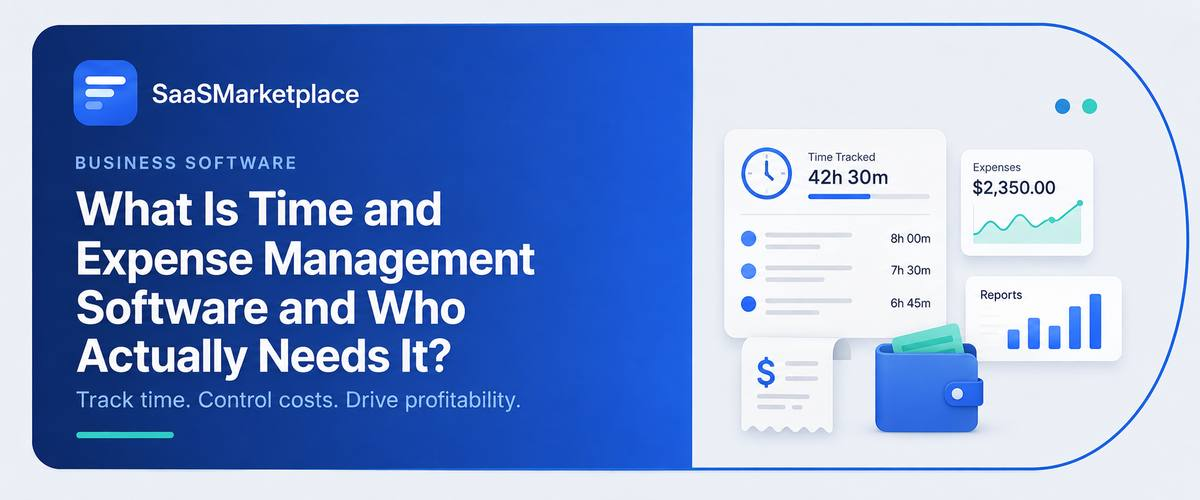
What Is Time and Expense Management Software and Who Actually Needs It?
-min.jpg)
Expanding firms frequently hit a threshold where paper-based tracking actively damages profit margins. Staff members enter time into separate spreadsheet files, physical bills accumulate inside desk drawers, and project leads waste hours matching billable client tasks prior to sending invoices. Such workflow resistance brings needless admin blockages and causes money loss via unpaid time and missing documents.
 Looking for Time and Expense Management? Check out SaaSmarketplace’s List of the Best Time and Expense Management in USA for Your Business.
Time and expense management software acts as an integrated system of record designed to solve these exact friction points. By bringing duration tracking and financial outlay under a single operational umbrella, organizations eliminate the guesswork involved in client billing, employee reimbursements, and project profitability audits.
What Is Time and Expense Management Software?
At its foundation, time and expense management software is an end-to-end digital system that logs employee work hours and categorizes company expenditures in real time. Rather than relying on separate disconnected tools for clocking in and submitting out-of-pocket receipts, this technology unifies daily operational activity into clean financial workflows.
The technology bridges the operational gap between frontline staff, project leaders, and financial accounting departments. By streamlining daily time tracking, it provides immediate oversight into how labor hours and company capital are distributed across client accounts for accurate billing and invoicing.
Primary Features of Integrated Systems
- Automated Time Capture: Mobile, web, and desktop timer tools that record employee work hours continuously across tasks, clients, and projects.
- Digital Receipt & Expense Processing: Mobile receipt scanning and automatic policy checks that eliminate physical paper backups and manual entry errors.
- Flexible Rate and Currency Engines: Multi-tiered billing rules that support custom billable rates, overtime calculations, and multi-currency billing requirements.
Key Components of Modern Time and Expense Platforms
To understand how unified governance operates, it helps to examine the core capabilities that replace legacy manual administrative workflows.
Operational Data Capture Breakdown
- Project Task Hours [ 42% ]
- Client Expense Claims [ 28% ]
- Internal Operations [ 18% ]
- Travel & Field Costs [ 12% ]
Advanced Time Tracking Capabilities
Modern time tracking software provides far more than a basic digital punch clock. It connects straight into work management areas, letting team members log concentrated project tasks as they occur.
Tools such as employee scheduling programs handle weekly reports, allowing managers immediate visibility into standard work periods, extra time, and leave accounts. Regarding groups dealing with clients, automatic recording of chargeable minutes guarantees each billable second enters the correct record rather than being lost.
Consolidated Expense Tracking Features
Specialized expense management software manages personal expenditures, staff reimbursement processes, and business card accounting tasks. When integrated with time tracking, workers can attach project-specific outlays directly to specific client accounts.
Field-based time tracking and expense reporting software enable users to capture images of receipts via expense reporting tools. These systems pull essential merchant details, check spending caps on their own, and send verified claims for sign-off, removing the need for hands-on typing.
Do You Know?
Organizations using paper-based logs forfeit significant income from missed entries, late recording, and poor forecasting. Switching to digital, instant monitoring usually retrieves those missing paid hours within the initial thirty-day period after launch.
Core Functional Capabilities Compared
Choosing the appropriate system relies on aligning corporate requirements with available technical strengths. The following section offers a mapping of core features to their corresponding advantages:
|
Platform Feature |
Primary Function |
Business Impact |
|
Real-Time Timers |
Tracks task durations on desktop and mobile applications |
Captures every billable minute as work occurs |
|
Optical Character Recognition (OCR) |
Scans paper receipts to extract dates, vendors, and totals |
Reduces expense report submission time by up to 80% |
|
Integrated Time & Billing |
Maps logged hours directly to custom billing rates |
Speeds up invoicing cycles and eliminates billing disputes |
|
Project Profitability Metrics |
Compares logged costs against set client budget caps |
Prevents project budget overruns before they happen |
|
Automated Policy Alerts |
Flags out-of-policy expenses before approval submission |
Eliminates fraudulent or unapproved company spending |
Who Actually Needs Time and Expense Management Software?
While any organization can benefit from digital tracking, specific business operational models rely heavily on integrated time and expense management software to protect their cash flow and operating margins.
Professional Services and Consulting Agencies
Agencies, IT services firms, and consulting groups sell knowledge and time. For such entities, recording professional service time remains vital for staying alive. Lacking precise project time logs, staff often understate hours used on client edits, causing scope expansion and compressed profit margins. Installing strong time and billing software guarantees each recorded activity turns directly into a distinct, billable entry ready for invoicing.
Legal and Accounting Practices
Accounting groups and law practices function within rigid frameworks governing billing rates and compliance mandates. Such entities deploy timesheet and expense management software to keep clear, verifiable logs available for examination by their clients. Accurate monitoring of hours spent avoids conflicts regarding retainer contracts and guarantees that costs for research or document filing paid directly by staff reach the paying party smoothly.
Field Service and Construction Teams
Organizations employing staff at various locations face challenges regarding physical time records and missing invoices. Tracking designed for mobile devices allows distant service providers to enter work duration, document on-site duties, and upload costs for equipment bought right away. Such action removes holdups in wage calculation steps and stops clerical mistakes occurring within main offices.
Step-by-Step Implementation Strategy
Upgrading to the new automated system will require strong change-management processes to get employee buy-in and maintain daily data integrity.
Assess Workflow Pain Points
Audit your existing admin bottlenecks and tracking gaps. Take a close look at the current state of hours and expenses logging. Are the pain points most often a drain on billable hours, payment delays in reimbursing expenses, or errors in invoice processing?
Define System Rules and Policies
Create clear rules for tasks and budgets. Finalize all guidelines before the software is implemented. Assign project billing rates, overtime regulations, predefined limits for daily expenditures, and guidelines for receipt submission.
Integrate with Business Infrastructure
Integrate clock tracking technologies with key financial applications. Push tracking data straight into your accounting, payroll, and project management applications. Do away with costly and time-consuming double-entry.
Onboard and Educate Teams
Train staff on desktop and mobile submission tools. Conduct practical training sessions focused on user-friendly daily habits. Teach staff how to run live task timers and scan receipts immediately using mobile apps.
Monitor and Optimize Operations
Examine weekly utilization and project profitability reports. Conduct constant reviews of live dashboards to flag unprofitable client projects, uncharged hours, or enduring operational constraints.
Connecting Time and Expense Systems to Broader Operations
Time and expense tracking does not exist in isolation. As organizations grow, subscription tracking and resource logs intersect with adjacent operational software categories:
- Financial Control: By integrating expense tracking with specialized spend management software, you can make sure all your company's expenditures stay within predetermined budgetary bounds.
- Project Delivery: The process of checking hours logged against project management applications gives project managers real-time updates on whether projects are over budget.
- Multi-Project Governance: By combining project portfolio management systems with time tracking, enterprise firms manage many dozens of projects at once by tracking resource requirements and allocations.
- Reimbursements and Payables: Streamline employee reimbursements and accelerate vendor invoice payments by feeding directly into your accounts payable software.
- Legal & Special Practices: Law practices integrate specialized legal billing software and practice management software to align trust accounting, hourly billing, and client expense ledgers.
- Accounting Practice Workflows: Financial accounting firms leverage accounting practice management software to track tax season workload hours and maintain strict client profitability targets.
- General Reimbursements: Utilizing dedicated expense report software guarantees complete audit trails for internal tax and compliance reviews.

Pro-tip
Implement the one-day rule for both time and receipts. Holding time entries until Friday morning drops data integrity by well over 50%. Motivate employees to log hours and scan receipts as they go using mobile apps. The more tamperproof the date the more reliable the information
Conclusion
Using today's time and expense management solutions turns the frantic manual-tracks-everything process into a defensible, revenue-saving process. Automatically recording billable time as it is generated and automating reimbursement expense flows reduces administrative chaos and stops revenue leakage before it can take hold. For professional services organizations, distributed teams, and enterprises on the rise, consolidating time data with spend management tools provides the insight necessary to preserve margins, keep clients happy, and grow.
FAQ's
It is an integrated online system designed to monitor hours worked by employees and expenses incurred by businesses.
Captures accurate work minutes as jobs are performed by eliminating lost hours and idle time, creating billable time into clean client invoices.
Time tracking records labor duration and task hours, whereas expense reporting captures out-of-pocket spending, vendor receipts, and reimbursement requests.
Yes, workers can snap photos of physical receipts using mobile apps, allowing the software to process total costs and vendor details automatically.
Because client margins depend directly on tracking billable hours accurately, preventing project budget overruns, and detailing transparent expense line items on invoices.