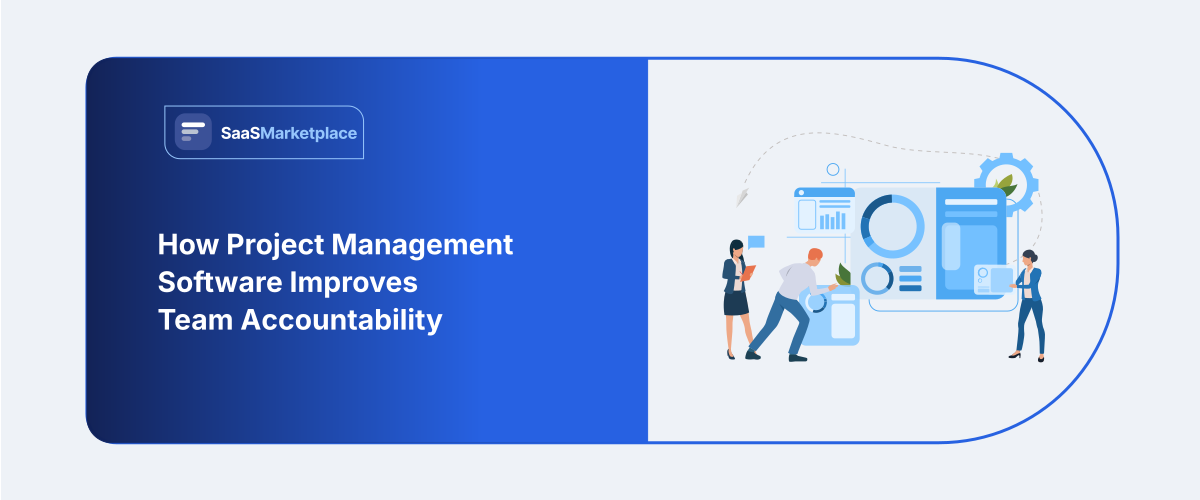
How Project Management Software Improves Team Accountability
-min.jpg)
Managing a modern corporate office, particularly with the current trend towards hybrid or fully-remote operations, is becoming increasingly complex in places such as Mumbai, Bengaluru, Chennai, or Delhi NCR. The ability to hold people accountable is one of the key issues executive managers discuss on a regular basis because it is one of those essential pillars without which organized project execution is next to impossible. By empowering staff members to take responsibility for their own processes and results, companies provide themselves with a high degree of security regarding adherence to deadlines and overall productivity. Project Management Software plays a key role here by helping leaders establish this standard easily across departments.
 Looking for Project Management Software? Check out SaaS Marketplace List of the Best Project Management Software in USA for Your Business
 However, growing companies frequently encounter common challenges in tracking responsibilities, such as unclear role definitions, missing documentation, untracked modifications, and over-reliance on scattered chat groups or messy email loops. Document Management Software further helps businesses organize critical files, maintain version control, and keep important documents easily accessible. These clear structural gaps make it incredibly difficult for managers to identify exact workflow blockages, often resulting in duplicated tasks and sudden, costly missed deadlines. Many organizations also use HR Software to improve employee accountability, streamline workforce management, and clearly define roles across teams.
What Is Project Management Software?
Project Management Software is a key digital platform for professional teams, where they can design, implement, oversee, and complete the relevant complex process in one place. Instead of using paper-based control systems and whiteboards, companies now rely on the software to digitize their processes and ensure there is a comprehensive system that ties together broader business objectives and daily activities in one space. From our specialized SaaS marketplace directory, the software can be found to help high-growth businesses structure their processes in a way that allows the core teams to scale faster while maintaining delivery quality.
1. Key Features
A premium iteration of Project Management Software includes built-in operational features designed to turn complex, multi-layered plans into straightforward action items. For example, standard platforms offer interactive timelines where teams use detailed Gantt charts or clean Kanban layouts to keep up with shifting schedules. Furthermore, robust cloud document hubs store vital client briefs, creative feedback logs, and technical specifications directly inside the workspace. Advanced tracking elements also capture the exact hours logged on specific deliverables, converting everyday team activities into clear, visual data points for corporate analysis.
2. Why Businesses Use It
Enterprises implement Project Management Software to eliminate hidden operational blind spots and remove communication barriers between remote departments. When companies function without structured Project Management Tools, critical project updates get buried inside private chat windows, creating information silos and causing unnecessary operational delays. By choosing to deploy professional Project Management Tools, a business can easily standardize its delivery cycles, maximize its resource utilization, and verify that rapid organizational growth never impacts quality or client satisfaction. Consequently, these Project Management Tools act as essential corporate infrastructure for driving long-term operational success.
Why Team Accountability Matters
Building a culture of a sustainable workplace is the key ingredient to any high-performance corporate workspace, and it is this very aspect that determines the former’s responsiveness to any spontaneous client demands and other organizational hazards. Many organizations also implement Workforce Management Software to optimize employee scheduling, monitor productivity, and strengthen team accountability.
1. Established Responsibilities
When a corporate office values accountability, every employee knows what needs to be delivered by them every week. This clarity eliminates the classic issue of overlapping duties, where multiple individuals mistakenly work on identical files while other essential business operations are completely ignored. Clear roles allow professionals to structure their schedules with high confidence, maximizing Team Accountability across all levels. Furthermore, high levels of Team Accountability promote streamlined cross-departmental projects with reduced need for supervisor intervention due to the awareness of individual responsibility within their own area of work.
2. Improved Trust and Transparency
A company culture that emphasizes the importance of Employee Accountability is likely to see increased levels of workplace trust between colleagues. By having this aspect of corporate culture ingrained in the employees’ minds, the tendency is reduced for coworkers to be distrustful and intrusive of each other’s work, thus eliminating the need for micromanaging. This creates a more productive and balanced corporate culture where people are willing to contribute freely to meet higher standards set by the management since accountability measures promote transparency. High levels of Team Accountability combined with those of Employee Accountability eliminate the need for long-drawn-out meetings on the topic of work coordination. Ultimately, consistent Employee Accountability creates an open workspace where workers feel empowered.
3. Better Project Outcomes
Focusing on Team Accountability leads directly to superior, highly predictable project outcomes across all corporate departments. When professionals feel a strong sense of personal Employee Accountability for their assigned milestones, they pay much closer attention to technical requirements and conduct thorough self-checks before submission. This deep commitment directly reduces technical errors, keeps operational costs under control, and strengthens the brand's reputation with key external clients. High Employee Accountability ensures that minor problems are resolved quickly before mutating into major structural delays. Thus, raising Team Accountability improves the overall quality of corporate execution.
How Project Management Software Improves Team Accountability
Integrating dedicated Project Management Software into your business model alters the way your workforce handles daily obligations by embedding ownership straight into the company's workflows.
1. Assigns Clear Task Ownership
The most effective way Project Management Software builds continuous Employee Accountability is through precise, automated Task Assignment features. Within a professional Project Management Software interface, an operational task cannot sit in an ambiguous or unassigned state. Every single corporate deliverable must be linked directly to a specific person's digital profile. This direct Task Assignment format entirely removes classic office excuses like "I didn't realize that file was my responsibility." Because every task is tied to an explicit owner via clear Task Assignment, individual duties remain perfectly visible to the entire department, naturally reinforcing personal ownership.
2. Tracks Progress in Real Time
Modern systems deliver outstanding, continuous Project Monitoring capabilities, enabling corporate leaders to check overall project health without interrupting their staff with constant messages. By actively using modern Project Management Tools, a department head can open a main visual overview and instantly review which deliverables are active, completed, or delayed. This rapid Project Monitoring approach ensures that slowing workflows are identified early, allowing managers to adjust team resources well before client deadlines are compromised. Regular Project Monitoring reduces the need for intrusive status calls, keeping teams focused on execution.
3. Sets Deadlines and Reminders
Firm completion dates are absolutely vital for maintaining a smooth Workflow Management framework across various corporate teams. Modern Task Management Software ensures that critical deadlines are never forgotten or overlooked by busy employees. These advanced Task Management Software options allow supervisors to establish strict calendar cut-off times and configure automated reminder notifications that ping professionals as due dates draw near. This reliable, automatic alert system helps workers arrange their daily workloads intelligently, maintaining steady Workflow Management without requiring constant supervisor intervention or manual follow-up emails.
4. Improves Team Communication
High-performing Team Collaboration Software brings essential communication threads directly onto individual digital task workspaces. Instead of debating project details across private instant messengers or disjointed phone conversations, professionals share updates, post media links, and mention colleagues straight inside the relevant task file. This localized setup keeps all contextual background information tied directly to the actual asset, turning your Team Collaboration Software into an undisputed record of operational choices. Using Team Collaboration Software eliminates the frustration of searching through massive mailboxes to find an old feedback note.
5. Increases Transparency
A robust Work Management Software platform functions as a shared corporate map that breaks down frustrating operational walls across different business departments. When every professional can view the entire project journey within a single Work Management Software system, they quickly see how their specific pace affects their coworkers' timelines. This high level of visual transparency prompts individuals to submit their work on time, as they realize that any personal delay will directly block a colleague's next step. Using Work Management Software replaces old office guesswork with real, clear operational transparency.
6. Generates Performance Reports
Gathering accurate, data-driven analytics remains absolutely vital for evaluating overall Team Performance during monthly corporate reviews. Advanced Project Management Software makes this task effortless by instantly compiling extensive performance metrics and productivity breakdowns. These detailed statistics track key corporate trends, including individual task completion speeds, estimated versus actual hours logged, and the occurrence of delayed submissions. Executives can use this information to evaluate Team Performance by rewarding those who contribute the most and assisting departments with difficulties during operations. Business Intelligence Software can further transform this performance data into actionable insights that support better strategic decision-making.
Benefits for Businesses
Using a specialized Project Management Software platform can bring substantial advantages that will ultimately affect the bottom line of the company and its general performance in the long run.
-
Higher Productivity
By consolidating all corporate activities, essential project documents, and communication in one secure Project Management Software platform, companies can free their employees from the small, time-consuming tasks that waste hours each day. With fewer distractions, more productive work can be done. This systematic cleaning of everyday processes drives a massive, permanent upgrade in collective Team Productivity. Higher Team Productivity directly lowers overhead costs and allows businesses to manage larger project portfolios effortlessly.
-
Faster Project Delivery
When corporate Workflow Management is properly structured and automated alerts keep all team members focused on their targets, project durations shrink significantly. Seamless handoffs between different departments guarantee that after one is finished, the other begins immediately. This quick transition means companies can finish more client work and get their own projects out the door sooner, capturing market opportunities before your competitors can. Efficient Workflow Management turns quick execution into a permanent corporate advantage.
-
Better Collaboration
Deploying advanced Collaboration Tools dismantles geographical and structural barriers, allowing cross-functional corporate teams to work together perfectly. Whether your employees are working from an office headquarters in Bengaluru or working remotely from home, they engage on the same digital workspace simultaneously. This constant, structured connection via professional Collaboration Tools fuels creative brainstorming and guarantees that everyone remains completely aligned with core business metrics. Using modern Collaboration Tools changes scattered individual efforts into a unified, powerful corporate force.
-
Reduced Missed Deadlines
Repeatedly missing client deadlines can damage a corporation's market standing and result in severe financial penalties. Utilizing professional Project Planning Software mitigates this risk by providing management with the deep insight required to spot and resolve workflow bottlenecks early. Thanks to updates and clear milestone overviews inside the Project Planning Software, executive leadership can reallocate personnel to protect critical deliverables. Proper Project Planning Software keeps the entire brand's delivery promises secure.
Common Mistakes to Avoid
To ensure your corporate digital transformation proceeds perfectly, keep a close watch for these frequent mistakes that can stall user adoption.
- Assigning unclear responsibilities: Generating vague task profiles without explicit descriptions or clear owners causes immediate confusion and defeats the primary purpose of monitoring Employee Accountability.
- Ignoring task updates: Allowing professionals to neglect updating their personal task boards turns your Project Management Software into an outdated archive, forcing supervisors to waste time chasing manual updates.
- Overcomplicating workflows: Building unnecessarily complex project structures with too many custom phases and mandatory fields triggers employee pushback, resulting in low software adoption rates.
- Not reviewing progress regularly: Failing to actively consult real-time dashboards and tracking tools allows minor project delays to quietly expand into major missed client deadlines.
Conclusion
In today's highly competitive corporate landscape, maintaining exceptional operational quality requires organized, data-driven frameworks. Implementing a robust Project Management Software platform remains the most reliable strategy to eradicate corporate confusion, elevate daily operational transparency, and establish genuine Team Accountability. By consolidating your core tasks, critical deadlines, and team communications, you hand your workforce the exact environment required to assume complete ownership of their daily output.
FAQ's
It establishes high visibility by guaranteeing that every single task is explicitly connected to an individual owner, complete with clear deadlines and real-time tracking features. This setup removes all ambiguity, ensuring that every professional understands exactly what they need to deliver.
The most reliable features include central progress dashboards, automated deadline notifications, integrated time-trackers, and auto-generated productivity analytics. These systems enable supervisors to review task completion trends and evaluate performance objectively without micromanaging their staff.
Yes, small businesses and growing startups gain immense advantages from these digital setups. Deploying these platforms early helps compact teams maximize their limited resources, build organized operational workflows, and scale up smoothly without experiencing painful organizational friction.
While these systems are incredibly prominent in IT development, software engineering, and digital marketing, they are also widely used across architectural planning, healthcare management, financial consulting, and creative media houses. Any enterprise handling complex, multi-step operations can benefit from structured tracking.
The standout benefits include a major boost to collective team productivity, shorter project execution cycles, smoother communication across distant departments, and a noticeable drop in missed client deadlines. It removes manual administrative work so teams can focus entirely on high-quality delivery.