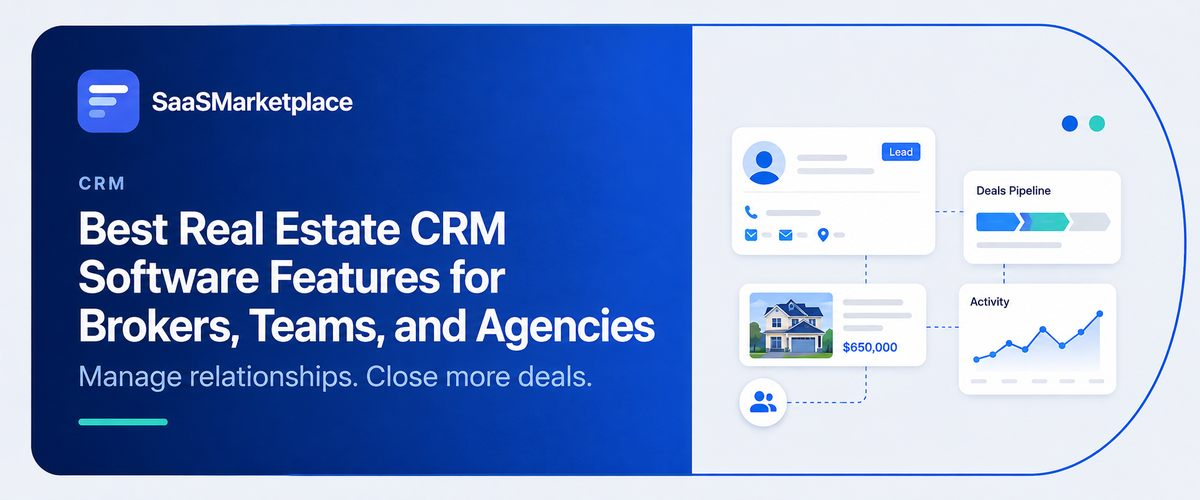
Best Real Estate CRM Software Features for Brokers, Teams, and Agencies
-min.jpg)
Running a real estate brokerage or agency can feel like keeping multiple plates in the air; it involves juggling active listings, cold calling, holding agents responsible, and ensuring deals don’t get lost in the shuffle. A remarkable real estate CRM should not only be viewed as a mere address book; it’s more like an engine that transforms random occurrences into predictable deal flow. Whether you have a small team or an incubator, the appropriate real estate CRM software solves the issue of getting agents to concentrate on what nets them money: trust and closing deals.
What is Real Estate CRM Software, and why do US brokers need it?
Real estate CRM software is basically a comprehensive digital platform built around the needs of brokers, team leaders, and agents. It helps them wrangle clients, keep everything organized, and automate a lot of the usual workflow stuff. More than just a telephone directory, a special real estate CRM system provides all the incoming leads from websites, monitors the entire log of communications by telephone and e-mail, and keeps all required documents together in one location. In fact, specialists in the real estate market could hardly imagine their job without such an advanced tool in contemporary conditions.
In the rapid and competitive US housing market, brokers are required to have a dedicated CRM in order to achieve quick speed-to-lead and to adapt to various regulatory and market changes. Because US buyers and sellers have the need for immediate responses, automated text triggers and drip campaigns allow agents to get in touch with clients instantly, at the time of the inquiry. Additionally, due to market changes in the industry, such as the new NAR settlement regulations that require the need for written buyer representation regulations before showing homes, an efficient CRM enables brokers to stay compliant and maintain auditable records. Moreover, by automating follow-ups and tracking agents’ job performance, CRMs allow brokers in the US to keep their market shares, build up a repeat-and-referral business, and attain constant growth.
How does Real Estate CRM Software help Agents manage Leads more Effectively?
A real estate CRM helps to effectively eliminate the misplacement of prospects by streamlining the entire process of gathering contacts from multiple sources, including Facebook advertising and open house registration forms, and organizing them into one cohesive pipeline. This way, instead of having to sift through scattered text messages, emails, and notes, agents will get easy access to contact information, budget, and desired area. It noticeably boosts speed-to-lead due to automation and multi-channel follow-up. So when a fresh customer asks for details about a listing at 9:00 PM, the CRM can reply right away with a custom SMS or email drip sequence, which means the very first contact gets made sooner, not later.
Smart task management ensures that the agent knows when to call, preventing any hot lead from being missed or erroneously cold-called. With the help of intelligent lead scoring and this behavioral bug tracking thing, agents can point their attention at the most promising leads, or at least the ones that look most likely. The tech gives them some useful context, like when a lead reopens an email, watches a property more than once on the site, or even saves a new listing in their browser yeah, that kind of signals. Then agents can respond with the right listing suggestion, at the right moment, not just any bland pitch.
What are the must-have features to look for in Real Estate CRM Software?
1. Automated Lead Routing & Speed-to-Lead
It takes in the leads that potential clients discover on places, or they drop in via web forms, then sorts them out using round-robin mechanics or territory rules.
2. Multi-Channel Drip Sequences & Behavioral Triggers
Runs campaigns that involve more than just one channel of communication without any manual response from the agent. Advanced CRMs automatically configure the timing of follow-ups based on the actions of the client, such as clicking any links or saving listings.
3. Visual Pipeline & Transaction Tracking
Presents the deals in a customized Kanban format from the first meeting to the closing session. Built-in task checkers make sure that nothing is skipped in the contract, deadline, or escrow stages of the deal.
4. Direct MLS / IDX Site Sync
Connecting local Multiple Listing Service (MLS) feeds into client accounts allows agents to monitor property activity in real time. Thus, agents receive updates on their customers’ activity and know what properties they have viewed or saved.
5. Document Management & E-Sign Integration
This CRM enables agents to store purchase agreements, buyer representation disclosures, and title documents in a single secure cloud location. Furthermore, the CRM can be connected with e-sign platforms such as DocuSign, which will allow agents to send documents for approval right from the CRM interface.
6. Team Performance Analytics & Routing Audits
The system provides team leaders with dashboards that help track call volumes, conversion rates, and pipeline status of their team’s agents. Hence, they can see delayed deals and gaps in responsibilities easily.
How does Real Estate CRM Software improve team collaboration across large agencies?
A real estate CRM system makes sure there is a common and accurate reference for all offices by storing all client records, listings, information, and records in a single cloud-based platform. Regardless of who they are- agents, transaction coordinators, or office administrators- they can know the full history of a given buyer/seller in real-time, eliminating the need for internal communication barriers, repetition of communication, and constant updates.
The system helps in the standardization of complex AI workflow automation across multiple offices using role-based permissions as well as automated assignment of tasks. After the signing of a contract, the CRM platform can automatically initiate checklists informing the administrative team to process relevant disclosures, notifying the marketing team to create marketing images, and setting up an itinerary of milestones for the transaction.
It enables control of flywheel leaders and field leaders with knowledge about high-level pipelines and transparent flow maps. Leadership can understand the number of deals, how long they take to get a response, and shift who is accountable for which deals depending on how busy the agents are. By replacing the numerous spreadsheets and independent message chains with a common database, large agencies save time within the organization, enhance the monitoring of activities, and have better performance overall.
Which Real Estate CRM Software integrations matter most for US-based teams?
The integration of the MLS feeds of local markets and integration with key portals is an essential component of US teams' success. By connecting with the local MLS, the system can provide timely information about new properties or prices of properties already saved by clients. At the same time, integration with the major Internet search engines and advertising networks guarantees that all new inquiries will be immediately relayed to the relevant staff.
Transaction management tools and e-signature software are instrumental in ensuring deal continuity and maintaining strict regulatory compliance. For agents to prepare purchase agreements, send disclosures for legal signatures, and store completely executed documents in the deal record, they should directly connect to contract and digital signature engines. By grouping the paperwork, brokerages can better keep up to date with the compliance requirements as laid down by national real estate rules and representation guidelines.
The use of communication platforms and advertising tools enables ongoing database management. The use of two-way communications through email, business texting, and VoIP results in automatic logging of communication details under every client. In addition to website pixel analysis and custom automation technologies, agents receive real-time alerts every time a lead re-engages with a listing.
How can Real Estate CRM Software help brokers close more deals faster?
The use of a real estate CRM improves deal speed by enabling rapid response to inquiries through automation. Because 75% of buyers and sellers work with the first agent they reach, real estate CRM software can gather a lead's information from property portals and instantly send a personalized follow-up to their inquiry. This greatly reduces lead time and enables the agent to set up viewings quickly while keeping hot leads from choosing another brokerage.
Secondly, behavioral monitoring and automated follow-up help reduce the sales cycle time by keeping the agents concentrated on actual buyers who are ready to offer. By connecting to local MLS property feeds and online activities on the website, the tool gets to know when the lead opens the email again, saves a property, or views a property several times. These behavioral alerts help agents know which lead should be contacted and when by the agents.
Integrated transaction management prevents deals from stalling during the critical contract-to-close phase. Built-in task checklists and e-signature integrations keep inspectors, lenders, title agents, and clients aligned on every contingency deadline. By streamlining contract generation, automating status updates, and centralizing signed disclosures in one location, brokers avoid administrative bottlenecks down, reduce escrow delays, and get transactions over the finish line in significantly less time.
What should agencies consider when choosing Real Estate CRM Software for the first time?
1. Speed to Lead & Native Portal Integrations
Make sure the platform captures and sends inquiries from top US lead sources such as Zillow, Realtor.com, and local IDX sites to the CRM in an efficient manner. The CRM must send automated email or SMS messages. Thus, potential customers can be contacted before competitors do so.
2. Compliance with NAR Regulations & Transaction Procedures
Ensure that the software works with modern electronic contract and e-signing platforms such as DocuSign and Dotloop. According to National Association of REALTORS® (NAR) rules, the CRM must contain all signed documents and agreement forms in order to be in compliance with the necessary regulations.
3. MLS Synchronization & Property Monitoring Functions
Search for the capability of connecting directly with the Multiple Listing Service (MLS). This connection will enable updating client profiles with information about property listings, price changes, and real estate market data automatically.
4. Usability and Mobile App Experience
Since agents are primarily occupied with showings and open houses throughout the whole day, the CRM software should include a quick and user-friendly mobile app. Steer clear of overly complicated software with difficult training processes that cause agents not to use the software.
How do you know when it's time to upgrade your Real Estate CRM Software?
Knowing when to upgrade your real estate CRM comes down to recognizing friction in your daily operations. When your software starts causing bottlenecks rather than removing them, it is a clear indicator that your current tech stack no longer fits your business scale.
1. Leads seem to fall right through the Cracks
If brand new leads from your website forms just kinda sit there, unassigned for hours, or your automated first message responses sometimes bounce or don’t fire right, then yeah, your CRM is quietly lowering your conversion rate. These days, modern setups kick off near-instant, multi-channel drip sequences (SMS plus email) within seconds after someone inquires, so you can catch that high-speed-to-lead moment.
2. Agents aren’t really using it, plus the Manual Workarounds
When agents stop logging calls, skip updating deal stages, or avoid the CRM because it feels clunky and too slow, they end up sliding back into personal spreadsheets and those little sticky notes that disappear. If you see more and more shadow off-platform data handling, it’s basically the clearest sign that the user experience is failing your team, not the other way around.
3. You can’t properly Track Compliance and signed Paperwork
Real estate rules keep shifting, like updated buyer representation agreement requirements so brokerages are expected to keep meticulous, audit-ready documentation. If your CRM can’t smoothly capture, store, and highlight missing representation agreements or disclosure forms while deals are still active in the pipeline, then you’re taking on real legal and operational risk, even if it doesn’t show up immediately.
Conclusion
Picking the right real estate CRM isn’t only about grabbing software with the biggest list of features; it’s more about syncing your agency’s operational goals with something a large part of your team will actually use every day. Like, when you have fast lead routing and automated multi-channel nudges, plus smooth MLS syncing and clear transaction compliance, that CRM becomes the core growth engine behind everything you do. If you want the best match without constantly second-guessing your current tech stack, look at SaaSmarketplace. It’s a broad platform where you can find, compare, and purchase business software that’s tuned to your particular workflow.
FAQ's
It centralizes lead routing, property listings, client communications, and team performance metrics into a single cloud dashboard.
Yes, industry-specific CRMs feature native MLS and portal integrations to automatically sync property listings and lead inquiries.
They use automated lead routing rules to immediately assign incoming inquiries to available agents based on territory, budget, or workload.
Yes, mobile CRM apps allow agents to update property notes, log client calls, and schedule showings on-site.
It provides pipeline tracking, digital signature integrations, and centralized document storage to streamline deals from listing to close.